How to Grow and Propagate Baby's Breath Flowers
Baby's breath is like a sky full of stars, hazy and enchanting, and also like a tree covered in snow, fresh and lovely. It is suitable for planting in flower beds, along roadsides and in flower hedges, and is also very suitable for potted viewing and bonsai making. So how do you grow baby's breath? What good methods are there for growing it? What should you pay attention to when growing baby's breath? Please read on with me as we explore these questions together!

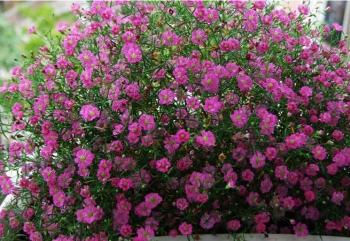
How to Grow Baby's Breath (Basic Knowledge):
Best propagation time: Baby's breath sowing period: autumn to early spring.
Best growing soil: Baby's breath is best grown in a sunny environment with loose, fertile, well-drained slightly alkaline sandy loam soil. The soil should be loose, rich in organic matter, with moderate water content, and a pH of around 7.
Growing humidity requirements: If baby's breath is in its growing period, it is best to place it in a sunny location with good ventilation for care, and keep the potting soil moist at all times.
Best growing temperature: The optimum temperature for baby's breath growth is 10-25°C.
Best growing light: Baby's breath prefers a warm, humid environment with plenty of sunlight. It is relatively shade-tolerant and cold-tolerant, but dislikes high temperatures and excessive moisture.
Precautions for growing baby's breath:
Fertilizing: During the growing season of baby's breath, we can apply a top dressing of water-diluted phosphate-rich tomato fertilizer about every two weeks.
Watering key points:
(1) If baby's breath is at the seedling stage, its water requirements are relatively higher.
(2) After pinching, you also need to continue maintaining adequate water and nutrients for it. Especially in the hot and humid summer season, whether water control is appropriate is often the most important factor determining the success or failure of baby's breath cultivation.
Pruning essentials:
(1) In autumn, pay attention to pruning the whole plant of baby's breath to maintain a good plant shape.
(2) Baby's breath grows vigorously. Places where leaves have fallen can be cut off at will, and new branches and leaves will quickly grow out. The more you cut off, the fuller the new leaves that grow.
Repotting: When repotting baby's breath every spring, add fresh fertile soil. During the growing period, keep the potting soil moist and fertilize once every 2 weeks to encourage more branches and leaves and abundant flowering.

Propagation essentials:
(1) Sowing: Baby's breath sowing period: autumn to early spring. Optimum growing temperature: 10-25°C. Flowering period: May to July. Seedling raising: Choose loose soil to make a bed, sow in September, cover lightly with fine soil, germinate in about 10 days, and move to a cold frame before winter to overwinter. Cultivation: In the following spring, transplant with soil to open ground. After the seedlings are established, pinch once to encourage more branching. When the plant height reaches over 20 cm, reduce the amount of watering appropriately; slight drought can promote flowering. It blooms in mid-to-late May. This species can also be direct-sown in open ground before freezing in November or sown in early spring.
(2) Cutting propagation: Carry out hardwood cuttings in spring. Cut 10-15 cm long mature branches from the previous year and insert them into a sand bed. They generally root in about 30 days. During the plum rain season, softwood cuttings can be used. Select tender tips of the current year for cuttings, and they will root in 2-3 weeks after insertion. Note that the control of temperature and humidity must be accurate. Generally, relative humidity should be kept above 95%, and temperature should be controlled above 15°C.
Pest and disease control:
(1) For leaf spot damage, spray with a 600-fold dilution of 65% zineb wettable powder.
(2) Pests include aphids and red spider mites. Spray with a 1000-fold dilution of 40% omethoate emulsifiable concentrate to kill them. Aphids can also be sprayed with diluted essential balm or neutral laundry detergent.
(3) For snails, you can apply molluscicide granules to the potting soil.
(4) For root rot, prevent water accumulation in the potting soil, and drench the roots with green copper emulsifiable concentrate or an 800-fold dilution of root rot remedy.


Tips for growing baby's breath:
1. It prefers a warm, humid environment with plenty of sunlight. It is relatively shade-tolerant and cold-tolerant, and grows best in well-drained, fertile and loose loam soil. Slightly alkaline calcareous loam is best for the growing medium, with good drainage and sunlight. When the plant height has reached over 20 cm, reduce the amount of watering appropriately; slight drought can promote flowering. Especially after flowering, poor drainage or prolonged rain can easily cause root rot. It likes warmth and dislikes high temperatures and excessive moisture. The optimum growing temperature is 10-25°C.
2. Tissue culture. Using shoot tip culture, the propagation coefficient is high, the root growth condition is good, and the seedling quality is good. Using tissue-cultured plantlets to produce cut flowers, the flower stems are upright, the color is pure, and the cut flower quality is high.