How to grow baby's breath? These methods make it easy to get started
Baby's breath (Gypsophila paniculata), a perennial herbaceous flower of the carnation family (Caryophyllaceae), originally named double-flowered Gypsophila, also known as "po tong qian", has slender stems and branches, lush branching, and a strong three-dimensional look, growing countless small white flowers. It is often used as an accompaniment in bouquets, flower baskets and flower arrangements, and is one of people's favorite home decorative plants. When growing baby's breath, pay attention to the following points:
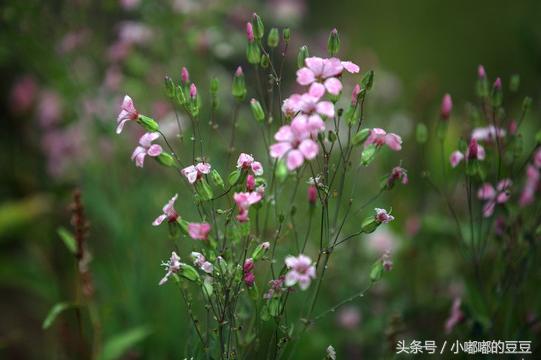
Loose soil is best: Baby's breath has low soil requirements for cultivation; generally, well-drained slightly alkaline calcareous soil or gravelly loam is sufficient.
Moisture must be controlled: Baby's breath needs more water during the seedling stage. After pinching, sufficient water and nutrients are still needed so that the plant can gradually change from the vegetative growth stage to the reproductive growth stage, that is, enter the bolting stage (flowering stage). Until the small flower spikes emerge and the petals grow out, water should be slightly reduced to prevent a decline in cut flower quality and stem strength, and also to promote uniform flowering of all blooms. Especially in the hot and humid summer season, whether moisture is controlled properly is often the main factor determining the success of baby's breath cultivation.
Temperature must not be too high: Baby's breath grows best at a daytime temperature of 25°C. If it exceeds 30°C, and the time or number of days is too long, the probability of malformed flowers tends to increase. The best nighttime temperature is 10-15°C. If it is below 10°C, and especially below 10°C, combined with the short days of autumn and winter, it easily leads to a dormant state or clustering.
Light must be sufficient: Light has a profound effect on whether baby's breath blooms, especially in winter, when it is more obvious. In summer, if baby's breath is given 80-24Klux of illumination, all plants can bloom; the difference is that the less illumination the plants receive, the correspondingly fewer flowers they bear. In winter, plants given 58Klux can all bloom; while those given 24Klux cannot bloom even if continuously given a 24-hour full-light period.
Fertilize regularly: Baby's breath likes fertilizer but dislikes waterlogging. After planting, topdress in stages, mainly with nitrogen fertilizer in the early stage and mainly with phosphorus and potassium fertilizer in the later stage. Water management must be strictly controlled; excessive moisture weakens growth, and waterlogging can cause root rot and death. When the plant grows to 30 cm, watering should be controlled, and extra care is needed especially during the bud stage; the flowering period should also be kept somewhat dry. In rainy areas, a shed should be built to shelter from rain.
Pest treatment: Pests and diseases are not commonly seen on baby's breath; occasionally there may be aphids or snails. At this time, diluted essential balm or neutral laundry detergent can be sprayed, which can kill aphids. For snails, molluscicide granules can be sprinkled into the potting soil. Note that for root rot, waterlogging in the potting soil must be prevented, and irrigating the roots with green copper emulsion or 800-fold root rot remedy solution is sufficient.
Baby's breath is a very common herbaceous flower. Its dense small white flowers feel very fresh and romantic, and it is often grown in pots to decorate the home. After reading this, I believe everyone now knows how to grow baby's breath!
Source: Soft Furnishing, Dushang Network www.58dsw.com. Please retain the source when reprinting!