How do okra planting costs and benefits look? A detailed analysis is here
A professional comprehensive agricultural technology service platform built specifically for fruit and vegetable planting bases, agricultural cooperatives, sightseeing garden planting, farm owners, agricultural input dealers and others.
Okra is an annual herbaceous plant of the genus Abelmoschus in the mallow family (Malvaceae). English name: okra. Other names: foreign chili, kidney-tonifying vegetable, etc. It is both a nutritious health-promoting fine vegetable (tonifying the kidneys, strengthening the stomach, clearing internal heat, aiding weight loss, etc.) and a landscaping and beautifying material of considerable ornamental value. It is a plant used as vegetable, medicine and flower all at once, with very broad development prospects. Its pods are crisp, tender and juicy, smooth without being greasy, with a unique aroma, and are deeply favored by ordinary people. At present, okra has become popular worldwide as a highly sought-after premium nutritious and health-care vegetable; in many countries it has become the vegetable of first choice for athletes, and it is also the best health food for the elderly.
Development prospects of okra:
1. Industrialized production, exporting abroad as a vegetable variety. Selecting suitable varieties for industrialized production and selling and exporting fresh okra pods as a vegetable can bring considerable economic benefits.
2. Functional production, researching its health-care functions, and selling health products. Okra has health-care functions such as promoting gastrointestinal peristalsis, preventing constipation, enhancing human endurance, preventing the occurrence of cardiovascular diseases, and improving immunity. It can be sold as a health product for athletes and the elderly, and can also be developed into weight-loss products.
3. Development and utilization in leisure agriculture. Combined with ecological tourism forms, pick-your-own gardens and eco-friendly restaurants for sales, forming an integrated ecological model of production, picking, processing, sales and service.
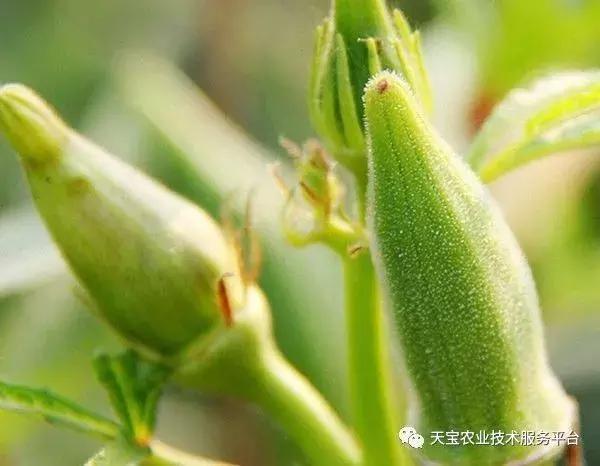
(1) Ornamental value: The okra stem is upright, with plant height generally 1.5-2m; the flowers are large and showy, blooming at every node, with the base of the petals purplish-red and the corolla pale yellow; the capsule is horn-shaped with ridges. The whole plant is elegant and upright, and can be cultivated as courtyard landscaping.
(2) Edibility: The tender pods of okra are tender and smooth in texture, require no peeling and no removal of seeds, and the whole pod is eaten. It can be stir-fried, boiled, served cold with dressing, made into soup, cooked in hot pot, grilled, etc., and can also be made into pickles and canned goods. Therefore, the fresh pods can be sold as table delicacies in eco-friendly restaurants in leisure agriculture.
(3) Providing ecological picking services so that people can better accept and understand okra.
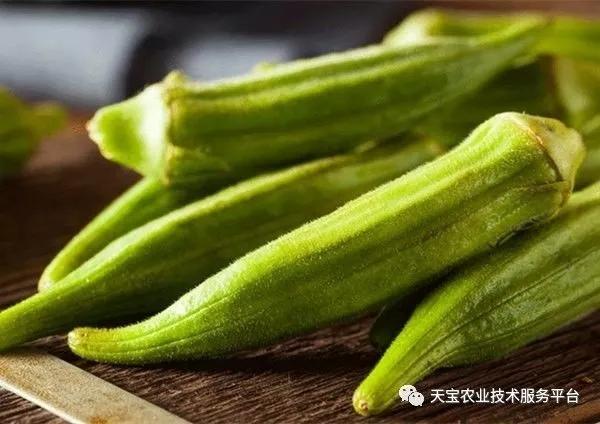
4. Green gifts: Making the fresh pods into tea bags; the nutritional components of the flowers are similar to those of the tender pods, and the fresh flowers can be made into flower tea, beautifully packaged and sold as green gifts.
5. Mixed with ordinary tea, it can achieve complementarity in taste and nutritional value.
6. Oil production: The seeds of old pods are used to produce okra oil; according to the research findings of some scholars, the amino acid composition of okra protein is similar to that of soybean, and its PER value is higher than that of soybean protein. At present, in the United States, okra seeds have already been used as a raw material for oil and protein.
7. Coffee production: The caffeine content in okra seeds reaches about 1%. The mature seeds can be roasted and ground into powder to be used as a coffee additive or as a substitute for coffee.
8. Development and research of cosmetics: It has a certain effect and significance for protecting the skin, preventing ultraviolet radiation, treating wounds, and beautifying and nourishing the skin; flavonoids and various vitamins are extracted from okra seeds, and okra is used as a raw material to develop pure plant-based green cosmetics.
9. Benefit analysis: With proper management, okra yields at least 2000 jin per mu, and the general market price in supermarkets and hotels is 10-15 yuan per jin. In large-volume wholesale it is at least around 5 yuan; taking a middle figure of 8 yuan per jin, then each mu can sell for about 16000 yuan, and after deducting seeds, fertilizer, pesticides, management and land rent, each mu can still make a profit of nearly ten thousand yuan. Now let us see how okra is planted!
I. Variety selection
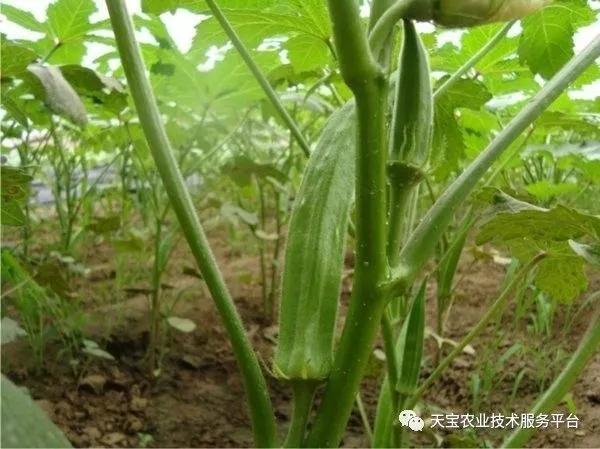
1. Pod color and flesh quality. In terms of fruit color, there are two types: green and purplish-red. At present, the green-pod varieties on the market have better flesh quality and are quite favored by consumers; the purplish-red-pod varieties are poorer and should not be selected.
2. Plant height
① Short-stalk type: plant height about 1m, with many side branches; both the main stem and side branches can flower; pods set early, the pods are dark green, relatively pointed, and mature pods can reach 20cm in length, with five ridges and a pentagonal cross-section; varieties include Changlü, Qingfu, Wufu, etc., all of which can be selected.
② Medium-stalk type: plant height about 1.5m-1.8m, fruit cross-section pentagonal, mostly dark green; varieties include Kaliba, Lüjian, Meili Wujiao, Lü Wuxing, etc., which can be selected.
③ Tall-stalk type: plant height about 2m, with few side branches, pods green, fruit cross-section with five or eight ridges; varieties include Perkins Large Long Horn, Daxiao, etc., which can be selected.
II. Land selection, land preparation and fertilization
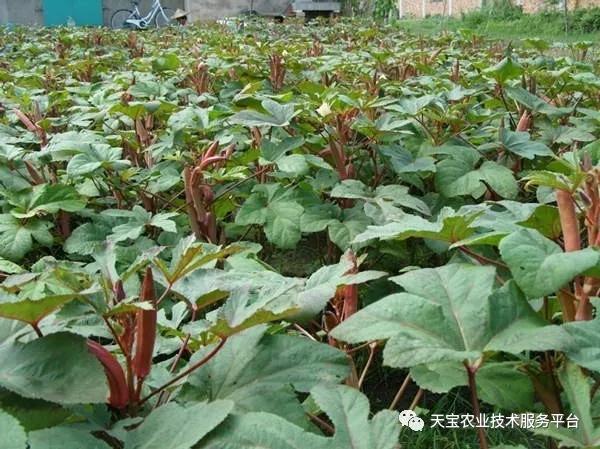
1. Selecting suitable plots: Okra is a short-day plant with strong heat tolerance and a preference for strong light, so sections with good ventilation and abundant sunlight should be selected; its taproot goes deep into the soil, its lateral roots are well developed, and its ability to absorb fertilizer and water is strong, so loam or sandy loam with deep soil layers, loose and fertile soil, and rich organic matter should be selected; it is drought-tolerant and moisture-tolerant, but not tolerant of waterlogging; with slight water accumulation, the leaves turn yellow and the roots rot, so the planting site needs a low groundwater table and good drainage; it should not be planted continuously on the same land, and acidic soil should be avoided, with the best soil pH being 6-6.8; the previous crop is best a vegetable garden, cotton stubble is not suitable for planting, and continuous cropping is also not suitable. (Note: The okra stalks are best crushed and returned to the field on the spot, so as to facilitate the return of certain nutrient elements to the land.)
2. Applying sufficient organic base fertilizer: Apply about 2000kg or more of fully decomposed livestock and poultry manure per mu, spread it on the ground before spring land preparation, then plow it into the soil, rake it fine and mix it evenly so that soil and fertilizer are fully mixed. This can both increase fertility and improve the soil, meeting the needs of its growth and development. (Note: Okra differs from leguminous crops; no rhizobia have been found on its roots, so interplanting soybean may be considered.)
3. Deep plowing in autumn and winter and freezing and sunning the ridges: For the plot prepared for planting okra, after the previous crop is harvested, deep plowing in autumn and winter should be carried out in a timely manner, striving for a plowing depth of more than 25cm, and then the ridges should be fully sunned and frozen, so as to deepen the cultivated soil layer, further loosen the soil, and enhance the soil's capacity to store water and retain fertilizer.
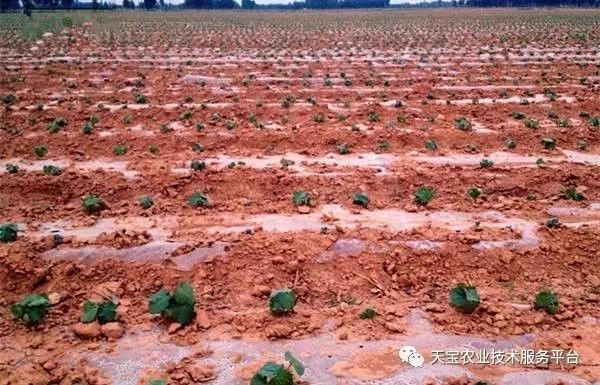
4. Opening furrows and making beds: Prepare the land before spring planting, requiring it to be fine, level, loose and soft, with the top loose and the bottom firm. On this basis, then open furrows and make beds. Generally, the bed surface width is required to be 170cm, the bed furrow width 50cm, and the bed plus furrow together occupy 220cm, with the bed furrow depth about 20cm. In this way, it is conducive to wide-and-narrow row planting and management and harvesting of okra, and ensures smooth drainage, so that the field does not accumulate water and the seedlings are not waterlogged.
III. Direct seeding and seedling transplanting
1. Direct seeding: Okra can be directly seeded, generally with spring sowing being preferable. Because the suitable temperature for its seed germination, plant growth and development, and pod setting is all 22-35°C, its sowing should not be too early; generally direct seeding is better when the soil temperature is stably above 16°C (Note: Sowing at low temperature easily causes seed rot). In the south, where spring temperatures are relatively high, direct seeding can be done after February; in the north, where temperatures are relatively low, the suitable sowing period is in early to mid-May; in the middle and lower reaches of the Yangtze River, sowing in early April; in the coastal areas of Jiangsu and Zhejiang, sowing in late April is preferable (specifically it should be based on the annual temperature changes). Seedling raising and transplanting can also be used; if seedlings can be raised in greenhouses and then field-planted, full and uniform seedlings can be achieved, and the growth period can be extended, which is conducive to high yield and good quality.
2. Greenhouse seedling raising time: 20-30 days earlier than direct seeding in the field.
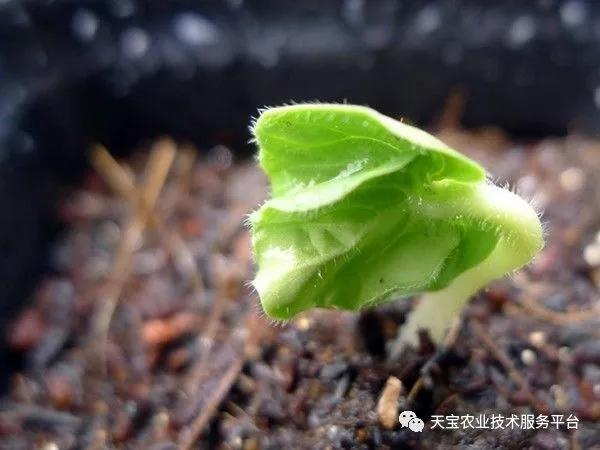
3. Seedling raising method: First, soak the seeds to promote germination. Soak the seeds in warm water for 24 hours, then wrap them in cloth and place them at 25-30°C to promote germination; sow after about 75% have sprouted white. They can be sown in a greenhouse seedling bed (for each mu of seedling bed, spread 20kg of nitrogen-phosphorus-potassium compound fertilizer, work it fine and level it, and make a small low bed running north-south, with a bed surface width of about 1m, a bed ridge height of 4-6cm, and the bed surface required to be higher in the north and lower in the south with a height difference of 10cm, to facilitate light exposure), using about 0.5kg of seed per mu, and covering with fine soil 1-1.5cm after sowing. It is even better if plastic pots, seedling trays, or nutritional pots or bags can be used in the greenhouse. (Note: Okra seeds and sprouts both fear prolonged soaking in water and are prone to rot.)
4. Reasonable close planting: Large-scale planting practice has confirmed that the highest yield is obtained with 4000-6000 plants per mu. The row spacing is 40cm and the plant spacing 15cm (short-stalk varieties should be slightly denser, and tall-stalk varieties can be sparser).
5. Transplanting technique: The key technique when planting is to transplant with soil (this is very important, similar to cotton, which is very afraid of root damage), and its root system should be protected from damage as much as possible. That is, for seedlings raised in seedbeds, more soil should be kept around the roots when lifting the seedlings; for seedlings raised in pots, bowls and nutritional bags, the soil in the bowls, pots and bags should be kept from breaking apart. The seedling age should not be too long, and the seedlings should not be too large; a seedling age of 25 days and seedlings with 2-3 leaves are best; be careful to select strong seedlings of comparable size and remove weak ones; water thoroughly after planting to promote survival.
6. Intercropping and relay intercropping: Taking advantage of the differences in morphology and characteristics between okra and strawberry and Chinese cabbage, scientific intercropping and relay intercropping can be carried out. Still taking the above-mentioned 170cm bed surface with 4 rows of okra planted in wide and narrow rows as an example, sufficient organic base fertilizer should be applied in advance and the land prepared and beds made; in the first year, 2 rows of strawberry are planted at the appropriate time in the wide rows of okra, and Chinese cabbage is planted in time at the positions where okra will later be planted; after the Chinese cabbage is harvested, okra is planted; after the okra grows up, its luxuriant branches and leaves can shade part of the sunlight, creating a superior ecological environment for strawberries to pass the summer. In this way, one harvest becomes three, and the benefit is quite good. (Note: ① In the south, the strawberry season tends to overlap with Chinese cabbage; ② From the perspective of fertilizer efficiency, soybean etc. are also good choices.)
IV. Strengthening field management
1. Skillful application of topdressing: Okra has a long growth period, and its tender pod harvest period can last about 100 days. Therefore, in addition to applying sufficient base fertilizer before planting, topdressing should also be applied skillfully and in a timely manner. That is, after transplanting and establishment, apply a seedling-promoting fertilizer once, using 400g of Jiamei Hongli per mu, mixed with 400kg of clear water and poured at the base of each plant. After entering the flowering stage, apply a flower-promoting fertilizer once, using 10-15kg of Jiamei Yinglilai per mu mixed with about 1200kg of water, poured between the rows. After entering the fruiting stage, apply 1-2 more fruit-strengthening fertilizers, using 15-20kg of Jiamei Yinglilai per mu mixed with about 1500kg of water, poured between the rows. In addition, when entering the flowering and fruiting stages, an 800-fold solution of Jiamei Nao Baijin can also be sprayed on the front and back of the leaves on cloudy days or after 4 p.m. on sunny days, spraying until the leaves are moist. In addition, southern soils are generally deficient in boron, so attention should also be paid to increasing boron fertilizer application, or spraying Jiamei Jinpeng on the leaves.
2. Preventing drought and removing waterlogging: Although okra is a drought-tolerant and moisture-tolerant plant, in high-yield and high-efficiency cultivation, drought prevention and waterlogging removal are still necessary. Therefore, attention should be paid to maintaining soil moisture; especially during the peak harvest period and in high temperature and drought, if drought is found, water thoroughly in a timely manner to improve the yield and quality of tender pods; during the seedling stage it fears waterlogging, so attention should be paid to waterlogging prevention; especially in the rainy season, the furrows should be cleared and drainage carried out, so that throughout the whole growth period it is neither waterlogged nor drought-stricken, always robust, and not prone to premature aging.
3. Intertillage and weeding: After topdressing, watering or rainy days, intertillage and weeding should be carried out in a timely manner to prevent soil compaction; combined with intertillage and furrow clearing, earth should be hilled up around the roots to facilitate root extension, make the plants grow robustly, and prevent lodging. Intertillage, weeding, and hilling can be stopped after the rows close.
4. Pruning and leaf removal: Okra plants (especially short-stalk varieties) will grow many side buds on the lower part. For denser planting with full and vigorous seedlings, too many side branches will affect fruit setting, so side buds should be removed in a timely manner to avoid consuming nutrients and to improve field ventilation and light penetration; if the plants are relatively sparse, only some weak small branches need to be cut off, leaving the thick and strong ones to increase fruiting branches. After entering the full fruiting stage, the plants produce leaves faster, and ineffective old leaves and residual leaves should be removed in a timely manner to facilitate ventilation and light penetration. Okra has deep roots and stable plants, so there is generally no lodging problem; but in southern regions, after summer begins, rainstorms and typhoons are frequent, and there is also the danger of lodging and breaking, so wooden sticks or bamboo poles should be inserted and tied firmly to the main stem to prevent losses.
5. Disease and pest control: Okra has strong resistance, and there are not many diseases and pests; its leaves and leaf stalks have stiff hairs, which can also reduce disease and pest damage; in new vegetable areas, diseases and pests are rarely found. However, attention should be paid to "prevention first, comprehensive control", adopting agricultural, biological, physical and ecological control methods to control the occurrence of diseases and pests. When chemical pesticides really must be used, they should be used scientifically and reasonably to ensure that pesticide residues in the product are below the national standard and that there is no pollution to the ecological environment.
V. Scientific harvesting
Okra begins to flower and set pods when the plant height is about 30-50cm, or when there are 7-8 true leaves; afterward, as long as there is sufficient sunlight, it will continue to flower and set pods. Its harvest period is long, generally 60-100 days.
1. Harvesting standards: The general requirement is that the tender pods should be firm and tough, green in color, fresh and bright, with the seeds beginning to swell but showing no signs of aging. For tender pods for fresh consumption, when the temperature is high the pod length is 7-10cm and the transverse diameter 1.7cm; when the temperature is lower the pod length is 7-9cm and the transverse diameter 1.7cm. For tender pods for processing, those 6-7cm long with a transverse diameter of 1.5cm are Grade A; those 8-9cm long with a transverse diameter of about 1.7cm are Grade B; pods more than 10cm long are substandard. Whether for fresh consumption or processing, the pod length should not exceed 10cm. (Note: This is for reference only; in practice there are correlated differences with climate, fertility and variety.)
2. Harvesting time: Generally, harvesting should be done within 3-7 days after the flowers fade (Note: This is proportional to temperature; in high-temperature
weather, usually not more than about three days). When the temperature is high, the tender pods grow quickly and need to be harvested every day or every other day; when the temperature is lower, harvest once every 2-3 days. It is best to cut and harvest every morning, when the tender pods appear more fresh and tender. 3. Harvesting method: Harvesters should wear long trousers and long-sleeved shirts, and wear gloves, to prevent stinging of hands and legs; use scissors to cut at the fruit stalk, and never tear or pick by hand, to prevent damage to the plant; be careful to cut cleanly and not miss any; if any are missed or harvested late, not only will the single pod be old and of poor quality, affecting eating and processing, but it will also affect the growth and development of other tender pods. After harvesting, they should be sent immediately to a processing plant for quick freezing or sold immediately on the market; tender pods left overnight will quickly become lignified, and their appearance and quality will be affected.
4. Post-harvest preservation: Tender pods have strong respiration and are very prone to turning yellow and becoming old after harvest. If they cannot be eaten or processed in time, attention should be paid to preservation. That is, put the tender pods into plastic bags, cool them in flowing cold water at 4-5°C for 10 minutes until they reach about 10°C, then store them at 7-10°C with a relative humidity of 95%, and they can be kept fresh for 7-10 days. For tender pods shipped to other places, the fruit stalks must be cut evenly in the morning, put into fresh-keeping bags or plastic boxes, then gently placed in cartons or wooden boxes, and sent as soon as possible to a 0-5°C cold storage for pre-cooling to await transport. If the tender pods become dark, wilted, soft and yellow, they should be handled immediately and should no longer be stored.
This article was edited and compiled by the Guotai Jiamei technical team
References:
"What are the prospects for okra planting? Is it profitable to plant now?" Heilongjiang Economic Daily
"High-yield cultivation techniques for okra" Okra Information Network
"Analysis of okra planting costs and benefits" Hunan Yongsheng Agriculture
Editor for this issue: Guo Jiawei, Chen Fang