Vegetables grown in the countryside without pesticides - city dwellers are in luck when buying groceries
Previously, the editor photographed one installment of their own vegetable garden, where the vibrant green vegetables looked tempting and healthy. Compared with summer, the winter vegetable garden is a bit simpler, mainly just leafy greens - the kind whose leaves you can eat. If it snows, the snow wrapped inside the cabbage looks quite beautiful.
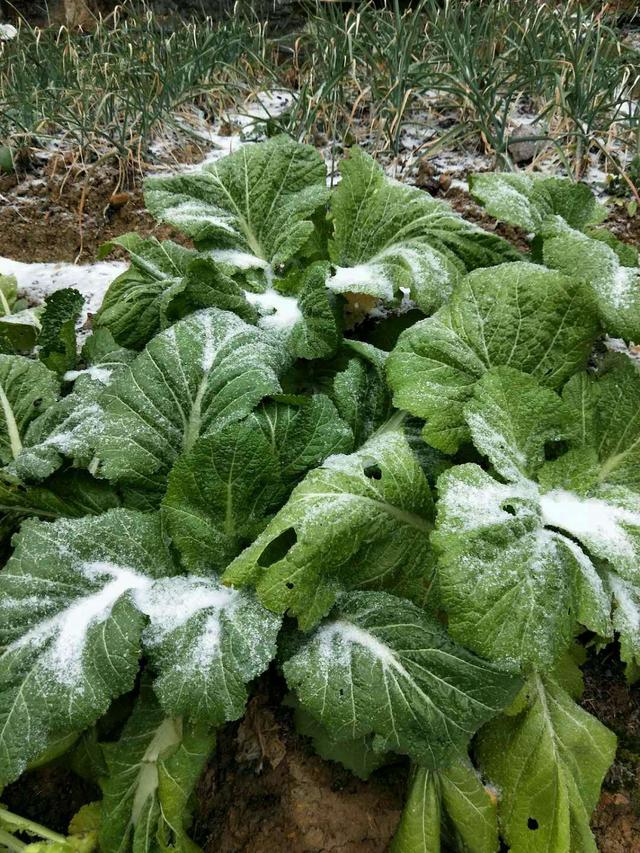
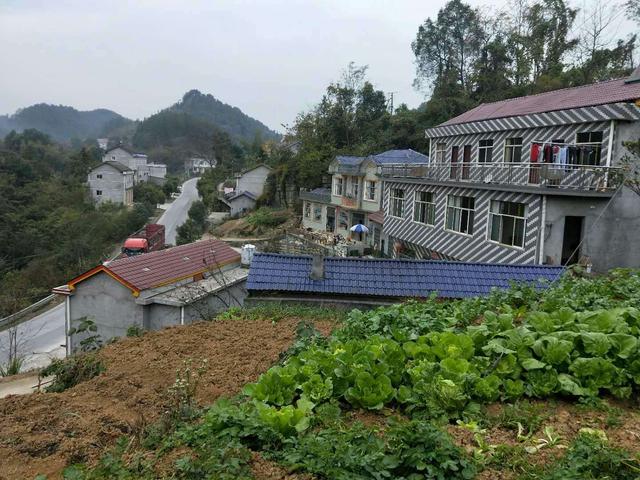
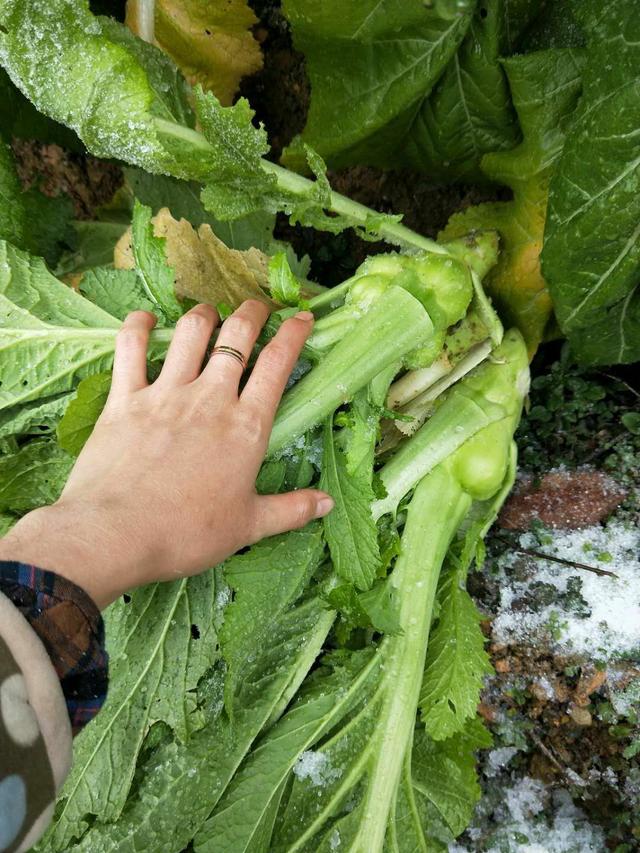
Kohlrabi (wo cai)
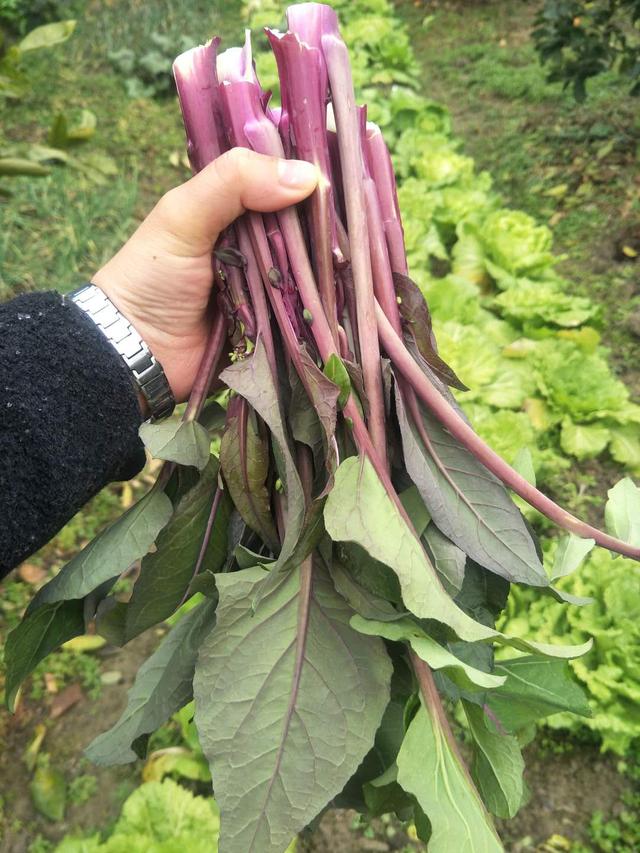
Red choi sum
Actually, green vegetables refers to the general term for pollution-free, safe, high-quality, nutritious vegetables that are allowed to use the green food label, provided the ecological environment of the production area is good. In this sense, vegetables grown at home in the countryside cannot all be lumped together as green healthy vegetables. Of course, the yards where ordinary farming households grow vegetables are usually right next to their homes, so the ecological environment and natural fertilizers are relatively abundant. Some families do not spray pesticides on the vegetables they eat themselves, but in fact, because some insects like to eat vegetable leaves and also like to nibble on melons and fruits, ordinary rural vegetable gardens still need to be sprayed with pesticides. The editor remembers that chili peppers, cucumbers, bok choy, eggplants and the like all need to be sprayed with pesticides when they are flowering, fruiting and growing leaves, and after they mature, people generally wait until after a heavy rain before picking them to eat, so that after the rain washes them, most of the pesticide residue is gone.
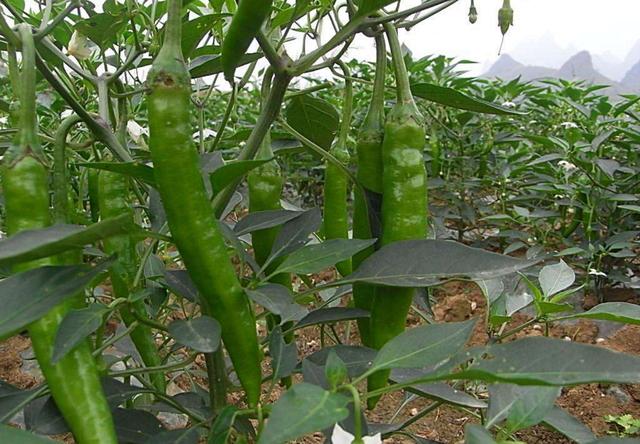
Chili peppers
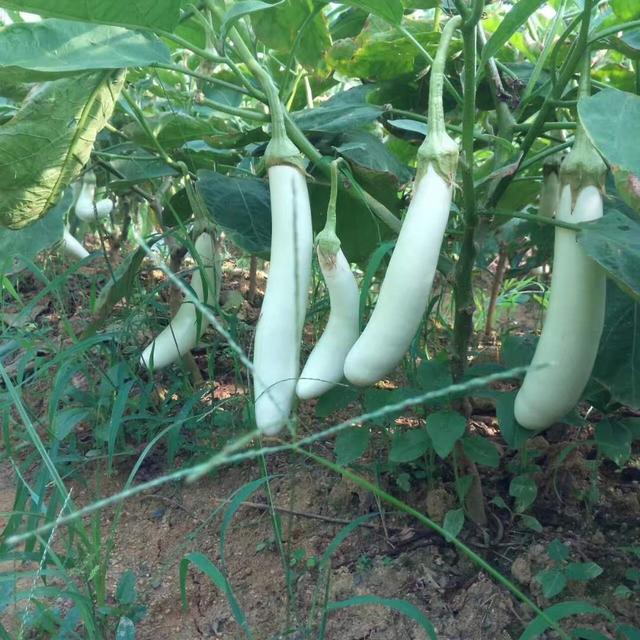
Eggplant
Cucumber
Bok choy
Ordinary rural households spray a bit of pesticide on vegetables to prevent pest damage, so what about the vegetables supplied to city dinner tables? You can imagine. For those vegetables sold in supermarkets or wet markets, you really cannot guarantee that they have not been sprayed with pesticides, and it is hard to guarantee whether there is pesticide residue. However, after living in the countryside for so many years, the editor has still found that some vegetables are absolutely never sprayed with pesticides, and are fertilized only with organic fertilizers such as manure. Today the editor can list several kinds of vegetables that are absolutely never sprayed with pesticides in the countryside. If you live in the city, then next time you go to the supermarket or wet market to buy vegetables, you can choose the following kinds - ones that have not been sprayed with pesticides.
Potato (yang yu)
The holes for planting potatoes
Freshly dug potatoes
Purple potatoes
Potatoes grow in the soil, and they are not prone to getting worms either, so generally no pesticides are sprayed. The dug-up potatoes are all covered in soil, though they may also have some fertilizer stuck to them. In fact, potatoes are planted on a large scale in the countryside and are not worth much money, and generally they are not taken to sell either, so many farming households will not spend money on pesticides, and even if they do spray, it will not remain on the tubers in the ground.
Pumpkin (bei gua)
Pumpkin leaves
Pumpkin flowering and fruiting
Pillow pumpkin
Small pumpkin
Old bei gua
Stir-fried old bei gua (has a sweet taste)
In the editor's area, pumpkin is also called bei gua. It originated in the region from Mexico to Central America, and is now widely cultivated around the world. Pumpkin seeds contain cucurbitine, which has the effects of clearing heat and removing dampness and expelling parasites, and has a controlling and killing effect on schistosomes. Actually, pumpkins do suffer from pests, but in the editor's impression, the pumpkins we grew were never sprayed with pesticides, and I do not know why. Perhaps it is because its growing environment is relatively simple - casually toss a few seeds into the vegetable garden, and they can grow very well even on a terrace edge. There are many types and shapes of pumpkins. In fact, most of the time in the countryside, aside from eating some tender pumpkins (zi bei gua), most pumpkins are left to mature into old bei gua to feed pigs, so spending money on pesticides is not worth it either.
Garlic
Strictly speaking, garlic does not count as a vegetable; it is only used as a cooking seasoning. Garlic has a strong smell, and some people cannot even stand to smell it, let alone small insects, and half of it also stays in the soil, so pesticides are rarely sprayed on it. Moreover, because garlic leaves are often picked to cook with noodles, it generally regrows quickly, so pesticides are not sprayed either.
Water spinach
Water spinach originated in China, and is widely cultivated as a vegetable, or sometimes also grows wild. It is commonly cultivated in the central and southern provinces. Although water spinach has relatively many diseases and pests, it is generally not sprayed with pesticides, mainly because its growing season is in spring, when there are not yet many diseases and pests, and the temperature is also relatively low, which is not suitable for insect growth. In addition, it is harvested and regrows relatively quickly, and sometimes it is harvested before the insects even show up. However, if pesticides are ever sprayed, this vegetable ranks first among vegetables in pesticide residue, so every stem must be carefully washed.
Luffa
Luffa and dried shrimp soup
The dried luffa sponge can be used for kitchen cleaning
Luffa is commonly cultivated in both northern and southern parts of China. It is also widely cultivated in temperate and tropical regions of the world. Having a bowl of luffa soup in summer is very refreshing. Luffa easily attracts mosquitoes and insects, but it is also generally rarely sprayed with pesticides, mainly because luffa itself is relatively "delicate" - with a little pesticide, the pests may not die but the plant itself may be killed by the pesticide first.
Radish
White radish
Radishes are grown all over the world. In areas with suitable climate conditions, they can be grown in all four seasons, and in most areas autumn cultivation is dominant, making them one of the main vegetables of autumn and winter. It is precisely for this reason that the growing season is also relatively cold, which is not suitable for mosquito and insect activity, and since they grow in the soil, there are relatively few diseases and pests, so no pesticides are needed.
Green radish
It can be said that the entire radish plant is a treasure throughout its growth process, and all of it can be eaten. Radish greens and radish sprouts can be used to make soup, and can also be boiled together with he zha. Radishes can be stewed with cured ribs, radish greens can be used to make salted vegetables, and large radishes can also be made into appetizing pickled radish.
Radish greens
Radish sprout soup
He zha
Radish greens
Salted radish greens
Radish stewed with ribs
Pickled radish
Crown daisy
Crown daisy was a palace delicacy in ancient China, so it is also called emperor's vegetable. It also has different names in different places, such as tong hao, peng hao, hao cai, chrysanthemum greens, tang hao, hao zi gan, hao zi, peng hua cai, tong hua cai and so on. It has the fresh fragrance of mugwort and the sweet scent of chrysanthemum. The editor personally very much likes eating this, but some people do not like its taste. Because it itself has a relatively unique smell and comes with pest-repellent qualities, it also does not need pesticides.
Dear friends, do you like eating these vegetables? In fact, to sum up, these vegetables either grow directly in the soil, or grow in a season unsuitable for mosquito and insect breeding, or have a unique smell that can repel insects, so pesticides are rarely sprayed on them. If you live in the city, when buying vegetables you might as well choose more of these. Of course, China's rural areas are vast, and there are certainly other vegetables in different places that also do not need pesticides. You are welcome to add more and leave comments for discussion!