Improper pesticide mixing can easily render the pesticide completely ineffective; nine methods to effectively avoid pesticide damage
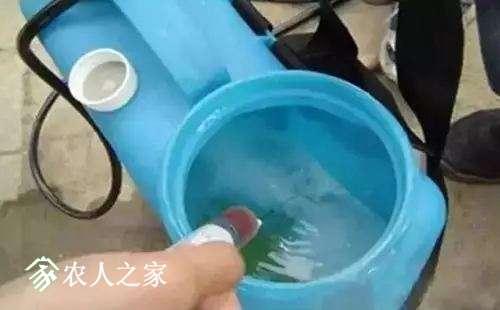
Reasonable mixing of pesticides can improve control efficacy, delay pest and disease resistance, improve control efficacy, and reduce the amount of pesticide used. Mixing pesticides for different pests and diseases can also reduce the number of applications, thereby lowering labor costs. If the mixing is unreasonable, it can be dangerous: at best the pesticide becomes completely ineffective, and at worst it causes pesticide damage. I. Order of Pesticide Mixing ① The order of pesticide mixing must be accurate. The usual order for mixing foliar fertilizers with pesticides is: micronutrient fertilizer, water-soluble fertilizer, wettable powder, water-dispersible granule, suspension concentrate, microemulsion, emulsion in water, water, and emulsifiable concentrate added in sequence (in principle, do not mix more than three pesticides). After adding each one, stir thoroughly to mix evenly, then add the next one. ② Add water first, then add the pesticide. When performing two-stage dilution mixing, it is recommended to first add more than half a bucket of water to the sprayer, add the first pesticide, and mix well. Then, pre-dilute the remaining pesticide in a plastic bottle, pour the diluted mixture into the sprayer, and mix well. Repeat in this manner (if you want good efficacy, do not cut corners). ③ No matter what agents are being mixed, always remember to "mix and use immediately, and do not leave standing for long." Although the solution may show no reaction when freshly mixed, this does not mean it can be left standing for a long time; otherwise, slow reactions can easily occur, gradually reducing efficacy. II. Principles of Pesticide Mixing ● Mixing pesticides with different toxic mechanisms: Mixing pesticides with different modes of action can improve control efficacy and delay pest and disease resistance. ● Pesticides with different toxic actions: Insecticides have modes of action such as contact poisoning, stomach poisoning, fumigation, and systemic action; fungicides have modes of action such as protective, curative, and systemic action. If these agents with different control functions are mixed, they can complement each other and produce very good control efficacy. ● Mixing insecticides that act on different insect stages: Mixing insecticides that act on different insect stages can kill pests at various stages in the field, achieving thorough pest control and thereby improving control efficacy. ● Mixing pesticides with different durations of efficacy: Some pesticides have good fast-acting control efficacy but a short residual period; some have poorer fast-acting efficacy but a long duration of action. Mixing such pesticides not only gives good efficacy after application but can also provide long-term control. ● Mixing with synergists: Although synergists have no direct toxic effect on pests and diseases, mixing them with pesticides can improve control efficacy. ● Mixing pesticides that act on different pests and diseases: When several pests and diseases occur simultaneously, using this method can reduce the number of spray applications and reduce working time, thereby improving efficiency. III. Precautions for Pesticide Mixing Although pesticide mixing has many benefits, never mix at random. Unreasonable mixing is not only unhelpful but can produce the opposite effect. The following points must be noted when mixing pesticides. ● Do not change physical properties That is, after mixing, there must be no floating oil, flocculation, precipitation, or discoloration, and no heat generation or bubbles. If all are powders, or all are granules, fumigants, or smoke agents, they can generally be mixed; Between different formulations, such as wettable powders, emulsifiable concentrates, concentrated emulsions, suspension concentrates, and water-soluble liquids that use water as the medium, they should not be mixed arbitrarily. ● Do not cause chemical changes ① This includes that many agents cannot be mixed with alkaline or acidic pesticides. Under alkaline conditions such as Bordeaux mixture and lime sulfur mixture, carbamate and pyrethroid insecticides, and dithiocarbamate fungicides such as thiram and zineb are prone to hydrolysis or complex chemical changes, thereby destroying their original structure. ② Under acidic conditions, 2,4-D sodium salt, MCPA sodium salt, and amitraz will also decompose, thereby reducing efficacy. ③ In addition to acidity and alkalinity, many pesticide varieties cannot be mixed with agents containing metal ions. ④ Mixing dithiocarbamate fungicides and 2,4-D herbicides with copper preparations can generate copper salts and reduce efficacy. ⑤ Thiophanate-methyl and thiophanate can complex with copper ions and lose activity. ⑥ Apart from copper preparations, other preparations containing heavy metal ions such as iron, zinc, manganese, and nickel should be mixed with particular caution. ⑦ Mixing lime sulfur mixture with Bordeaux mixture can produce harmful copper sulfide and also increase the content of soluble copper ions. ⑧ Propanil, butachlor, and others cannot be mixed with organophosphorus or carbamate insecticides; some chemical changes may cause pesticide damage. ● Pesticides with cross-resistance should not be mixed For example, the fungicides carbendazim and thiophanate-methyl have cross-resistance. Mixing them not only fails to delay the development of pathogen resistance but instead accelerates the development of resistance, so they must not be mixed. ● Biological pesticides cannot be mixed with fungicides Many pesticide fungicides are lethal to biological pesticides; therefore, microbial pesticides and fungicides must not be mixed. IV. Nine Effective Methods to Avoid Pesticide Damage 1. Before spraying, read the instructions on the pesticide bottle clearly Understand the nature of the pesticide and the pests and diseases it targets. Most pesticides currently on the market are mixed formulations. That is, organophosphorus pesticides mixed with pyrethroid pesticides, or formulated with biological agents, or insecticides and acaricides mixed with diesel (machine oil); in some cases, the same pesticide variety has different trade names because it is produced by different manufacturers, and so on. 2. Avoid mixing multiple pesticides together For a single disease or pest, use one pesticide for control as much as possible, and avoid mixing multiple pesticides. When two pests or diseases occur, choose a pesticide with simultaneous control action for spraying. Because in a given amount of water, the more types of pesticides added, the higher the concentration will be, and the greater the possibility of pesticide damage. Among them, there may also be pesticides of the same variety. 3. Do not arbitrarily increase the spray concentration of pesticides 4. Avoid spraying pesticides at noon under high temperature and strong sun Spraying emulsifiable concentrates in high-temperature weather causes pesticide damage 5. Pay attention to the use of oil-containing and alkaline pesticides When spraying oil-containing pesticides (diesel, machine oil) or strongly alkaline pesticides (Bordeaux mixture, lime sulfur mixture, rosin soap, etc.), pay close attention to air temperature, season, and the phenological period of citrus trees. For example: during the first physiological fruit drop period after flowering, try not to spray machine oil emulsion pesticides to avoid increasing the number of dropped fruits. After rainy weather, do not immediately spray Bordeaux mixture when the citrus trees are wet. 6. Use of agents poorly soluble in water and growth regulators Some pesticides poorly soluble in water should first be mixed with a small amount of water to make a stock solution, and then diluted for spraying. When spraying growth regulators, some varieties also need to be dissolved first with alcohol. 7. Use clean water for spraying Use clean water for spraying; do not use sewage or well water to dilute pesticides. 8. Mix and use immediately After some pesticides are mixed, they should be sprayed completely promptly and not left for use the next day. Pesticides that cannot be mixed should not be forced together. 9. Pay attention to the use of herbicides When spraying herbicides, varieties that have no effect on the citrus tree root system must be selected, and when spraying, avoid drifting spray mist onto the branches and leaves of citrus trees. It is recommended to use glufosinate and similar products for orchard weed control to reduce the use of glyphosate. |