Which fruits and vegetables have high pesticide residues? Save this buying guide
There are all sorts of claims about pesticide residues in fruits and vegetables.
Water spinach is the vegetable that absorbs pesticides and heavy metals the most; abroad it is used to purify soil, and nobody eats it;
Cucumbers with a small yellow flower on top have all been sprayed with pesticides;
Strawberries have particularly high pesticide residues;
……
These claims leave consumers muttering to themselves: can these vegetables and fruits still be eaten? How can you buy fruits and vegetables you can eat with peace of mind?
Do these fruits and vegetables really have especially high pesticide residues?
Many articles that "analyze" pesticide residues in fruits and vegetables use data from EWG, an American environmental organization, as evidence. They do indeed publish a ranking of pesticide residues every year.
In the image below, the left side shows the 12 "dirtiest" fruits and vegetables, while the right side shows the 12 "cleanest" ones.

I won't translate them one by one, because...
This is actually a seriously misleading list.
EWG is neither a government regulatory body nor an academic institution, but merely a private organization that advocates for environmental protection.
The data source for their "Dirty Dozen" fruits and vegetables ranking is the USDA's pesticide residue testing database. The results of the USDA's latest report are:
No pesticide residues were detected in 15% of the samples, and in 99% of the samples the pesticide residue levels were far below the standards set by the Environmental Protection Agency (EPA). Samples with residues exceeding the standard accounted for only 0.53% of the total number of samples.
To put it simply:Pesticide residues in conventionally grown fruits and vegetables are not worth worrying about.
So there is no such thing as a ranking table of pesticide residue levels in fruits and vegetables. When choosing fruits and vegetables, just buy whatever you like; there is no need to agonize over which vegetables or fruits are said to have more pesticide residues.
Because fruits and vegetables bought at legitimate supermarkets and markets do not contain enough pesticide residue to harm your health.
Why must pesticides be used?

China's cultivated land area has been decreasing year by year, but our grain yield per unit of land area has been increasing year by year.
Why?
Because of technological progress. Selective breeding, pesticides, chemical fertilizers, agricultural mechanization and preservation technology are all indispensable.
Pesticides are mainly used to kill weeds and pests; without them, yields would drop and grain and vegetables would become more expensive. Also, there is no need to panic the moment you hear "pesticide residues." If a food does contain pesticide residues but they are low enough, then it is fine.
The research direction of modern pesticides is designed to be non-toxic to humans. Moreover, through a large number of experiments, researchers take both acute toxicity and chronic toxicity into account and calculate a harmless value.
This value balances the benefits of killing pests and weeds against the risk of pesticide residues.
In reports about serious cases of excessive pesticide residues in fruits and vegetables, strawberries, Chinese chives, water spinach and the like appear very frequently.
But what is the truth? Take strawberries as an example.
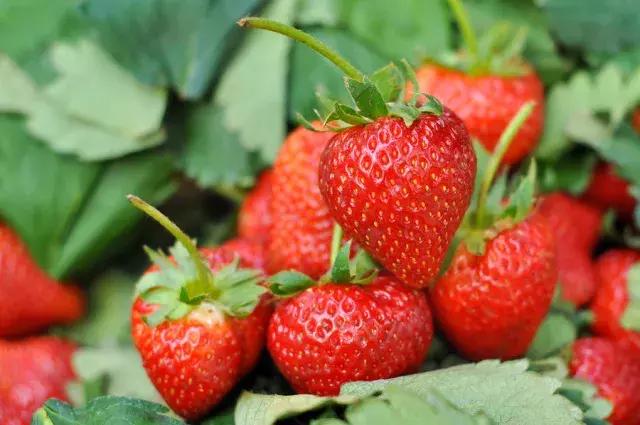
Strawberries rarely have "excessive pesticide residues."
The news about "strawberries exceeding pesticide residue limits" that caused a big stir two years ago was later proven to be theoretically impossible, and the actual detection methods were unreliable; even large-scale testing organized by the government never found any such cases.
It was just fake news!
These 3 methods are very effective for removing pesticide residues
Everyone's concern about pesticide residues is understandable; people think fruits and vegetables contain "excessive pesticide residues," so they need to do something to "remove" them.
If you really cannot set your mind at ease, then here are 3 more methods to thoroughly remove that last little bit of possible pesticide residue.

1. Rinsing
Rinse and rub under running water for more than 30 seconds.
For example, when cleaning strawberries, do not cut them; just rinsing under running water is enough.
Other more complicated and fancier-sounding cleaning methods, such as salt water, alkaline water, flour water, ozone, ultrasound or complex enzymes, merely make you feel more reassured psychologically and may not be of much real use.
2. Peeling
If there are pesticide residues, they are basically all in the skin. Many people are reluctant to give up "the nutrients in the skin," but there really are not many; whether to peel or not is up to you.
3. Heating
Ordinary heating can promote the degradation of pesticides.
Most vegetables, whether water spinach, Chinese chives or Chinese cabbage, are eaten after being cooked.

Try to buy vegetables and fruits through legitimate channels, then wash them clean and cook them properly. Avoiding pesticide residues is actually not complicated.
Overall, everyone can eat fruits and vegetables with peace of mind. Rest easy.
Found this useful? Remember to save, forward and share it!