Applying pesticide fungicide as a root drench: the dosage ratio must be precise
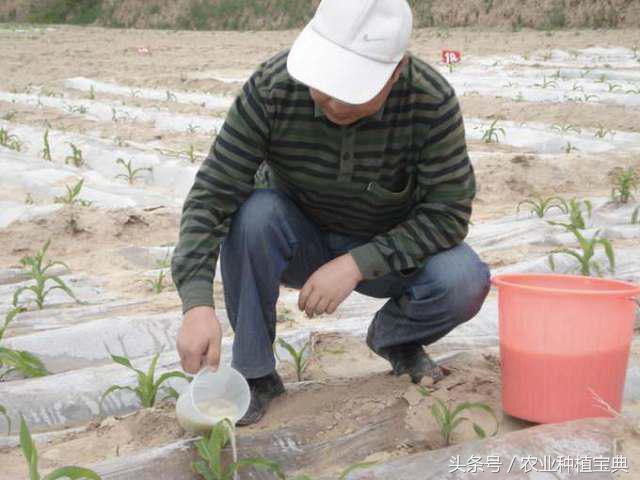
It is now winter, the temperature in the greenhouse is low and the humidity is high, and crop pests and diseases increase accordingly. Root diseases of crops are one important category among them. To prevent and control root diseases of crops, drenching the roots with chemicals is a commonly used method. If you do not grasp the correct methods and precautions, when drenching roots with pesticides or fungicides, it is very easy to fail to achieve the desired effect, and side effects may even occur.
So, how should we correctly carry out root drenching?
I. Grasp the correct timing for root drenching
If crops are to have fewer diseases, prevention must be done in advance, and the same goes for root drenching. Do not wait until disease occurs to drench; it should be done at the time of transplanting and seedling recovery. Chemical root drenching is like watering with clean water, and it also has weather requirements. Be sure to choose a period of several consecutive days of fine weather for root drenching, and it is better to carry out the root drench after 10 a.m.
II. Grasp the strength of the chemical concentration
If the concentration is too low it is ineffective, while if it is too high it will instead damage the roots. Therefore the concentration must be adjusted according to specific circumstances so that the chemical can be fully used and the disease-prevention effect can be achieved. For example, vegetable seedlings have few roots and they are tender, with low tolerance to chemicals, so at this time the concentration should be lowered, otherwise the young roots are easily damaged. But in winter, because the ground temperature is low, the concentration should be slightly higher to achieve a better effect.
III. Grasp the amount of chemical solution properly
In actual root-drenching operations, growers often drench each plant with half a jin of chemical regardless of whether it is a small seedling or a mature plant, which is incorrect. For small seedlings, half a jin of solution is not only wasteful but also causes root damage; in fact, 2 liang is enough. For mature plants in full fruit stage, half a jin of solution instead cannot soak through to the plant's main root system, so it is clearly insufficient, and thus cannot play a very good role. For the fine capillary roots in the deep soil layer in fruit-tree areas, half a jin of solution simply cannot soak into the deep root system, so it cannot achieve a sterilizing effect. Compared with the main root system, capillary roots are more susceptible to bacterial infection, and without the soaking protection of the chemical solution, they cannot achieve a sterilizing effect. Therefore, the amount of solution for root drenching should be reasonably increased so that the disease-prevention effect is good.
IV. The dosage ratio must be precise
Be sure to follow the instructions and prepare a precise concentration for root drenching. By all means do not estimate by feel, so as to avoid poor root-drenching results or even chemical damage.
V. When drenching roots, the microorganisms in the soil must also be taken into account
This is mainly for root drenching in greenhouses where bacterial fertilizer has been used, to prevent the root-drenching chemical from destroying the biological community and ecological balance and killing the beneficial bacteria in the biological bacterial fertilizer. It is best not to use fungicides for root drenching. Or, one week or two weeks after root drenching, apply fertilizer containing microorganisms to supplement the microorganisms. If the root disease is severe, these considerations must be set aside, and root drenching for sterilization is necessary, with microbial fertilizer applied afterward.
In addition, the following matters must also be noted when drenching roots:
1. After using a fungicide for root drenching, if chemical damage occurs, watering can be used as a remedy. Generally, quickly run a small amount of water once to dilute the concentration of the chemical in the soil, then spray some hormone-type chemicals for seedling recovery and seedling promotion to help the plant quickly recover its growth.
2. Ensure that the chemical solution quickly and comprehensively reaches the diseased site. For example, for diseases occurring at the stem base, such as Phytophthora root rot and stem base rot, you can directly spray the stem base and then carry out root drenching.
3. Generally, do not water immediately within a few days after root drenching, otherwise it will dilute the concentration of the chemical solution or even wash it away, and it will not achieve the true effect of sterilizing and treating the disease.
4. Do not water in the few days before using a fungicide for root drenching either. Once root disease of the crop has occurred, watering will cause the pathogens to spread with the water, causing infection over a larger area and more plants to become diseased. Watering also easily leads to decreased soil aeration, root oxygen deficiency, and root rotting. Stress resistance decreases, pathogens are more likely to infect, after root drenching the chemical solution is harder to penetrate downward, and the concentration of the chemical solution is also lowered.
Through the above introduction, I hope it can help you make better use of chemical solution root drenching to achieve disease prevention and treatment effects and promote healthy, robust crop growth.
Agricultural Information News