The full dental implant process explained clearly in 6 steps
Many people today are already familiar with dental implants, but they still do not quite understand the principles behind them or the implant process. Below, Dental Care Jun takes a look with you
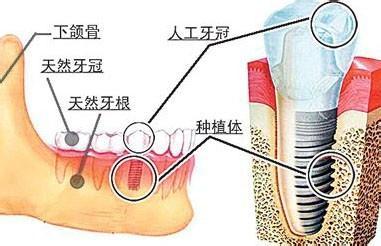
1. Oral examination
First, the necessary oral examination, auxiliary radiographic imaging examinations and systemic biochemical index tests are carried out. This is mainly to find out whether the patient has alveolar bone resorption in the missing tooth area and how severe the resorption is, the remaining bone volume and bone density, whether there is chronic inflammation, etc., and to rule out systemic contraindications.
2. Implant surgery
It must be completed under strictly sterile conditions. After anesthesia, the mucoperiosteum of the missing tooth area is incised to expose the alveolar bone, and a hole is prepared step by step in the alveolar bone at the corresponding site of the missing tooth, and the implant is placed. If bone grafting is needed, it can be done at the same time, the incision is tightly sutured, and the sutures are removed after about 10 days.
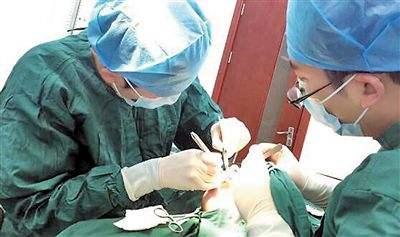
3. Waiting for the bone integration period
After implant surgery, follow-up examinations are carried out every 1~2 months, and radiographic imaging is used to observe whether the bone integration condition is normal. Zhang Qiang said that the length of the bone integration period varies from person to person, by implant system, and by bone condition; it is generally 3~6 months, and a small number of patients with poor bone condition need to wait more than half a year.
4. Installing the healing abutment
The abutment is an auxiliary device for the implant in dental restoration; after the implant is surgically placed, the abutment will also be permanently attached to that implant through surgery. Li Jiang said that this step is to extend the abutment outside the gums, forming the part that passes through the gums, to fix the denture and other corrective objects (restorations). Then, wait for the soft tissue to take shape. This process takes 2~3 weeks.
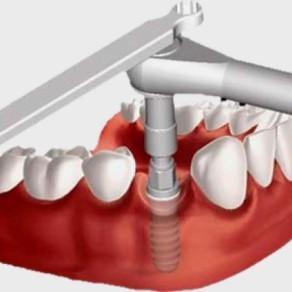
5. Taking impressions
Take impressions to make the implant-supported denture. After the gingival tissue around the implant heals for 6~8 weeks, remove the healing abutment, attach the transfer coping, take the impression, and make the upper crown.
6. Wearing the implant crown
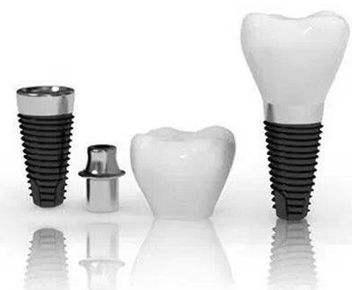
The crowns that fix implant-supported dentures are mainly of two types: all-ceramic and porcelain-fused-to-metal. According to different product brands and their biological and mechanical properties, there are many types at different price points for consumers to choose from.
The above is the treatment process for most dental implants at present, which generally takes as long as half a year. However, some advanced dental implant technologies are much faster. For example, the currently emerging "minute-by-minute implant" dental implant technology of the Yangcheng Koufu Grand Action public welfare implant program can place one tooth in 3 minutes, and the teeth can be used the same day, greatly shortening the time, and the surgery is minimally invasive and painless, comfortable and convenient.