How to Grow Bleeding Heart Vine? A Detailed Guide to Practical Growing Tips
[Introduction]Bleeding heart vine (Clerodendrum thomsoniae) is a perennial plant in the Verbenaceae family, native to West Africa, and is a potted climbing flowering plant. It needs plenty of water during the growing season, and at each flowering season it should be fertilized once every 7-10 days. To grow a perfect potted bleeding heart vine, the height of the branches must be strictly controlled during the growing season, and the shoots should be pruned and cut back to promote the growth of the bleeding heart vine.
How do you grow bleeding heart vine? I believe many people are not very familiar with it, and it has not been cultivated in our country for very long. Next, let us learn about the growing tips for bleeding heart vine together!
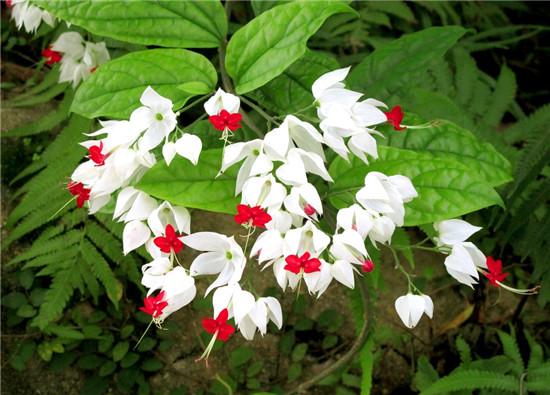
Bleeding heart vine is a perennial plant in the Verbenaceae family. Generally, potted plants stay quite short because of the restrictions of pruning. In fact, it is a semi-vining climber, and its branches can reach over one zhang (more than 3 m) in length. This flower is relatively easy to grow, produces a large number of blooms, and has very few pests and diseases, making it most suitable for home cultivation. If it is pruned promptly after the flowers fade in summer, it can be expected to bloom a second time before the end of the year.
Bleeding heart vine is native to West Africa and is now widely cultivated as a potted climbing flowering plant. It prefers a warm, semi-shaded and humid environment. The overwintering temperature should be above 15°C; prolonged exposure below 10°C can cause leaf drop and even death. It is propagated by sowing or cuttings (propagation methods); the seeds have a short lifespan and should be sown immediately after collection.
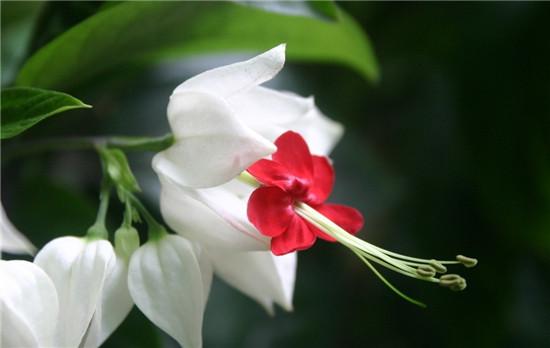
Bleeding heart vine is a flowering plant with a very long flowering period. It is best grown in fertile, well-drained, slightly acidic sandy loam. Potted bleeding heart vine is generally repotted once every 1-2 years, and repotting can be done either in early spring or after the flowers fade. When repotting, first cover the drainage hole with broken tile pieces, then add a small amount of bone meal as a base fertilizer, then fill in new potting soil (4 parts leaf mold, 4 parts garden soil, 2 parts sand). Plant the specimen well, leaving 2-3 cm of rim at the top for fertilizing and watering. After repotting, water thoroughly and place in a shaded spot for the plant to recover; after it has recovered, move it to a spot with plenty of sunlight for care.
Bleeding heart vine should not be fertilized too much. During the flowering season, apply once every 7-10 days a diluted, well-rotted cake fertilizer solution, and 3-4 consecutive applications are enough. If yellowing is observed during the cultivation of bleeding heart vine, apply 0.2% ferrous sulfate solution together with the topdressing, and the leaves will gradually turn from yellow back to green.
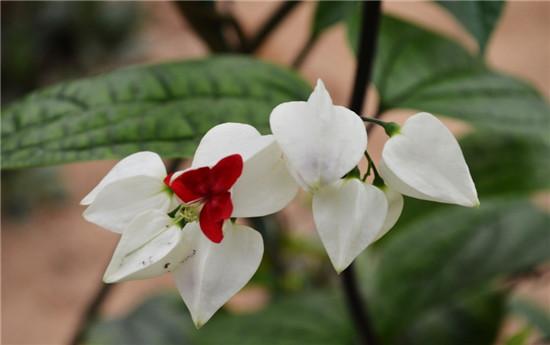
Potted bleeding heart vine is commonly grown in 12-15 cm pots, with 3 plants per pot. It needs plenty of water during the growing season. If the soil is too wet, the leaves will turn yellow and drop; if the branches do not wither, stop watering and let it recover and produce new leaves.
Fertilize once every half month. During the flowering season of bleeding heart vine, apply 1-2 additional applications of phosphorus-potassium fertilizer, or use "Huiyou" 20-8-20 all-season high potassium nitrate fertilizer. In winter, reduce watering and stop fertilizing.
To create a graceful plant shape for bleeding heart vine, when potted cutting seedlings or seedling plants have grown to 15 cm, cut the stems 10 cm above the pot rim to encourage the growth of sturdy new shoots. During the growing season, strictly control the height of the branches and pay attention to pinching out the tips so that the branches are neat and flowering will be dense in the future. Half a month after pinching, apply daminozide or chlormequat to control plant height, achieving a short plant, lush leaves and abundant flowers.
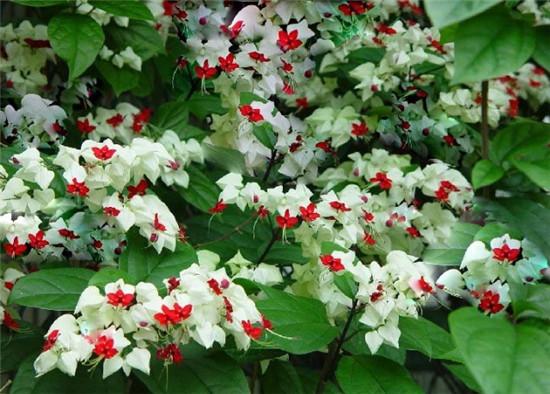
Every spring when repotting, prune and cut back the above-ground branches so that the plant is rounded and compact, with more branches and more flowers.