What are the management methods after planting agarwood trees?
(1) Initial management
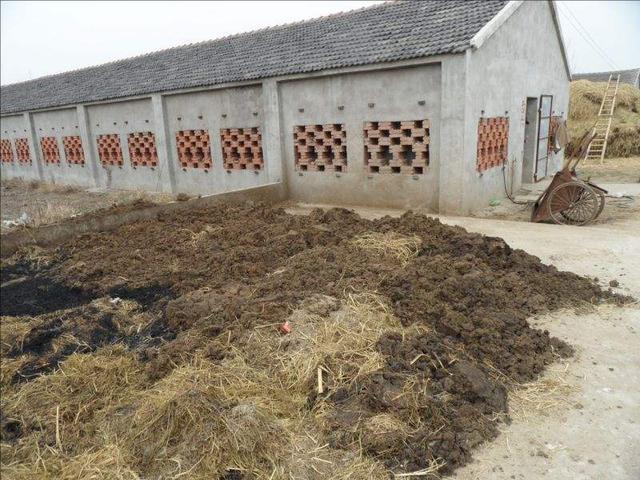
In the early stage after planting agarwood trees (Aquilaria spp.), attention must be paid to preventing drought, and they should be watered promptly according to weather conditions. During the sapling stage, weed and loosen the soil once each year in February to March, June to August, and October to November. During the young tree stage, apply fertilizer 2 to 3 times per year in conjunction with weeding. In the dry season, apply a light dressing of diluted human and livestock manure water or ammonium sulfate or urea mixed with water. In the rainy season, open furrows around the planting holes and apply organic fertilizer mixed with superphosphate; for mature trees, open furrows and apply additional organic fertilizer and green manure. When agarwood seedlings are small, the tree body is small and also requires a certain degree of shade, so it is best to plant several rows of legume crops such as red beans or mung beans between the rows, appropriately controlling their height and density so they do not overly shade the agarwood. To help the main trunk grow straight and to facilitate artificial agarwood formation, prune once each year in autumn and winter, removing side branches on the lower part of the stem, diseased and weak branches, and overly dense branches. In the first year, pruning should be light: simply cut off the side branches on the tree head, diseased and insect-damaged branches, weak branches, and overly dense branches; do not excessively remove all side branches, as this will affect growth. Thereafter, as time passes and the young trees gradually grow taller, gradually prune upward. Some side branches are best removed in two cuts: the first cut removes half, so as to maintain a certain leaf area, and the second cut removes them flush with the trunk.
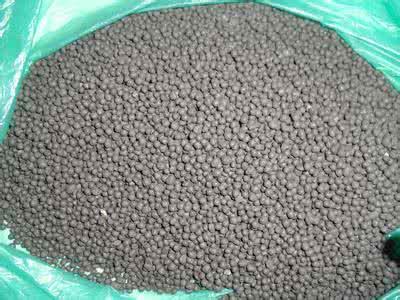
Organic fertilizer
(2) Routine management after maturity
Loosen the soil and remove weeds. After agarwood trees are planted, the soil needs to be loosened and weeds removed each year in May-June before the summer drought and in August-September. Spread the removed weeds over the root zone, then turn them into the soil layer by layer year by year to increase organic matter. Fertilization: if growth is not especially poor and growth is not especially slow, agarwood trees generally do not need special fertilization. Turning the weeds removed during weeding into the soil can already effectively increase organic matter for tree growth. If growth problems are indeed found, it is appropriate before the spring shoots sprout in February-March to apply human and livestock manure urine water to promote shoot growth and budding and accelerate growth. In principle, agarwood formed by agarwood trees growing naturally will be purer and more easily formed. Pruning: agarwood trees are tree species in which the trunk forms agarwood, so the growth of the trunk must be promoted to favor agarwood formation, and appropriate pruning is essential. Gradually cut away the lower branches, diseased and insect-damaged branches, and overly dense branches.
(3) Disease and pest management
During the seedling stage (generally the nursery stage), pay attention to the occurrence of seedling blight, which can easily cause seedlings to wilt and die when it occurs. Old seedbeds, poor drainage, and dense planting make the disease more likely. There is also anthracnose, which damages leaves. It initially appears as small brown spots, then expands into round, oval, to irregular spots, and some lesions show concentric rings. In severe cases, the leaves fall off. Damp rainy weather and heavy dew favor the development of the disease. If spread is found or it occurs over a large area, treatment is needed.
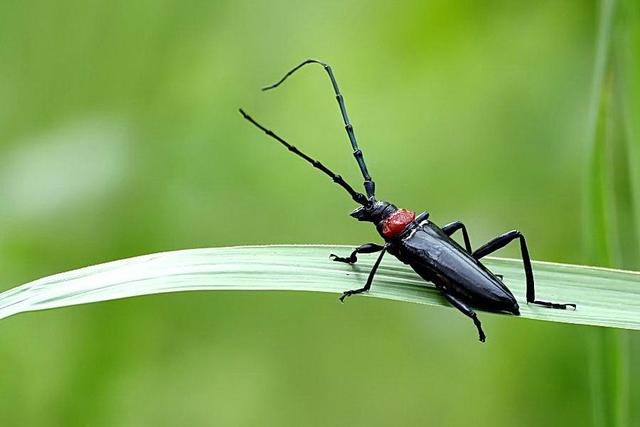
Longhorn beetle
Agarwood trees are wild trees and, because of their growth characteristics, generally have very few pest problems. The most likely pests to appear are common pests such as leaf-roller caterpillars, longhorn beetles, and scarab beetles. If scattered pests appear, no special management is needed, but if pests appear over a large area, pest control is necessary. Generally, ordinary pesticides can be used for spraying to kill the pests. To kill leaf-roller caterpillars, in the early egg stage spray with 25% dimehypo or 80% dichlorvos at 800-1000 times dilution; to kill longhorn beetles, use a syringe with 80% dichlorvos emulsifiable concentrate at 800-1000 times dilution for spraying, or capture them manually.
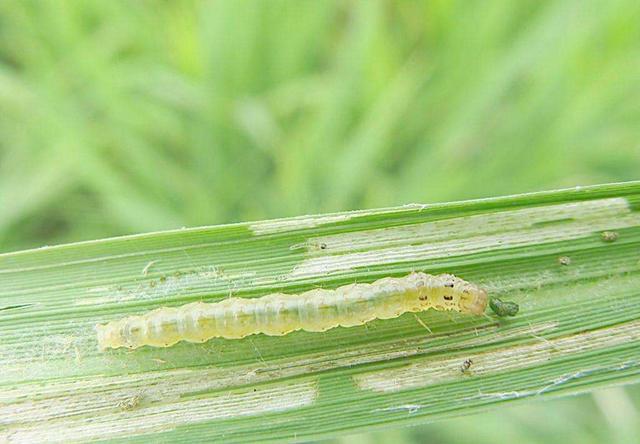
Leaf-roller caterpillar