Key Points of Greenhouse Celery Cultivation Technology to Know Early
In "Lüshi Chunqiu - Benwei" it is recorded that "among the delicacies of vegetables, there is the celery of Yunmeng." Celery is not only delicious in meals, but also high in nutritional and medicinal value. In addition to being rich in various vitamins and minerals, it also has effects such as lowering blood pressure, lowering blood lipids, reducing swelling and promoting urination. Such a healthy vegetable is of course a regular and best-selling item in the vegetable market, and it can be seen all year round. So today, the editor will introduce the greenhouse cultivation technology of celery.
Greenhouse celery generally follows the pattern of summer seedling raising, autumn planting, winter insulation, and harvesting around New Year's Day and the Spring Festival. Celery prefers a cool and humid climate and is not tolerant of high temperatures. The main technical points during planting are as follows:
1. Variety selection and breeding
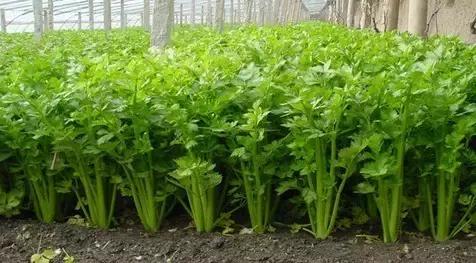
For greenhouse celery cultivation, it is advisable to choose solid-stemmed celery varieties with cold tolerance, strong flavor, high yield and good resistance. At present, varieties suitable for cultivation in China include American celery, Dutch celery, Ventura celery, Shuanggang celery, Tianjin solid celery, California King celery, etc.
2. Seedling raising
Greenhouse celery seedling raising takes place in summer and faces climatic conditions of strong light, high temperature and frequent rain, so the seedbed preparation must have conditions for shading and rain protection.
Before sowing (soak the seeds first in water at 15-20°C for 24 h, then rinse them 3-4 times with clean water, mix in fine sand and germinate them at 15-18°C, remember to stir and water every day, keep them moist, and they will sprout in about a week), first water the seedbed thoroughly, then evenly broadcast the germinated seeds.
After sowing and before emergence, the seedbed soil must be kept moist. Before emergence, straw should also be spread over the bed surface or a shade net should be set up to prevent direct sunlight and play a role in cooling and moisturizing. Note that during the entire growth period of the celery seedbed, the temperature must not be too low and the light intensity must not be too weak, otherwise it is prone to bolting early, reducing yield and quality.
3. Planting
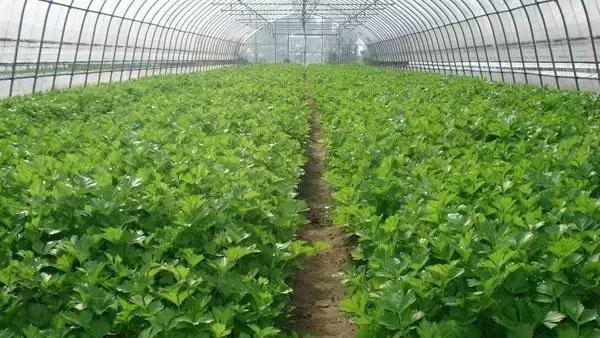
Before planting, the soil needs to be prepared and base fertilizer applied. The base fertilizer should be mainly organic fertilizer, and a small amount of chemical fertilizer, especially phosphorus and potassium fertilizer, can be applied together with it. Before lifting the seedlings, note that the seedbed should be watered thoroughly so that the seedlings can be pulled up with roots. When planting, note that the seedlings should be planted in separate beds, with a row spacing of 15-20 cm and a plant spacing of 10 cm within the bed, planting a single plant per position, at a suitable depth, with the standard being shallow enough not to expose the roots and deep enough not to bury the heart. After planting the whole bed, water immediately with the planting water.
4. Management
Celery seedlings just after planting are in the seedling recovery stage and need frequent ventilation to maintain suitable temperature and humidity, and spraying foliar fertilizer is beneficial for promoting the production of new roots.
During seedling growth, the daytime temperature should suitably be controlled at 15-25°C, and the nighttime temperature should suitably be controlled at about 10°C. When the room temperature exceeds 25°C, ventilation is needed to regulate the temperature. In the later growth stage of celery, the temperature can be appropriately increased, with daytime control at 20-25°C. As the outdoor temperature decreases, the nighttime greenhouse temperature will also decrease. If it is below 10°C, insulation needs to be strengthened to prevent freezing damage.
After planting and survival, the seedlings need 1-2 weeks of seedling hardening. After that, attention should be paid to keeping the ridge surface moist once it dries, laying a foundation for rapid growth in the middle and late stages. When celery seedlings grow to 6-7 leaves, they begin to enter the vigorous growth period. This is the formation period of the product organ and also the peak period of nutrient absorption, so water and fertilizer management should be strengthened. Under normal circumstances, water once every 5-7 d, and apply fertilizer once between two waterings, that is, apply one fertilizer after two waterings. Each time, apply 20 kg of diammonium or 15 kg of urea per mu, broadcast it when there are no water droplets on the plants, then water, or it can be applied together with irrigation. As the temperature drops and the greenhouse temperature decreases, appropriately extend the watering interval, changing from watering once every 5-7 d to watering once every 10-15 d. Watering should be done in the morning. After watering, ventilation should be strengthened to avoid excessive humidity, which can cause celery to grow excessively and lead to diseases. The most suitable air humidity for celery is 80%, and the soil humidity is 80-90%.