Detailed Explanation of Red Peony Cultivation Techniques and Management Methods
【Overview] Red Peony is a commonly used traditional Chinese medicinal herb with a long history of application. It is an excellent product for clearing heat and cooling blood, and dispersing blood stasis, and is deeply favored by physicians. This product is the root of the Ranunculaceae plant peony (wild variety). Most are wild. The former is mainly produced in Inner Mongolia, the three northeastern provinces, Hebei, Shanxi and other places. Sichuan Red Peony is mainly produced in Sichuan, Gansu, Yunnan, Guizhou and other places.
【Growing Environment] Wild peony grows mostly in mountainous areas and grasslands at altitudes of 500-1,500 m in the north. The soil is brown or dark brown forest soil, commonly found on hillsides, beside ditches, under broad-leaved mixed forests, at forest edges and in shrub thickets. Sichuan Red Peony grows mostly in mountain plateaus and canyon areas at the edge of the Qinghai-Tibet Plateau, where the soil is mostly plateau brown soil and dark brown soil. It has the characteristics of being light-loving, drought-resistant and cold-tolerant.
【Cultivation Techniques] 1. Site selection and land preparation: Red Peony is best suited to loam and sandy loam, followed by sandy soil, while heavy clay soil is relatively poor. After the crops are harvested in autumn, carry out autumn plowing to help eliminate pests and diseases. In the following spring, prepare the land, plow and then harrow level, then make beds. The size and length of the beds can be determined according to the specific terrain. 2. Breeding and cultivation: When harvesting in autumn, the seed roots can be sorted and selected. The seed roots must have buds, be intact and free of defects, and be robust perennial roots. When planting, first dig holes between the beds, with a spacing of 40-50 cm between rows and between plants, then plant the seed roots separately in the holes with the buds facing upward, planting 1 plant per hole, and on average about 3,000 plants can be planted per 667 sq m. After Red Peony is planted separately, in the 1st to 2nd years, corn and soybeans can be intercropped at the edges of the beds, but in the 3rd year no other crops can be interplanted. Red Peony is not suitable for continuous cropping. It is best to replace the soil or switch to other crops on land where Red Peony has been grown, so as to avoid pests and diseases.
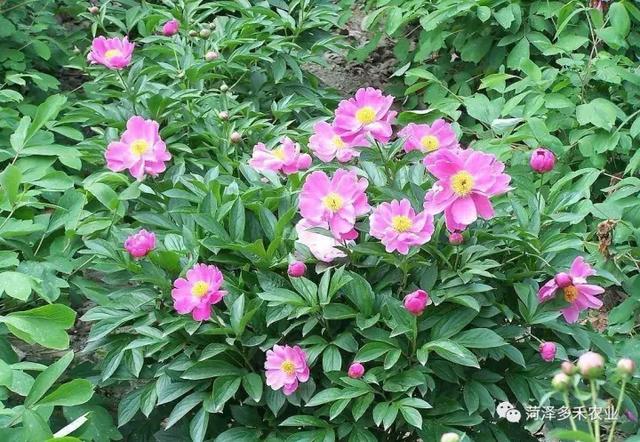
【Cultivation Management] 1. Fertilization and weeding: Farmyard manure and soybean cake are generally used as fertilizer, applied immediately at the time of separate planting. The first fertilization can be done in early spring after seedling emergence by digging holes between the plants with a hoe and applying the fertilizer, then covering with soil. Fertilize 1-2 times each spring and autumn, and hoe weeds once during fertilization to prevent weeds from spreading. 2. Flower bud removal: After peony is planted, it forms buds and blooms every year. In order to ensure sufficient nutrients for the roots of Red Peony, the buds are removed as soon as they form. 3. Pest and disease control: (1) Diseases: 1. Peony gray mold: a disease caused by a pathogen, affecting leaves, stems, flowers and other parts. It generally occurs after flowering, and is most severe during continuous rainy weather. Control methods: after the disease occurs, remove the damaged branches and leaves and burn them in a centralized manner or bury them deeply. Practice crop rotation or select disease-free seed buds. Strengthen field management at ordinary times, drain water promptly, and maintain ventilation and light penetration. During the susceptible period or in the early stage of the disease, spray the plants with 1:1:100 Bordeaux mixture, once every 10-14 days, for 3-4 consecutive times. 2. Peony rust: damages leaves, with the disease being more severe in July-August. Control methods: when harvesting peony, burn the residual branches and diseased leaves in a centralized manner to reduce overwintering sources of inoculum. In the early stage of the disease, spray with 0.3-0.4 degrees Baume lime sulfur mixture or 70% fenaminosulf 400-fold solution, with good results. (2) Insect pests: There are white grubs, cutworms, mole crickets and others that damage the roots. Zinc phoxim at 2 kg/667 sq m can be used to make poisoned soil, which is spread into the soil during land preparation to kill them.
【Harvesting and Processing] Generally harvested after 3 years, but can also be extended to 4-5 years. However, after more than 5 years, the roots turn black, resulting in poor quality. The harvesting period is preferably autumn. Remove the fibrous roots from the dug tuberous roots, wash off the sand and soil, and sun-dry or dry over a heated bed to obtain the product.
【Medicinal Material Characteristics] 1. Red Peony: This product is cylindrical, slightly curved, 5-40 cm long, 0.5-3 cm in diameter. The surface is brownish, rough, with longitudinal grooves and wrinkles, as well as fibrous root scars and transversely protruding lenticels; some outer bark easily falls off. The texture is hard and brittle, easily broken. The broken surface is powdery white or pink, the bark portion is narrow, the xylem has obvious radial striations, and some show cracks. It has a slight fragrance and a slightly bitter, sour and astringent taste. 2. Sichuan Red Peony: Peeled Red Peony is mostly a single strip, with a thick, round and sturdy body, thick and straight or slightly curved, 10-26 cm long, with the middle section 1-4 cm thick. The top has no rhizome head and is relatively thick and plump, while the lower end gradually becomes slender, though some are round-strip shaped. The surface is light purplish-red or flesh-white, with longitudinal wrinkles. The body is solid, and the cross-section is mostly powdery, white, with a pale yellow outer ring and pale yellow chrysanthemum-like texture inside, which is more obvious in old roots. The inner core of young roots is purple, the taste is bitter and slightly sweet, and the aroma is rich. The shape of unpeeled Red Peony is roughly similar to that of peeled Red Peony. It is mostly a single strip, or may have forked double branches. The rough outer bark is brownish-red or dark brown, with longitudinal striations. The inner color of the cross-section is relatively dull, or yellowish-white, also showing chrysanthemum-like texture, and is powdery. The odor and taste are similar to those of peeled Red Peony.

Duohe Professional Peony and Red Peony Planting Base
Pure varieties, high survival rate, low investment, good returns