Detailed Guide to Jabuticaba Planting Methods and Cultivation Techniques
Jabuticaba Planting andCultivation Techniques
1. Jabuticaba Planting
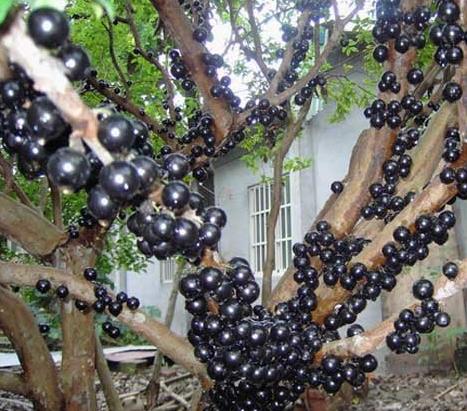
The scientific name of jabuticaba is Plinia cauliflora, also known as the Brazilian grape tree, jaboticaba, and Myrciaria cauliflora. It originates from South America and is an evergreen shrub of the genus Plinia in the family Myrtaceae. It is suitable as a bonsai and garden tree. Its fruit is both edible and ornamental, and it is extremely suitable for balcony container planting, garden landscaping, or potted ornamental display. Now let us take a look at jabuticaba cultivation techniques!
Jabuticaba Growth Habits
Jabuticaba is suitable for growing in moderately to high rainfall, relatively cool tropical and subtropical climates. Most varieties can tolerate low temperatures of -2.8°C, while some varieties can tolerate low temperatures of -4.4°C. It is a sun-loving tree species that requires full sun or tolerates minimal shade. It requires moist soil but dislikes waterlogging, and can tolerate short-term drought. It has strong adaptability to soil, but the best is slightly acidic (pH 5.5-6.5) sandy loam with deep soil layers, fertility, and good drainage. It grows poorly on calcareous soil and is not tolerant of salinity and alkalinity.
Jabuticaba Propagation Techniques
1. Seed propagation: Seed propagation is currently the most important propagation method for jabuticaba, and fresh seeds germinate better. After harvesting the fruit, store it in plastic bags and refrigerate at 5-8°C. When ready to sow, take out the seeds, wash them, and sow them. Cold storage can maintain viability for 1-2 months, and there is still a certain germination rate. Seeds germinate 20-40 days after sowing, and germination is slower at low temperatures.
2. Grafting propagation: Most jabuticaba varieties grown from seedling stock require 6-10 years before they begin to bear fruit. Grafting can advance fruiting, with fruit bearing about 3 years after grafting. Use two-year-old seedlings as rootstock, and cut one-year-old branches from fruiting mother trees as scions. The survival rate is higher with cut grafting or approach grafting in autumn and winter, while the success rate is poorer after March-April, and grafting in summer is not easy to succeed.
3. Cutting propagation: Jabuticaba is difficult to propagate by cuttings, and domestic research has identified it as a typically difficult-to-root species. In May each year, semi-hardwood cuttings (2 nodes, 4 leaves) can be quickly dipped in NAA 2000 ppm, with peat moss as the rooting medium, and the rooting rate can reach 90%. Foreign research, however, uses 10 cm long cuttings with 3-4 pairs of mature leaves, inserted in a medium of sand mixed with peat moss (ratio 1:1) for best results. Longitudinal cuts at the base of the cutting in 4 places plus treatment with IBA 1000 ppm can promote rooting.
Jabuticaba Cultivation Techniques
1. Seedling stage management: After jabuticaba sprouts, remove double buds, multiple-head buds, and overly weak buds. After new shoots form, tie them to the wire on both sides, set the shoots at 15-20 cm intervals, and promptly spray Chuhuawang No. 3, which can effectively control excessive shoot growth, promote more flowering branches, promote flower bud differentiation, effectively balance large and small flower clusters, and save the trouble of flower and fruit thinning.
2. Rational fertilization: Jabuticaba cultivation requires timely topdressing according to growth stages, namely flower and fruit fertilizer, fruit swelling fertilizer, coloring fertilizer, and post-harvest growth-promoting fertilizer. Special attention should be paid to achieving a reasonable match of N, P, K and various other nutrients to ensure a balanced nutrient supply. Farmyard manure mixed with straw must undergo high-temperature fermentation for more than 60 days and be fully decomposed before it can be applied.
3. Timely pruning: Jabuticaba fruit growth and development is slow, and strong pruning is usually unnecessary. However, to control plant height and potted tree shape, it is advisable to timely prune vigorously growing terminal branches. In general cultivation, it is recommended to prune low and internal thin, short branches to create a tree shape with good ventilation and beautiful branches. In autumn and winter, dense or leggy branches can also be pruned.
4. Pest and disease management: Jabuticaba grown domestically has few pests and diseases, and pesticides are rarely used in management. However, during the fruiting period, it is easily damaged by birds. Black netting can be covered around the plants or a net house can be set up to prevent birds from eating the fruit. Double-layer newspaper bagging can also be used to protect the fruit. If tussock moth larvae damage the leaves, pesticides recommended in plant protection manuals can be applied for control.
What should be noted when planting grapes——
1. Site selection:
The vineyard site should be established on sunny dry land or paddy fields near water sources with good drainage. Fertile sandy loam soil is preferable. For plots with heavy, compacted clay soil, soil improvement should be carried out by mixing in sand and applying more farmyard manure and organic fertilizer. For sandy barren land, an appropriate amount of clay and more organic fertilizer should be mixed in to improve the soil, which is beneficial for grape growth.
What should be noted when planting grapes——
2. Land preparation and cultivation specifications:
It is recommended to mainly use trellis cultivation methods. With this cultivation method, planting 220-260 plants per mu is appropriate, that is, plant spacing of 1.2-1.5 m and row spacing of 2 m. A dense planting method of 400 plants per mu can also be used, and after reaching the full production period, thinning can be done as appropriate.
During land preparation, first fully cultivate or plow and level the entire orchard land, and dig drainage and irrigation ditches around the perimeter. Then determine the row direction according to north-south or against the wind (for sloping land, follow contour lines for row direction), and dig planting pits or planting trenches according to row spacing and plant spacing. The standard for digging planting pits is 1 m in length and width and 0.60-0.8 m in depth. The standard for digging planting trenches is 1 m in width and 0.6-0.8 m in depth. When digging, place topsoil and subsoil separately on the two sides of the pit (trench). Sun-expose the pits for 10-20 days, then apply decomposed pig and cattle manure kg or farmyard manure 100 kg and phosphate fertilizer 1 kg in each planting pit. For trenches, apply farmyard manure 2000 kg, bran fertilizer 750 kg, and phosphate 250 kg per mu. Backfill topsoil, then backfill part of the subsoil. After backfilling, the planting pit (trench) surface should be more than 0.3 m above the original ground. After the backfilled pit (trench) soil settles and stabilizes, proceed with planting.
What should be noted when planting grapes——
3. Planting:
1. Planting season:
Cultivation can be carried out throughout the entire period after the grape seedlings normally shed their leaves and before sprouting.
2. Planting method:
(1) Pre-planting treatment of seedlings
After cutting off overly long old roots and branches and roots and branches damaged by pests and diseases, soak the entire seedling in 2‰ carbendazim solution for 1 hour, then lift the seedling and continue soaking the root crown for 8-10 hours to absorb water. Then coat the root crown fully with yellow mud slurry, and it can be planted or temporarily heeled in moist sand indoors for preservation.
(2) Planting specifications
Within the planting pit (trench), establish the planting point. Within the planting point, dig a cultivation pit slightly wider and deeper than the grape seedling root system. Arrange the roots of the qualified grape seedling coated with slurry in a radiating manner, gently pull the seedling upright, then lightly backfill fine topsoil. While filling soil, gently shake the seedling so that the roots and fine soil are in close contact. Tread the backfilled soil firmly in two stages, water thoroughly to settle the roots, and finally cover with a layer of loose soil, shaping it into a turtle-back-shaped fruit tree root disk and making it 0.2 m above the original ground.
What should be noted when planting grapes——
4. Strengthen fertilizer and water management
1. Check after cultivation, water appropriately, maintain soil moisture, and promote new root growth. Timely clear drainage and irrigation ditches to prevent waterlogging.
2. Timely topdressing. When newly planted grape plants grow new roots and the leaves reach 3-5 leaves, topdressing should be carried out in a timely manner. Topdress once about every 15 days. Mainly apply decomposed dilute manure and urine water, or apply 0.3% urea or compound fertilizer aqueous solution. For young seedlings more than 20 cm long, furrow application of decomposed manure or compound fertilizer or amino acid compound fertilizer can be used. When applying fertilizer, keep about 10 cm away from the grape plant, and do not apply fertilizer to the stems and leaves of the plant. Topdress 8-10 times throughout the year. Appropriately spray foliar fertilizer.
What should be noted when planting grapes——
5. Set up the trellis well
Single upright trellis or double upright trellis is suitable.
1. Single upright trellis: For wine grape varieties (Beichun, Vitis amurensis), set up a single upright trellis. That is, along the grape planting row, about 20 cm from the center line of grape planting, set up a row of fence-like upright trellis with a height of 2.0-2.2 m. Set up 3-4 horizontal tiers (using No. 12-14 galvanized iron wire or bamboo poles). The first tier is 40-60 cm from the ground, and the 2nd to 4th tiers are spaced 50 cm apart. Small upright posts are spaced 2 m apart, large upright posts 4 m apart. Posts are 2.5-2.7 m long and buried about 50 cm in the soil. Bury and insert upright posts firmly. When using small upright posts, set up several wooden stake posts or reinforced concrete posts with a diameter of 8-12 cm at both ends and the center of each row as the main supporting upright posts.
2. Double upright trellis: For table grape varieties, set up a double upright trellis. That is, on both sides of the grape planting row, 50-60 cm from the center line of grape planting, set up one row of single upright trellis on each side, forming a double upright trellis. This can increase the trellis area by 50-70%, increase the sunlight-receiving area, and raise the yield per mu. 5. Cultivate main vines according to grape variety and plant spacing. When new shoots grow to 4-5 cm long, select and retain 2-3 strong new shoots to cultivate as main vines (depending on variety and cultivation density).
What should be noted when planting grapes——
6. Cultivate main vines according to grape variety and plant spacing
1. Wine grape varieties (such as Beichun, Vitis amurensis): For wider plant spacing, cultivate 3 main vines per plant; for closer plant spacing, cultivate 2 main vines per plant. Remove all other useless buds and all tendrils. When the main vine grows to the first horizontal tier of the trellis, guide the vine onto the trellis, tie and fix the vine with a small rope or straw in a figure-"8" loop knot, then pinch off the growing tip and cultivate 2-3 secondary shoots. When the secondary shoots grow to the second horizontal tier, tie and fix them again, pinch off the growing tips, and cultivate fruiting branches.
2. Table grape varieties: Retain 2 strong buds per plant as main vines, and remove other useless buds and all tendrils. When the main vines reach the first horizontal tier of the trellis, guide and tie the 2 main vines respectively to each side of the double upright trellis, pinch off the growing tips, and cultivate secondary shoots up to the second horizontal tier. Thereafter, a V-shaped vine trellis is formed.
3. Some plants grow only one strong new shoot. When it grows 5-6 leaves, pinch off the growing tip to promote secondary shoots, then cultivate 2-3 secondary shoots as main vines.
What should be noted when planting grapes——
7. Pay attention to pest and disease control
1. Disease control. Main grape diseases include downy mildew, rust, black rot, and brown spot, which should be controlled by timely spraying. Refer to the following drug types, concentrations, and methods:
0.2-0.3 degrees Baume lime sulfur mixture; 50% thiram 500 times solution; 50% carbendazim 800-1000 times solution; 75% chlorothalonil 500-600 times solution; 58% metalaxyl mancozeb 500-600 times solution; zineb 800-1000 times solution. Select 2-3 types of pesticides for alternating use against the symptoms, spraying once every 7-10 days, for 2-3 consecutive times. Each spraying concentration should be appropriate, but the amount of spray liquid should be sufficient.
2. Pest control. Currently, beetles, yellow squash beetles, short-haired mites, mealybugs, stink bugs, cutworms, mole crickets, crickets, and others have been found damaging seedlings. They can be killed by spraying 40% omethoate or 50% dichlorvos 1500 times solution.