Key Management Points After Planting Chinese Cabbage in Autumn
As the saying goes, "No vegetable compares to Chinese cabbage." Traditional Chinese medicine holds that Chinese cabbage is slightly cold in nature and non-toxic; eaten regularly, it has the effects of nourishing the stomach and promoting fluid production, relieving restlessness and quenching thirst, promoting urination and bowel movements, and clearing heat and detoxifying.
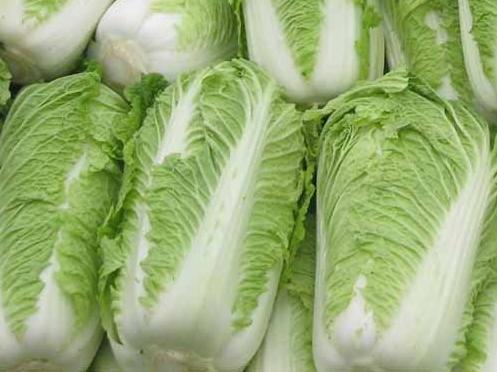
Nutritional Value of Chinese Cabbage
1. Moistens the intestines and removes toxins. Chinese cabbage is rich in crude fiber, which not only moistens the intestines but also promotes detoxification; it stimulates gastrointestinal peristalsis and can improve digestion in people with poor digestion. Eating Chinese cabbage regularly also has a good effect in preventing intestinal cancer.
2. Prevents breast cancer. The trace elements contained in Chinese cabbage can help break down the androgens associated with breast cancer. Hormone researchers in New York, USA, have also shown that eating Chinese cabbage regularly can prevent the occurrence of breast cancer.
3. Can supplement calcium. Chinese cabbage contains abundant calcium, with calcium in milligrams per gram. A cup of cooked Chinese cabbage juice can provide almost as much calcium as a cup of milk. Some people do not like drinking milk, and can obtain a lot of calcium by eating a sufficient amount of Chinese cabbage.
The sowing time for autumn Chinese cabbage is generally 3-5 days before and after the Start of Autumn, and management of Chinese cabbage after emergence is even more important.
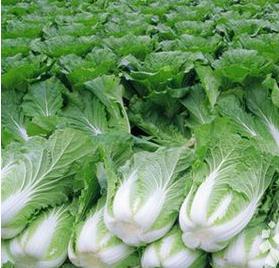
I. Seedling stage management
This refers to management from seedling emergence to the rosette stage. At this time, thinning should be done in a timely manner; at 2-3 or 4-5 true leaves, thin once each time, and remove weeds, diseased seedlings and weak seedlings.
II. Pest management
1. Striped flea beetle: It mostly occurs around the time the seedling heart breaks through, when the cotyledons are eaten and the whole plant dies; the larvae only damage the cabbage roots, causing the leaves to wither and die. Use 5% fipronil 1500x solution, or 90% trichlorfon 1000x solution, or 50% phoxim emulsifiable concentrate 1000x for foliar spraying or root drenching to control.
2. Cabbage webworm:It is boring in habit, which makes control difficult. The larvae cause damage by boring; at the seedling stage the heart leaves and leaves are damaged, and the seedling growing point is destroyed so growth stops or the plant dies. However, young larvae damage the leaves and heart leaves, and the occurrence period is relatively uniform, so spraying can be timed at the early larval hatching stage and before boring into the heart. Spray with fenvalerate 3000x solution, or Bt emulsion 50 g mixed with 40 kg water, or 48% chlorpyrifos emulsifiable concentrate 2500x solution (30 g per mu) for control, spraying 2-3 times consecutively, and be careful to spray the pesticide into the cabbage heart.
3. Cabbage caterpillar (small white butterfly): 1st-2nd instar larvae chew the leaf mesophyll; from the 3rd instar onward they can bite the leaves into holes and notches, and in severe cases only the petioles and veins remain. The larvae excrete large amounts of frass, contaminating the leaves and cabbage heart, and the wounds easily lead to soft rot. Spray with the bacterial insecticide Bt emulsifiable concentrate or Bacillus thuringiensis liquid 500-800x, or spray with 50% phoxim emulsifiable concentrate 1000x for control, or evenly spray with Lüheng Wenjing 2000-2500x solution for control.
4. Aphids:They often gather densely on cabbage leaves and tender stems, sucking the sap from the plant, causing severe water loss and malnutrition. Besides harming the plants, they also transmit many viruses, so they must be controlled early. Use 20% fenvalerate 6000x solution or 10% imidacloprid, 10 g per mu mixed with 40-50 kg water for spraying, or evenly spray with Lüheng Wenjing 2000-2500x solution for control.
III. Fertilizer and water management.
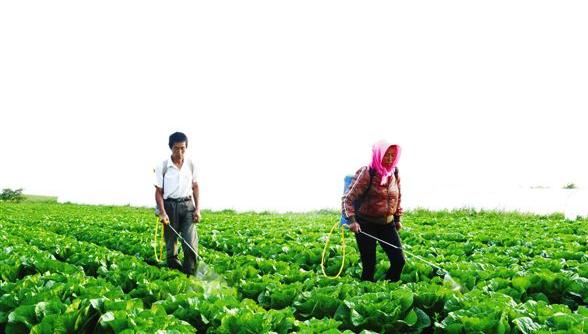
1. Topdressing.At the seedling stage, topdressing is generally not applied. If the base fertilizer is insufficient, at the 3-4 true leaf stage apply 10 kg ammonium sulfate per mu, scatter it on both sides of the seedlings, and water immediately; this is called "seedling-promoting fertilizer." In the middle of head formation, apply 15-20 kg ammonium sulfate per mu, which can be applied with irrigation water; this is called "heart-filling fertilizer."
2. Watering.From the rosette stage to the lotus stage, the temperature gradually drops and the weather is mild; during this period, watering can be done appropriately. After Chinese cabbage enters the head-forming stage, it needs the most water; therefore, as soon as it has just formed and is being hardened off, give one thorough watering. Then after 2-3 days, give a second watering. After that, generally water once every 5-6 days to keep the soil moist.