What is the difference between dental implants and porcelain-fused-to-metal crowns? This article helps you tell them apart
For people who can't tell dental implants and porcelain-fused-to-metal crowns apart, failing to distinguish them means more suffering for your teeth down the road!
First, let's start with their concepts.
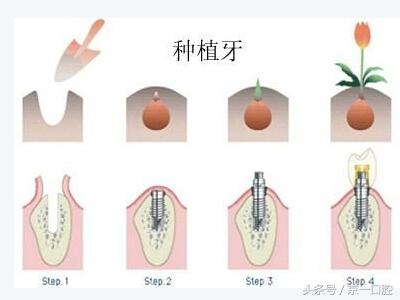
Dental implant: A post is implanted into the alveolar bone at the missing tooth site, equivalent to an artificial tooth root, and then a porcelain-fused-to-metal crown is placed on top of it. Both its appearance and function are the same as your own natural teeth.
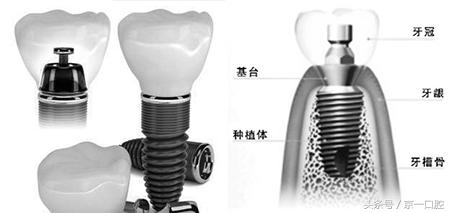
Porcelain-fused-to-metal crown: The two adjacent healthy teeth are ground down, and then the porcelain-fused-to-metal crown is fitted on. The ground-down natural teeth will not regenerate, which amounts to permanent damage.
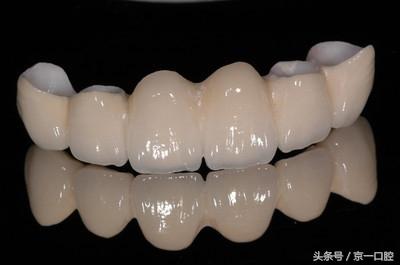
Secondly, both dental implants and porcelain-fused-to-metal crowns aim to restore teeth, but there are big differences between the two.
Moreover, each of the two has its own advantages and disadvantages.
Advantages of dental implants:
1) Basically no pain: A dental implant is a minor surgery, and the whole procedure takes only a few tens of minutes to a few hours to complete. "Immediate" dental implants even shorten the time to within 60 minutes.
2) No damage to adjacent teeth: It exists independently like a natural tooth and does not require grinding down healthy adjacent teeth.
3) Comfortable and stable: Dental implants use a fully fixed implantation, and there are no hooks or sleeves like those of traditional dentures.
4) Looks like a real tooth: The appearance and function of a dental implant are the same as a real tooth, it is convenient to use, and it is easy to clean.
5) The service life can be as long as 40 years.
Disadvantages:
1) Dental implants cost more than traditional dentures and porcelain-fused-to-metal crowns.
2) There is a certain degree of technical difficulty, and the technical requirements for the dentist are relatively high.
3) There is a strict range of suitability, and not everyone with missing teeth is suitable for dental implants.
Advantages of porcelain-fused-to-metal crowns:
1) Good marginal seal. The making of porcelain-fused-to-metal crowns requires the margin to fit closely, at 1mm below the gingiva, and with a special non-water-soluble bonding material, the marginal seal is ensured.
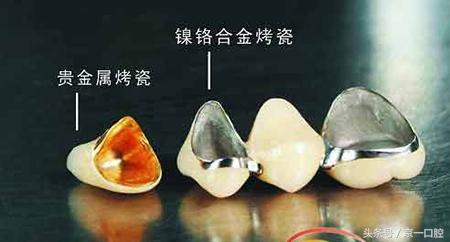
2) Good biocompatibility. In particular, porcelain crowns and all-ceramic crowns made of precious metals have corrosion resistance due to their electrochemical inertness, and cause no tissue allergy.
3) Extremely high strength. After metal and ceramic powder are melted and bonded together at high temperature, they are strong enough to withstand the chewing force within the oral cavity, and the bonding force between precious metals and ceramic teeth is even stronger.
4) The price is relatively cheaper than dental implants.
Disadvantages:
1) It damages healthy adjacent teeth;
2) Short service life;
3) Moreover, for ordinary stainless steel porcelain crowns, after wearing them for a period of time, a dark gray margin can be seen at the gingival margin.
Finally, when restoring missing teeth, you should take your own conditions into account and choose a restoration plan that suits you.
If you think the article is good, you can share it or subscribe to us, and you can also follow our WeChat official account: Jingyi Stomatology / Beijing Jingyi Hospital of Traditional Chinese Medicine, and tell our editor about your oral problems, and our editor will give you advice!