Can you have an MRI with dental implants? The two are not in conflict
As dental implant technology matures and becomes more widespread, more and more people are beginning to accept this technique and benefit from it. But many patients, after learning about its benefits, still have concerns, and older people in particular worry that having dental implants will affect theirmagnetic resonance imaging。
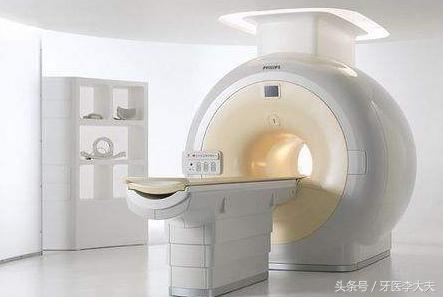
Today, let's talk about this topic!
Today's interventional medical devices all place great emphasis on MRI compatibility. Take dental implants, which many people are concerned about: patients who have had dental implants can undergo MRI examinations.
Why can't you have metal objects on your body during an MRI scan?
What people usually call MRI refers to the technology that uses the phenomenon of nuclear magnetic resonance to obtain information about molecular structure and the internal structure of the human body. The reasons why metal objects cannot be present during an examination are as follows:
1. Metal objects are not part of the body. They have a major effect on how electromagnetic waves penetrate the human body, interfering with the uniformity of the magnetic field and the stability of the radio frequency, causing artifacts and affecting judgment. Therefore, you must not have metal objects on your body during an MRI scan!
2. Extremely strong magnetic fields exist inside the MRI machine and the MRI examination room. Generally, outside the door of a hospital's MRI examination room, there are conspicuous red or yellow signs indicating situations in which MRI examinations are absolutely prohibited. For example, people with cardiac pacemakers, those with metal clips or metal stents left after vascular surgery, or those who have had metal stent surgery for the coronary arteries, esophagus, prostate or biliary tract, are absolutely prohibited from undergoing MRI examinations. Otherwise, because the metal is attracted and moved by the powerful magnetic field, serious consequences may result.
3. If there are other metal foreign bodies in the body that cannot be removed but an examination must still be performed, the patient should be closely monitored to prevent the metal from moving in the powerful magnetic field during the examination and injuring nearby major blood vessels and important tissues. Those with metal contraceptive rings and removable metal dentures must have them removed before the examination.
You can still undergo an MRI examination after having dental implants
Only by clearly understanding dental implants can you eliminate fear. Let us first look at the basic composition of a dental implant:
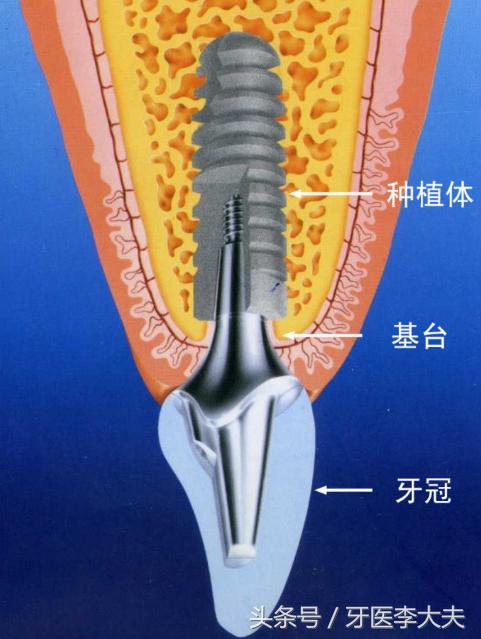
In fact, what a dental implant places is an artificial tooth root (the implant). It does not grow outward, but it will fuse with the jawbone. After this artificial tooth root has bonded firmly with the jawbone, an abutment is screwed on to extend the artificial tooth root beyond the jawbone into the oral cavity. Finally, a crown is placed over this abutment to restore the missing tooth. This is the so-called dental implant (as shown in the figure).
1. Implant
At present, among the thousands of dental implant brands worldwide, the material used for the implant is all titanium metal; only the manufacturing processes and treatment methods differ somewhat. Titanium is currently the metal with the best known biocompatibility, and it is a non-magnetic metal that will not be magnetized even in a very large magnetic field. Therefore, the implant itself has no effect at all on MRI examinations, and there is no safety hazard. Patients who worry that the implant will affect MRI examinations can rest assured.
2. Abutment
The matching abutments provided by dental implant manufacturers are generally made of two materials: pure titanium or all-ceramic material (zirconia). Whichever material is used, it will not affect the MRI examination.
3. Crown
The materials used to make crowns fall into two main categories: all-ceramic crowns and metal porcelain crowns. All-ceramic crowns contain no metal components and will not affect MRI at all. Metal porcelain crowns, however, can indeed interfere to some extent with MRI imaging, and the effect varies depending on the material.
The porcelain-fused-to-metal materials commonly used in oral prosthodontics include gold alloys, nickel-chromium alloys, cobalt-chromium alloys and so on. A large amount of experimental data shows that precious metals such as gold alloys cause only slight artifact interference in MRI examinations, while non-precious metals such as nickel-chromium alloys and cobalt-chromium alloys produce relatively large artifacts and have a certain effect on MRI examinations.
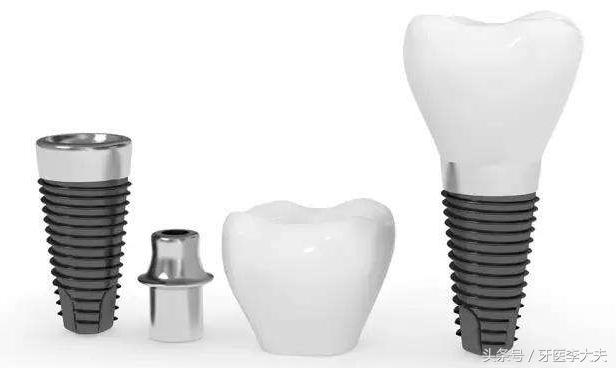
So if there is a non-precious-metal fixed restoration in the mouth, must it always be removed before an MRI examination? Actually, not necessarily.
What everyone should be reminded of is that even if you have a non-precious-metal porcelain crown, during an MRI it will only interfere with imaging within a certain range around the restoration. If the area we need to examine is not in the head, it will not affect the diagnosis of the disease, and there is no need to remove the restoration.
In summary, patients who have had dental implants can undergo MRI examinations. If you are still hesitating about whether to get dental implants because of this issue, I hope the above analysis can help everyone. As a dentist, I sincerely hope that dental implant technology can benefit more patients with missing teeth.