How Are Dental Implants Done? Three Tips to Help You Get It Done Easily
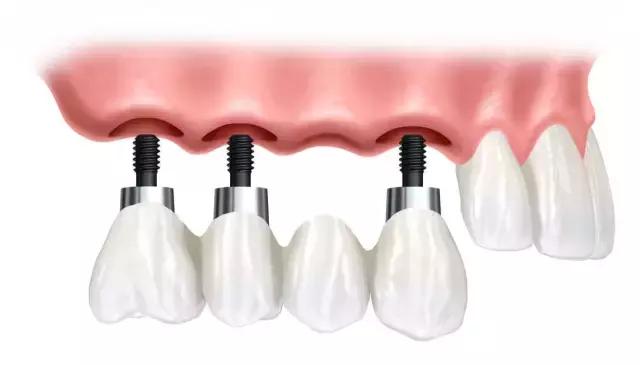
A dental implant means placing a specially made artificial tooth root into the bone at the site of a missing tooth, and then fitting an artificial tooth onto that artificial root that functions just like a natural tooth.
There are so many hospitals on the market? So many prices? So many implant systems? ......How should you choose?
The three tips below will help you get your dental implant sorted out.
Tip One:
Why is there such a big gap in dental implant prices on the market?
The price of a dental implant is mainly determined by the cost of materials and the doctor's surgical fee.
The cost of materials mainly includes the implant system, the crown, and possibly the bone membrane and bone powder needed. Choosing implant systems of different brands makes a huge difference in price. Crowns are mainly divided into metal porcelain crowns and all-ceramic crowns; the two are made of different materials, so there is a fairly big difference in price, and at the same time, crowns of the same material but different brands also differ in price.
The doctor's surgical fee is generally related to the doctor's professional skills and experience, and there are also certain differences between regions.
Once broken down this way, you can roughly have a clear idea in mind and won't be fooled by the mixed and confusing market prices. Now read the next two tips to understand things further.
Tip Two:
How to choose dental implant materials?
For dental implant materials, the first thing is choosing the implant system. Currently on the market there are domestic implant systems, Japanese and Korean implant systems, and European and American implant systems. Generally speaking, European and American implant systems have a long history, higher international trust, and a larger number of implants placed worldwide, with abundant clinical evidence, and at the same time they are also more expensive. Japanese and Korean implant systems are mainly used in Asian countries; although their history of development is not long, the number placed has already reached nearly ten million, and the price is moderate. Because domestic implant systems have only just moved toward commercialization, fewer medical institutions in China choose to use domestic implant systems compared with Japanese and Korean ones.
As for choosing crowns, medical institutions currently do not recommend metal porcelain crowns much. Although they are cheap, because they contain metal components, they affect patients undergoing examinations such as CT and MRI, and sometimes they can also be affected when passing through security checks. Besides that, after a few years of use there is a possibility of a black line appearing at the gum margin, which affects appearance. All-ceramic crowns are made with more precise and refined craftsmanship, but the cost is higher. The downside is that the strength of ordinary all-ceramic crowns is lower than that of metal porcelain crowns, and the clinical crown fracture rate is also higher than that of metal porcelain crowns.
However, among all-ceramic teeth, zirconium dioxide all-ceramic teeth are a new type of composite biological high-strength porcelain tooth, with good transparency, excellent color, more lifelike shape, hardness that makes them not easy to chip, good biocompatibility, and no irritation or allergic reaction to the gums. They are superior to various metal alloys. The disadvantages are: the price is higher, and the price difference between brands is also fairly large.
Tip Three:
Teachyou to tell which dental implant clinic and doctor are good?
The doctor who performs the dental implant surgery largely determines the later effect and service life of the dental implant. First, it should be made clear that, against the current national backdrop of allowing doctors to practice in multiple locations, choosing a legitimate medical institution is the key point; choosing public or private is no longer the core issue. The dental implant surgery process is also a technical skill, and practice makes perfect; with a long time doing it and many cases, the technique is naturally better. So when choosing a doctor, you generally choose one with rich implant experience and long-term professional training, and if they have a higher educational background, even better, with a greater margin of assurance.
Dental implant surgery is also a technical skill, and practice makes perfect; with a long time doing it and many cases, the technique is naturally better. So when choosing a doctor, you generally choose one with rich implant experience and long-term professional training, and with a higher educational background, the margin of assurance is also greater.
Quanmin Dental provides you with one-stop dental medical services.
Search the WeChat public account "Quanmin Dental",
WeChat ID: teeth_care,
Professional dental physicians answer your questions online.
