Detailed Explanation of High-Yield and Efficient Raspberry Cultivation Techniques
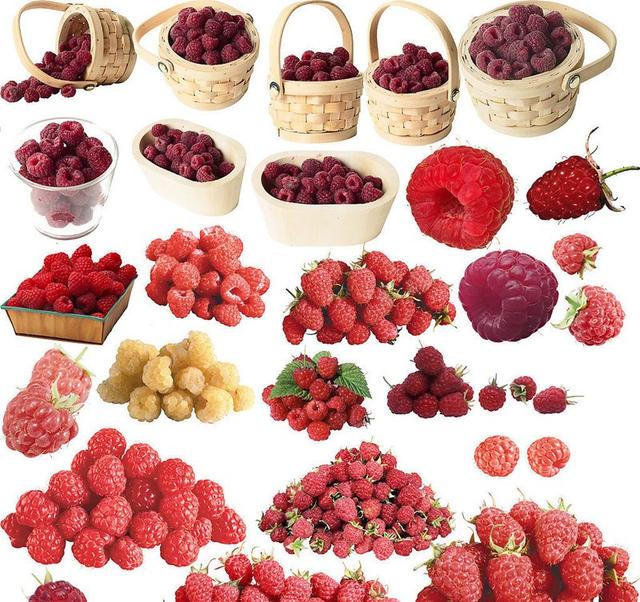
Raspberries of various kinds
Raspberry is a trailing shrub of the genus Rubus in the rose family.Raspberry has relatively high economic value, and its ber-ries are rich in nutrients. Every 100 grams of berriesalso contains 0.5-2.5 mg of salicylic acid, oftenused to produce diaphoretics. The roots, when steeped in liquor, have the effects of relaxing musclesand activating blood circulation, reducing inflammation and swelling. The stems and leaves, decocted in water,can be used as a wash for hemorrhoids, with relatively good therapeutic results. The Compendium of Materia Medicarecords that raspberry "is sweet in flavor, neutral,non-toxic, and can tonify the kidneys, secure essence, reduce urination and strengthen yang." WithinPan'an County, Zhejiang Province, there are extremely abundant wildraspberries, but because market demand has increased year by year,wild resources are increasingly depleted. Based on the raspberry'sgrowth habits, the author used wild seedlings forartificial propagation and cultivation, which both protected the wild raspberryresources and achieved economic income. Below is an introduction to the cultivation techniques for wild raspberryseedlings.
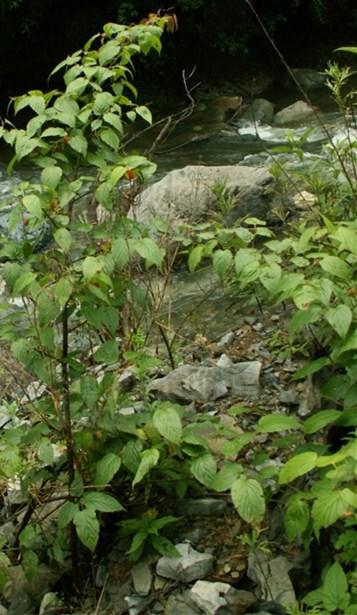
Raspberry in the wild state
I. Site Selection and Land Preparation
Raspberry does not have strict requirements for soil; generallyany plot can be used for planting. Apply 2000 kg of decomposed farmyard manure per mu,dig it deeply into the soil, level and harrow finely, and makeraised beds for later use.
II. Propagation Techniques
1. Root sucker propagation
The underground stems of raspberry sprout root suckerseedlings every year. From late autumn to early spring, during the raspberry's dormant period,dig up the mother plants, appropriately prune the roots and branches,then divide them into several plants for heel-in or field planting.
2. Layering propagation
Each year in August, select 4-8-year-old mother plants that have already floweredand are growing vigorously, lightly wound one-year-oldbranches near the ground and press them into the soil. The layered portioncan grow new adventitious roots and send out new shoots. In the following yearin spring, dig up the new plants and plant them separately.
3. Field planting
Raspberry can be planted in spring, summer, and autumn,with autumn planting before leaf fall giving the highest survival rate. Before planting,cut the young seedlings into short stubs 15-20 cm longto reduce water evaporation. For strip planting, the row and plant spacing is(2.0-2.5 m) x 0.5 m; the planting holes are 30-40 cm wideand deep, each hole is given 5 jin of farmyard manure,mixed evenly with the subsoil, and 2-3 strongseedlings are planted per hole. The planting strip gradually forms a plant band 30-60 cm wide.
For single-plant planting, the row and plant spacing is (1.5-2.0 ⟧48⟧m) x 0.5 m, with 1 strong seedling planted per hole. Fill with finem) × 0.5 m, plant 1 strong seedling per hole, fill with finesoil and compact it, then water to settle the roots.
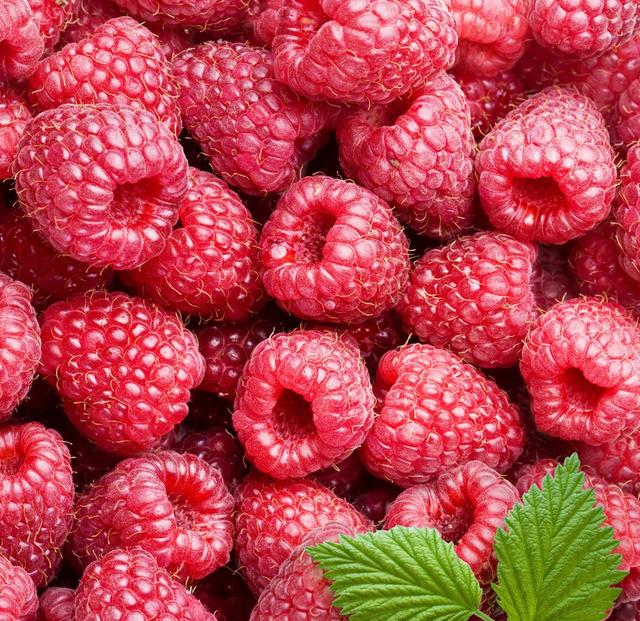
Tempting raspberries
III. Field Management
1. Intertillage and weeding
Within two years after transplanting, carry out intertillage and weeding 3-4times each year: the first time when shoots sprout in spring, the second time inMay-June, the third time in July-August, and the fourth time inlate autumn and early winter. Intertillage around the roots should be shallowto avoid damaging the roots, with a tilling depth of 6-10 cm. In the later period, when the branchesare dense, pull out weeds promptly. After rain orafter irrigation, loosen the soil, and at the same time earth uparound the plant roots.
2. Trellising and tying
Raspberry branches are soft and often droop to the groundunder the heavy weight of the fruit, affecting fruit quality andyield. Trellising and tying should be done in late April. For single-post tying,place one support post near the plant clump and tie the branchesto it; for double-post tying, place two supportposts between plant clumps and tie 1/2 of the branches of each of two adjacent clumpsto the two posts. This tying method gives the plants good light exposureand is convenient for management, with high yield.
3. Topdressing
Each year after the branches sprout in early spring and during the young fruit stage,topdressing should be carried out together with intertillage and weeding. In spring, summer,and autumn, apply nitrogen fertilizers such as decomposed human and livestock manure water, ammonium sulfate,and urea. In winter, apply decomposed stable manure,compost, and plant ash. Open furrows between rows for fertilization, with a furrow depthof about 20 cm, and cover with soil after application.
4. Shaping and pruning
Spring pruning is done together with trellising and tying the branches. Cutout thin and weak branches, dry branches, broken branches, overly dense branches,and diseased branches, retaining 7-9 thick, strong branches per plant. For summerpruning, when basal branches are 30 cm long, retain12-15 evenly distributed vigorous branches per plant and pinchoff the growing tips, cutting out all the remaining branches. Autumn pruning is carried out after the fruitis harvested, when the fruiting branches begin to dry up. Cutout the dead branches and diseased or weak branches after fruiting, and thin out densebranches that affect ventilation and light penetration.
5. Water management
Soil drought or excessive rain can both cause raspberryto drop a large number of flowers and fruits. Therefore, drainage and irrigationshould be done according to soil moisture conditions.
IV. Harvesting and Processing
The fruiting period of raspberry is June-July. When the fruitsare plump and still green and unripe, harvest them in batches, removethe receptacles, stems, leaves, and impurities completely, blanch them in boiling water for 2-3minutes, then spread them out to dry in the sun. In rainy weather, usea drying machine to dry them until the moisture content is less than 13%. Fruits that are greenand yellow and do not shed their seeds are considered good.
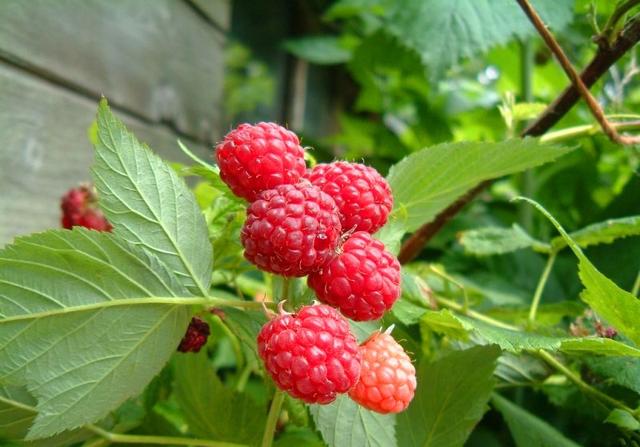
Raspberries ready to be picked