Analysis of Common Problems in Citrus Cultivation and Solutions
In 2016, China's citrus planting area reached as high as 2.5567 million hm, with a total output of 36.168 million t, with relatively rapid growth in western production areas such as Guangxi, Chongqing, Sichuan, and Yunnan; central regions such as Hunan, Hubei, and Jiangxi remained stable. Among them, provinces such as Jiangxi suffered from the dual damage of extreme low-temperature freezing injury and huanglongbing, with the area decreasing by 3,200 hm; the eastern production areas dominated by Zhejiang Province, Fujian Province, and Guangdong Province continued to shrink, widening the gap with the central and western regions, and the trend of the citrus industry shifting to the west was obvious.
At the same time, in China's citrus cultivation, there are problems such as high production costs and labor shortages, which severely restrict the development of the citrus cultivation industry. Corresponding countermeasures should be formulated, and measures such as optimizing the variety structure and large-scale planting should be adopted to ensure the sustainable development of the citrus industry.
1 Problems in Citrus Cultivation
1.1 Small Planting Area
At present, the main characteristic of citrus cultivation in China is dispersion. Most fruit growers' citrus orchards were obtained through the household contract responsibility system in the past. On the one hand, the planting area is relatively small; on the other hand, the planting technology is not high. With the decline in citrus selling prices, economic benefits show a downward trend. At present, many Chinese growers plant with the attitude of obtaining land requisition compensation, and some citrus orchards with relatively convenient transportation have long adopted extensive management, making it difficult for many agricultural enterprises or citrus professional cooperatives to realize their desire to expand the planting area, increasing the difficulty of large-scale citrus management[1].
1.2 High Production Costs and Low Selling Prices
In the process of citrus cultivation, after deducting expenses such as fertilizers, pesticides, and hired labor, the net profit of citrus is not high. At the same time, because in recent years agricultural labor and agricultural input prices have continued to rise, while the selling prices of citrus have long been relatively low, costs have continued to increase and the economic benefits obtained have continued to decrease, affecting the development of the citrus cultivation industry.
1.3 No Scientific Ecological Cultivation Technical Plan Has Been Formulated
In the existing citrus cultivation industry, a relatively large scale has not been formed, and extensive management is mostly adopted in production. This management model directly affects the improvement of citrus planting quality and scale. At the same time, due to the lack of scientific and reasonable cultivation and planting technology as guidance, maintenance technical work such as fertilizing, weeding, and drought resistance has not been done properly, affecting the improvement of citrus yield.
1.4 Failure to Master Citrus Large-Branch Pruning Technology
Citrus large-branch pruning technology is a pruning method that removes overly dense large branches in the middle and upper parts of the canopy that affect light, opens up the canopy, creates an uneven canopy, and allows ventilation and light penetration. However, in recent years, due to labor shortages and high costs, production costs have increased year by year, and the mastery of citrus pruning technology is not proficient enough, lacking scientific guidance, which affects the progress and development of citrus pruning technology and hinders the improvement of citrus yield[2-3].
2 Countermeasures
2.1 Build Standard Orchards and Develop High-Efficiency Citrus Orchards
Increase efforts to build standard orchards, turn large-scale citrus production bases into standard orchards, carry out unified management, and use advanced production management technology to improve the competitiveness of the citrus industry. When building standard orchards, in order to promote the further improvement of the citrus planting industry, infrastructure construction such as transportation should be strengthened. At the same time, government departments should optimize project funds and carry out overall planning to advance the development of the citrus cultivation industry.
2.2 Accelerate Variety Improvement and Optimize the Planting Structure
In the existing citrus production pattern, adapt measures to local conditions, select suitable areas to plant high-quality citrus varieties, optimize the citrus planting structure, and give play to the regional characteristics of citrus cultivation. Continue to expand the planting scale of late-maturing new varieties such as mandarin hybrids mainly including Wogan and Tango, and Lunwan and Fengwan, further advance the scale of early and late citrus, and adjust the structure of early, middle, and late-maturing varieties to 25:35:40. The structure has been further optimized, the problem of difficulty in selling mid-maturing varieties has basically been solved, and benefit improvement has been achieved.
2.3 Formulate a Scientific and Reasonable Ecological Cultivation Technical Plan for Improving Quality and Efficiency
According to the citrus planting conditions, formulate a scientific and reasonable cultivation technical plan, and according to seasonal changes, rationally allocate technologies such as fertilizing, weeding, drought resistance, pruning, fruit preservation, and pest and disease control. At the same time, formulate a monthly work calendar for ecological cultivation technology for improving quality and efficiency, and keep detailed records of measures such as monthly soil management and fertilization, integrated pest and disease prevention and control, and tree and fruit management to ensure the quality of citrus planting.
2.4 Master Citrus Large-Branch Pruning Technology
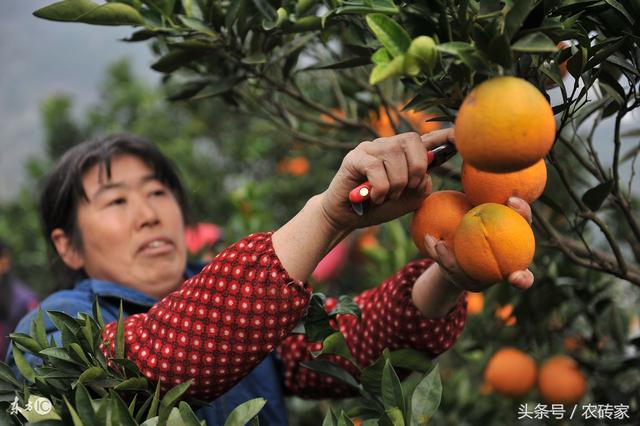
Citrus large-branch pruning technology can transform the original tree shape into a natural open-center canopy, improve internal light conditions, promote internal fruiting, regulate tree growth, rationally distribute nutrients, and improve yield and quality. Note that spring pruning should be the main method; pruning of trees in an off year can be postponed until the bud stage. After pruning, the canopy spacing between plants should be no less than 20 cm, and there should be a certain light path spacing between rows. The canopy height should be controlled between 3.0-3.5 m to achieve tree dwarfing and canopy opening[4].
Citrus large-branch pruning technology is a key technology for labor-saving citrus cultivation. During pruning, it must be noted that if there are too many main branches and secondary main branches, pruning can be completed in 2-3 years, and the amount of pruning should be determined according to the actual situation of the vegetation. When sawing large branches, they generally need to be sawed off or cut off from the base of the large branch, and no stubs should be left, so as to reduce the sprouting of new shoots. After large-branch pruning, new shoots should be promptly cut off in production to prevent the formation of water sprouts. After pruning, a series of measures such as soil, fertilizer, and water management, flower and fruit preservation, and pest and disease control must all keep up to ensure that "large-branch pruning" achieves the expected goals.
2.5 Pay Attention to the Use of Pesticides
It is prohibited to use phorate, isofenphos-methyl, demeton, carbofuran, aldicarb, ethoprophos, phosfolan, and chlorpyrifos on fruit trees; it is prohibited to apply omethoate and isocarbophos on citrus. Highly toxic and extremely toxic pesticides must not be used to control sanitary pests, and must not be used on vegetables, melons and fruits, tea, and Chinese medicinal materials. According to the provisions of the "Regulations on Pesticide Administration," no pesticide product may be used beyond the scope approved in the pesticide registration[5].
Author: Xiang Jinsong. Modern Agricultural Science and Technology