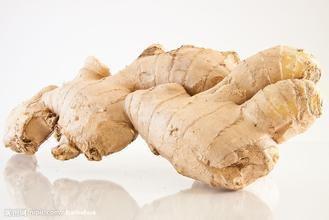
Key technical points for pest and disease control in ginger cultivation
Ginger encounters various pests and diseases during cultivation. How to better prevent and control pests and diseases, increase ginger yield, and raise farmers' income is currently very important; this is especially in line with the spirit of the No. 1 Central Document, advancing the pace of agricultural supply-side reform, and continuously raising farmers' living standards. Therefore, this section discusses pest and disease control techniques during ginger cultivation.
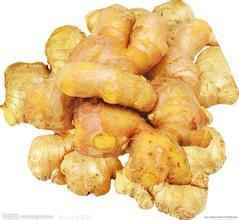
I. Ginger rot disease
Ginger rot disease is quite common during cultivation, and rotting ginger can often be seen in the field. Moreover, ginger rot disease is a devastating disease in ginger cultivation. If ginger rot disease occurs, ginger yield generally decreases by 10%-20%, and in severe cases can even reach more than 50%, with some cases resulting in total crop failure. It poses a serious threat to ginger cultivation and is a major factor restricting the development of ginger.
① Symptoms of ginger rot disease: The occurrence of ginger rot disease is not limited to specific parts; the roots, stems, and leaves of ginger can all be affected. However, the pathogen generally first infects and damages the base of the aboveground stem and the rhizome. At the initial stage of onset, ginger leaves begin to curl, droop, and lose their luster. Gradually, the leaves turn withered yellow from bottom to top. The base of the diseased plant first appears dark purple, then turns yellow-brown and water-soaked, after which the rhizome softens and rots.
② Control methods for ginger rot disease: Control of ginger rot disease should implement comprehensive control measures, with emphasis on agricultural control as the main approach, supplemented by chemical control. It should start with cutting off transmission routes and control the occurrence and spread of the disease as much as possible. Specifically, the following points should be achieved.
(1) When selecting ginger seed, it is necessary to be aware that it is best to select seed retained from disease-free fields or carefully select disease-free ginger seed for retention, which can eliminate the occurrence of the disease from the source.
(2) Ginger cultivation must strictly implement a crop rotation system, preferably with an interval of 5-7 years; ginger cannot be continuously planted in the same field.
(3) Choose plots with high terrain and good drainage. After deep plowing, apply 35-40 kg of lime per mu for soil disinfection treatment. When preparing the land, the ground should be level, and ginger furrows should not be too long, so as to prevent poor drainage and water accumulation in the field, which can trigger disease.
(4) During the ginger growing period, special attention should be paid to drainage and controlling the number of irrigations, applying more phosphorus and potassium fertilizers and organic fertilizers, especially beneficial microorganisms that have antagonistic effects on pathogens, and conducting timely topdressing.
(5) Chemical control: At the initial stage of ginger rot disease, drench the roots with 500 times dilution of Bisheng (thiazole zinc), applying 0.5 kg per plant, for 2-3 consecutive treatments. Alternatively, use 20% thiasen copper suspension concentrate at 300-500 times dilution, or 20% leaf blight azole wettable powder at 400 times dilution, or 50% chlorobromoisocyanuric acid water-soluble powder at 1000 times dilution. The first chemical drenching should be 10 days before disease onset, then once every 10 days thereafter, for a total of 4-5 drenchings.
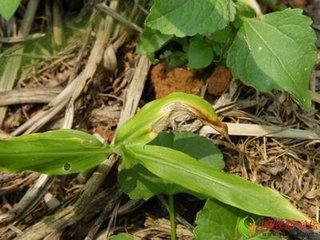
II. Ginger anthracnose
① Symptoms of ginger anthracnose: Ginger anthracnose mainly affects ginger leaves. First, water-soaked brown small spots appear at the leaf tip and leaf margin, then expand downward and inward into several elliptical or prismatic brown spots with halo patterns on the surface. The lesions merge into patches, causing the leaves to turn brown and dry up, and in humid conditions small black dots appear on the lesion surface.
② Control methods for ginger anthracnose: Ginger anthracnose should adopt comprehensive control measures focused on strengthening cultivation and disease-control measures, combined with spraying for protection. The specific methods are as follows:
(1) During ginger cultivation, inoculum sources should be reduced. Thoroughly clean the field and deeply plow and sun the soil during normal times, both of which can effectively reduce infection sources.
(2) Ginger cultivation should use high-ridge deep-furrow planting. Before planting, apply high-quality organic base fertilizer, level the ridge surface, carry out timely intertillage and hilling, remove weeds to reduce field humidity, and appropriately increase phosphorus and potassium fertilizers.
(3) Spray protection: At the initial stage of disease, choose Kairun (pyraclostrobin), or 20% prochloraz emulsifiable concentrate at 800 times dilution, spraying once every 10-15 days, for 2-3 consecutive sprays.
III. Ginger speckle disease
① Symptoms of ginger speckle disease: The main damage of ginger speckle disease is still to the leaves. Leaf spots are yellowish-white, spindle-shaped or oblong, small, 2-5 mm long, with the center of the spot becoming thin and easily rupturing or perforating. In severe cases, lesions are densely distributed, and the whole leaf looks speckled. Pycnidia in the shape of needle tips can be seen on the lesions.
② Control methods for ginger speckle disease: Ginger speckle disease should focus on strengthening and improving cultivation and disease-control measures, combined with comprehensive control measures of spray protection. The specific technical methods used are:
(1) Ginger cultivation still emphasizes avoiding continuous cropping. Before sowing, field cleaning should be thoroughly carried out and continuous cropping should be avoided. Rotation with rice is relatively effective.
(2) Before ginger planting, the land must be prepared and fertilized. Combined with land preparation and sunning the soil, raise high ridges, apply sufficient high-quality organic fertilizer, level the ridge surface to facilitate irrigation and drainage, avoid applying quick-acting nitrogen fertilizer alone or excessively, and appropriately increase phosphorus and potassium fertilizers to enhance resistance.
(3) During the ginger growth process, spray protection should be carried out in a timely manner: At the initial stage of disease, spray 68% refined metalaxyl-mancozeb water-dispersible granules at 600 times dilution, once every 7-10 days, for 3-5 consecutive sprays.
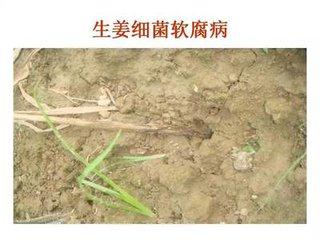
IV. Ginger borer
① Symptoms of ginger borer damage: The ginger borer is the main pest damaging ginger. When causing damage, the larvae bite and eat tender stems, then bore into the stems to continue damaging them. After the ginger borer bites and eats ginger plants, it causes the stems to become hollow, blocking the transport of water and nutrients, causing the upper leaves of ginger seedlings to wither and yellow and the stems to break easily.
② Control methods:
(1) Clean the field: After harvesting ginger, remove broken ginger plants, dead leaves, pest-damaged seedlings, and weeds, and burn them in a centralized manner.
(2) Manual capture: When damage to young seedlings is found, locate the entry hole and peel open the stem to catch the larvae.
(3) Chemical control: Spray foliage with 40% chlorpyrifos emulsifiable concentrate at 1000 times dilution, or 20% Longge at 3000 times dilution, or 20% Kangkuan at 3000 times dilution, etc.
V. Beet armyworm
① Symptoms of beet armyworm: Newly hatched larvae gather on the underside of leaves, spin silk to form webs, feed on leaf mesophyll, and leave the epidermis. After the 3rd instar, they eat the leaves into holes or notches.
② Control methods:
(1) Use black light lamps or frequency-vibration insect-killing lamps to trap and kill adults. Manual capture in the morning or evening is also possible, but it is labor-intensive, time-consuming, and quite exhausting.
(2) Installing insect-proof nets across the whole field to avoid damage is also a good measure. To control beet armyworm alone, choosing a 20-mesh insect-proof net is sufficient to achieve the control effect. If multiple pests are to be controlled at the same time, it is best to choose a 30-40 mesh insect-proof net.
(3) Beet armyworm larvae have thick and smooth epidermis, making it difficult for pesticides to penetrate. General pesticides have poor control effects. Spray 40% chlorpyrifos emulsifiable concentrate at 1000 times dilution, or 20% Longge at 3000 times dilution, or 20% Mimic gum suspension concentrate at 1000-1500 times dilution, once every 7-10 days, for 2-3 consecutive sprays.
Pest and disease control in ginger should be considered starting from ginger seed selection, and should be comprehensively considered during the initial growth cycle and the vigorous growth period of ginger. Only in this way can high yield and high quality of ginger be achieved and the income of farmer friends be increased!