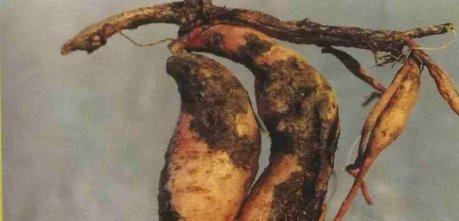
Pest and Disease Control Methods in Sweet Potato Cultivation
At present, farmers' enthusiasm for growing sweet potatoes is generally quite high, but in the process of cultivating sweet potatoes, just like with other crops, they will encounter various pests and diseases that affect the yield and quality of sweet potatoes. Today we bring you knowledge on the prevention and control of sweet potato pests and diseases.
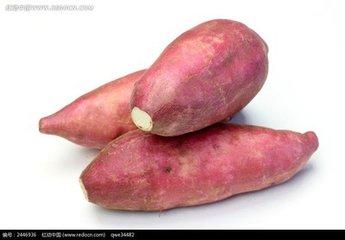
1. Disease Control
Common diseases in the process of sweet potato cultivation mainly include viral disease, leaf spot disease, scab disease, sweet potato blight, sweet potato stem rot, sweet potato soft rot, and so on.
2. Disease Control Methods
First, use virus-free seedlings and disinfect the seedlings; second, carry out chemical control according to different diseases.
For the control and prevention of physiological diseases: due to factors such as soil nutrient deficiency, physiological nutrient deficiency, and adverse environmental conditions (too dry, too wet, sunscald, high temperature, low temperature), various physiological diseases such as nutrient deficiency symptoms, sunburn, aging, weakness, and wilting are caused.
Control methods: select resistant varieties or insensitive varieties; select robust varieties with strong growth vigor; water appropriately to keep the soil surface and plants dry; maintain appropriate density; maintaining crop rotation in the planting plot can reduce the occurrence.
For non-infectious diseases, use sulfur and copper preparations for control. For bacterial diseases, such as soft rot, water appropriately while watering to keep the soil surface and plants dry. For fungal diseases, such as downy mildew, rust disease, and other soil-borne diseases, measures such as mulching and drip irrigation can be adopted to keep the environment dry, which can achieve control.
For viral diseases, control is achieved by controlling aphids.
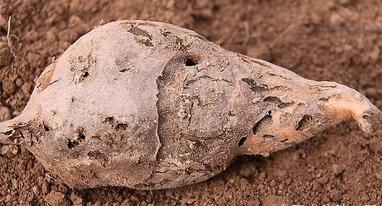
3. Pest Control
Common pests in the process of sweet potato cultivation mainly include stem borers, hawk moths, leaf roller moths, leaf beetles, small weevils, wireworms, scarab beetles, mole crickets, cutworms, cotton leafworms, aphids, and whiteflies, and so on.
4. Pest Control Methods
①. Crop rotation. Implement paddy-upland rotation in paddy fields, planting rice in early stubble and sweet potatoes in autumn, or planting rice in late stubble and sweet potatoes in winter; or planting aquatic vegetables in spring and summer and sweet potatoes in autumn and winter.
②. Adopt tissue-culture virus-free seedling methods.
③. Light-based insect killing. Install one frequency-vibration insect-attracting lamp every 20000 sq m.
④. Integrated control measures for underground pests such as small weevils, cutworms, mole crickets, wireworms, and leaf beetles. After planting, spray 500 times diluted probiotic liquid once every 15d; 2 to 3 months after planting, drench once with Beauveria bassiana or tobacco leaf (tobacco stem) water; the timing of each drenching should be staggered by 15d; place 15 to 20 small weevil sex pheromone traps per 667 sq m.
⑤. Stem borer control. 20d after planting, spray once with azadirachtin or rotenone to control sweet potato stem borers, then spray once every 10d, for 2 to 3 consecutive sprays.