Balcony loofah growing method: turn your balcony into a mini vegetable garden with ease
Loofah can be used not only as a vegetable, but its vines can also beautify the balcony, killing two birds with one stone. Today I will share with you the method for growing loofah on a balcony, turning the balcony into a mini vegetable garden.
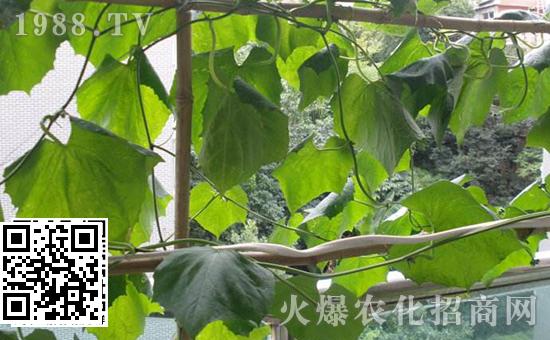
1. Growing loofah on a balcony requires preparing a sufficiently large container. The larger the volume and depth of the growing container, the better. At minimum, ensure a soil layer thickness of 15 cm and a soil capacity of more than 10 liters. Only in this way can the later growth of the loofah be guaranteed.
ps: Some gardening enthusiasts grow loofah in small flower pots. Although it will still grow, the results are much worse. This is something gardeners can weigh for themselves.
2. Find suitable soil, add compound fertilizer, and mix thoroughly, or directly buy nutrient soil. Because flower pots are limited, fertile soil is a powerful factor for giving loofah a boost in the later stages.
3. Space: loofah is different from other vegetables in that it needs to climb vines, so before planting loofah, we need to make reasonable plans for the balcony and prepare for guiding the loofah vines to climb. Because balcony layouts differ, gardeners can improvise freely, as long as the loofah has somewhere to climb. In addition, pay attention to light and ventilation, which are very important.
4. Seedling raising: we can first use a small pot to raise seedlings, generally in spring. Soak the seeds in warm water at 25°C-30°C for 4-6 hours, wash the sticky liquid off the seed surface, and then sow. Cover with about 1 cm of soil.
5. Planting out: generally seedlings emerge one week after sowing. When the young seedlings have *** true leaves, thin them out, removing old, weak, and diseased seedlings. Pay attention to ventilation and cooling. Keep the daytime temperature at 25°C-28°C and the nighttime temperature at 15°C-18°C to prevent leggy growth. One week before planting out, ventilate and harden the seedlings. When the young seedlings grow to 3-4 leaves and the temperature is around 20°C, they can be transplanted.
6. Key points of daily management:
When the vine grows to one meter long, do not rush to put it on the trellis. Bury sections of the vine into the soil around the roots. This is called vine burying. When the loofah vine grows long again, you can guide the vine onto the trellis. The trellis can be adapted to local conditions, and you can decide how to set it up according to your own situation.
When the main vine climbs to about 4 m-5 m, you can pinch off the growing tip, that is, pinch off the top of the vine, to encourage the loofah to grow more vines. After female flowers appear, you can hand-pollinate in the early stage, and later rely on bees. Keep 2-3 female flowers on one vine, then pinch off the growing tip. This can ensure fruit quality and at the same time encourage new vines to grow.
When there are too many male flowers, you need to remove flowers, that is, cut off the excess male flowers and leave only a small number of male flowers to save nutrients. As for how many to cut and how many to leave, just use your own judgment. When removing flowers, you can also thin leaves at the same time, cutting off overly dense leaves, old leaves, and yellow leaves to improve ventilation and light penetration and reduce the occurrence of loofah pests and diseases.
Loofah generally begins to be harvested in June, and enters the peak fruiting period in July-August. Harvest once every other day, and during the peak harvest period it can be harvested every day. Loofah can be harvested until Frost's Descent, but after the autumn turns cool, growth slows and quality declines.
For saving loofah seeds, the root gourd is best. The root gourd sets fruit early, has a long growth period, and its seeds are plump; its offspring grow quickly and bear fruit abundantly and early. However, the root gourd of long loofah will touch the ground and rot, so it is better to use the loofah formed just where it goes onto the trellis for seed.
That is all for sharing the method for growing loofah on a balcony and the details of turning the balcony into a mini vegetable garden. I hope this article is helpful to everyone, and good luck to you all.
Health preservation for middle-aged and older people: growing vegetables on the roof balcony
Middle-aged and older people who have retired at home originally kept birds and grew flowers, but in order to cope with rising prices, urban residents who clear their own roof balconies to grow vegetables are everywhere. These people include housewives, retired seniors, white-collar workers, bosses, and others. Of course, some people grow vegetables on roof balconies not to save money, but more to have fun. While we are still immersed in the online version of "Happy Farm" growing virtual fruits and vegetables, many trendy older people in our cities have long been busy and delighted in their own real-life "Happy Farm."Health preservation for middle-aged and older people: growing vegetables on the roof balcony (Figure 1)
Grandma Liu uses her own balcony to grow vegetables and chose to plant some potted vegetables, such as tomatoes, chili peppers, scallions, and so on. By moving her hands every day to tend the vegetables, her high blood pressure of many years unexpectedly healed without treatment. Balcony vegetable growing does not take up much space, does not require major effort when planting, and will not affect the neighbors' lives; when the plants grow, they are also quite nice ornamental pieces, and after ripening they can become fresh side dishes on the dining table. "Growing your own vegetables not only lets you enjoy greenery in daily life and enjoy the pleasure of farm-style cultivation, but you can also make them into dishes for the whole family to enjoy. Because no pesticides are used and there is no pollution, it feels safer to eat."
Health preservation for middle-aged and older people: growing vegetables on the roof balcony (Figure 2)
As for his wife growing vegetables on the home balcony, Grandma Liu's husband raised both hands in support. After seeing Grandma Liu growing vegetables at home, the neighbors also joined the ranks of growing their own vegetables one after another. Grandma Liu said that because she saved seeds when planting last year, quite a few neighbors came to ask her for seeds this year. Grandma Liu, who likes growing vegetables, especially likes to share her vegetable-growing experience with everyone. Grandma Liu said that sometimes everyone gets together in the community to discuss and sum up their own vegetable-growing experience. When a neighbor has not bought chili peppers or does not have enough, occasionally they go to another home to pick a few, and when she has extra vegetables, she also swaps them with neighbors to eat. It is very fun.
Health preservation for middle-aged and older people: growing vegetables on the roof balcony (Figure 3)
"Growing vegetables on your own balcony and enjoying the pleasure brought by green plants, with your own hands, you can likewise have ample food and clothing," said Mr. Zhao, Grandma Liu's neighbor. Because he and his wife are both wage earners, each month's income, besides paying the mortgage, also has to save tuition and living expenses for their child in elementary school. Since last year, he and his wife have turned their balcony and roof into a vegetable garden, tending these loofahs, chili peppers, scallions, and garlic at home every day. Their home has vegetables for every season. Mr. Zhao's wife, Ms. Kang, said, "The vegetables you grow yourself feel safe to eat. The key is that kind of joy and satisfaction from labor, which cannot be bought in the market."
Health preservation for middle-aged and older people: growing vegetables on the roof balcony (Figure 4)
In fact, when U.S. President Barack Obama and his wife, who love rural life, spent less than 200 US dollars to open a vegetable garden on the South Lawn of the White House, they may not have imagined that besides meeting the daily ingredient needs of the "first kitchen," this organic vegetable garden would also transform into a "health ambassador" advocating the concept of healthy eating and providing ordinary people with opportunities to get closer to the White House, with its influence sweeping across the United States. Last November, at the World Urban Forum, United Nations experts also suggested growing vegetables in communities, praising Brazil for investing millions of US dollars each year to support the urban poor in cultivating public vegetable gardens in communities and increasing sources of income. Whether to solve the problem of vegetables for people with economic difficulties or for a healthy and ecological lifestyle, the atmosphere of this green wave sweeping the globe is creating a new round of vegetable-growing fashion.
Health preservation for middle-aged and older people: growing vegetables on the roof balcony (Figure 5)
In fact, the popularity among older people of growing vegetables on roof balconies has deep social reasons. Returning to rural life is an instinctive human reaction, and the joy of "cultivating, planting, and harvesting by oneself" is a need for self-realization; as urban modernization advances, in fact many older people have a strong attachment to land, and frugality and vegetable growing have become a habit. When there is nothing to do, growing vegetables on a roof balcony can pass the time. In addition, some people grow vegetables because vegetable prices are relatively expensive and not safe enough, some people grow vegetables to relieve the pressure of the fast pace of the city, and some people do it to let children know and get close to nature.
Growing vegetables on urban roof balconies can let busy urban people exercise their bodies and cultivate their temperaments, and should be strongly encouraged! Let's all get hands-on and become green vegetable experts in our own homes!
Urban farmers growing vegetables on roof balconies
Franchise investment and purchase hotline: 0752-****069
3rd Floor, Building B, R&D Building, No. 5 Kechuang Road, Science and Technology Innovation Park, West District, Daya Bay, Huizhou City, Guangdong Province (Navigation: Daya Bay Science and Technology Innovation Park)
”