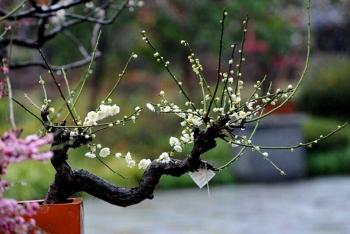
Detailed Guide to Plum Blossom Planting Methods and Propagation Techniques
Many types of plum blossoms can not only be grown outdoors for ornamental purposes, but can also be planted as potted flowers and used to make plum bonsai. Along with orchids, bamboo, and chrysanthemums, they are known as the "Four Gentlemen." So how are plum blossoms cultivated? What good methods are there for cultivation? What points should be noted when cultivating plum blossoms? Please read on with your questions alongside me!
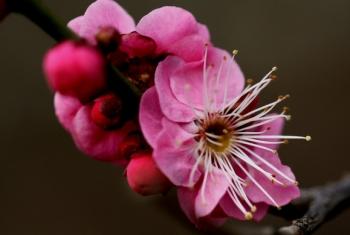

Plum Blossom Cultivation Methods (Basic Knowledge):
Best propagation time: Plum blossoms are generally propagated in early spring or late autumn.
Best growing soil: Plum blossoms are not demanding about soil and tolerate poor fertility. Any well-drained clay, loam, or sandy loam, as well as slightly alkaline soil (pH 6 to 8), allows them to grow well.
Growing humidity requirements: For plum blossoms, master the principle of watering when dry and letting dry between waterings; do not water when not dry, and water thoroughly when you do. On rainy days, empty saucers promptly to avoid waterlogging. During the vigorous growth period, water once a day. In summer, water once in the morning and once in the evening, and spray water on the potted plants and the ground to increase air humidity.
Best growing temperature: Plum blossoms like warmth and ample light. Except for apricot plum varieties, which can withstand low temperatures of -25°C, they generally withstand low temperatures of -10°C. They tolerate high temperatures and can still grow at 40°C. They grow and develop best in areas with an annual average temperature of 16 to 23°C.
Best growing light: During the growing period, plum blossoms should be placed in a sunny, well-ventilated location. If kept in a shaded environment with insufficient light, they will grow weak and spindly and bloom sparsely.
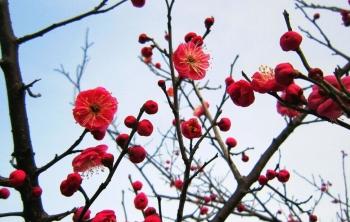

Precautions for Cultivating Plum Blossoms:
Applying fertilizer: Plum blossoms are relatively tolerant of poor soil and generally do not need much fertilizer; too much causes excessive vegetative growth of branches and leaves and makes it hard for flower buds to form. However, too little causes poor growth. The principle of fertilizing is small amounts, applied multiple times. Before flower bud differentiation, mainly use nitrogen fertilizer.
Key watering points:
(1) During the growing period, plum blossoms should be watered with attention, keeping the potting soil often moist with a tendency toward dryness. It should neither be waterlogged nor too wet or too dry. Follow the principle of watering when dry and letting dry between waterings.
(2) Generally, water less on cloudy days and when temperatures are low; otherwise, water more. In summer, water 2 times a day; in spring and autumn, water once a day; in winter, water thoroughly only after the soil has dried completely.
Pruning essentials: Shaping and pruning of plum blossoms can be done within 20 days after flowering. Focus on a natural tree shape, cutting out crossing branches, upright branches, dead branches, and overly dense branches, and shortening side branches to encourage abundant flowers and lush foliage. After potting, potted plum blossoms should be heavily pruned to lay the foundation for making bonsai.
Repotting and soil replacement: Plum blossoms should be repotted in late March to early April. When repotting, cut away old roots and rotten roots. Apply sufficient organic base fertilizer at the bottom of the pot, and replace with a neutral or slightly acidic, loose, fertile growing medium.
Propagation essentials: Plum blossoms are mainly propagated by grafting, commonly using cleft grafting and bud grafting.
Pest and disease control:
1. Leaf curl disease: Spray thiophanate or carbendazim for control, or spray 1% Bordeaux mixture once every week; 3 to 4 times is enough to cure it.
2. Anthracnose: In the early stage of the disease, spray 70% thiophanate at 1000 times dilution or zineb at 600 times dilution for control. When other various diseases are found, spraying the above two solutions can also be effective.
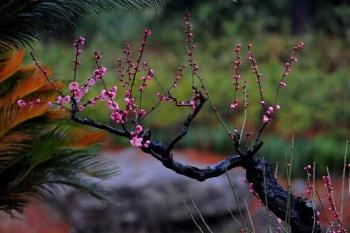
Tips from cultivating plum blossoms:
1. Throughout the entire vegetative growth period, plum blossoms need sufficient water. Reasonable water supply is what allows plum blossoms to grow well. Although plum blossoms are fairly drought tolerant, severe water shortage can also cause poor growth and even death of the plant. In cold northern regions, plum trees often suffer physiological freeze damage due to soil water shortage. Therefore, in winter, even more attention should be paid to preserving soil moisture. From spring to early summer, watering is also needed to prevent drought.
2. Plum blossoms fear waterlogging most. If there is a large amount of standing water, roots often rot and the plant dies.
3. Potted plum blossoms are generally for home viewing. After leaf fall in winter, place them indoors and keep the temperature at 0 to 5°C. After New Year's Day, gradually raise the temperature to 5 to 10°C, and let them receive full sunlight during the day. Frequently spray water on the branches, and the water temperature should be close to room temperature.
4. Plum blossoms like a warm climate, are not very cold hardy, are relatively drought tolerant, are not tolerant of waterlogging, and have a long lifespan that can reach a thousand years. They are especially sensitive to climate changes during the flowering period. Plum blossoms like relatively high air humidity, but avoid heavy rain during the flowering period.