Key Technical Points for Cluster Elongation in Grape Growing
For some grape varieties, in order to give the clusters higher commercial value, gibberellin is used during the cluster separation stage to elongate the cluster, achieving the goal of reducing berry thinning and increasing cluster weight. This is a technique in grape growing.
Today we will briefly study cluster elongation technology.
The varieties suitable for cluster elongation are mainly Euro-American grape varieties.
Seeded varieties grown for seedless production, such as seedless Zuijinxiang and seedless Yinhong (Yongyou No. 1).
Varieties that set fruit well but naturally have relatively small clusters.
Many Euro-American varieties expected to set fruit well, in order to reduce the workload of berry thinning.
For various reasons, varieties whose clusters reach less than 2/3 of the normal cluster size of previous years, such as Fujiminori.
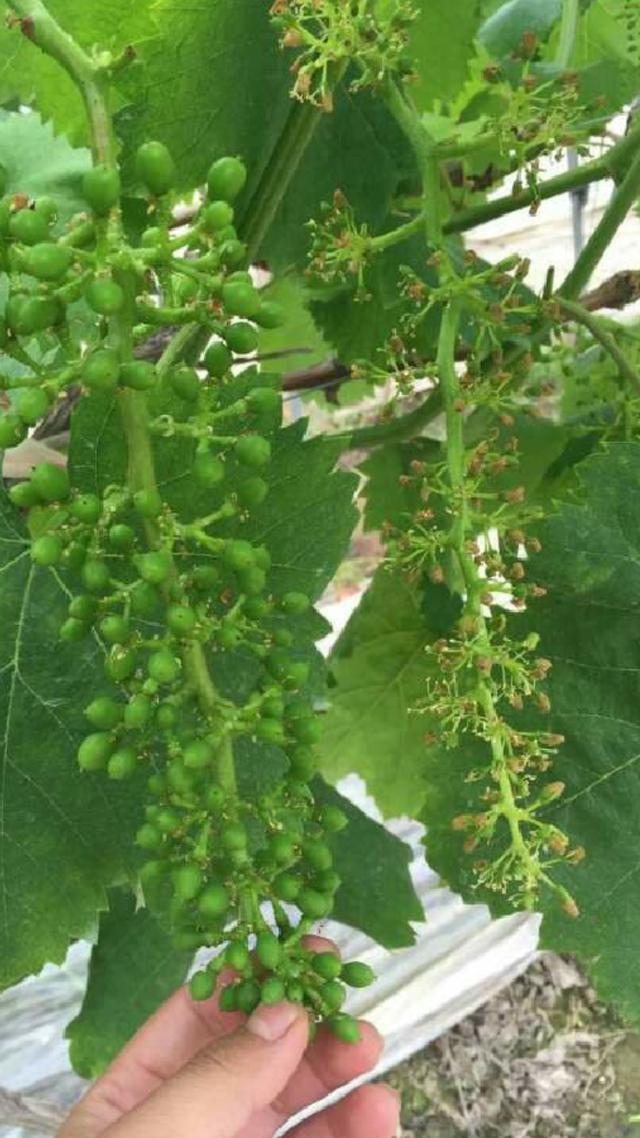
Selection of Cluster Elongation Agents
Domestic gibberellin can achieve cluster elongation, but its performance is not stable enough, and in certain years certain varieties fail to reach the expected effect. Therefore, most vineyards choose 20% American Qibao.
Timing and Concentration for Using Cluster Elongation Agents
Theoretically, it can be used from the 6-leaf stage of grapes until the early flowering stage. In actual practice, most vineyards use it at the 7-8 leaf stage, that is, about 15 days before flowering (about 30 days after bud break). At this time the effect is best and the cost is moderate.
A concentration of 5PPM can achieve the expected effect, that is, one 1-gram packet of 20% American Qibao mixed with 80 jin (40 kg) of water. For the special variety Zuijinxiang grape, in the first year of fruiting, mix with 50 jin (25 kg) of water; from the second year onward, use the normal amount of water.
Either dipping with a disposable cup or micro-spraying can be used.
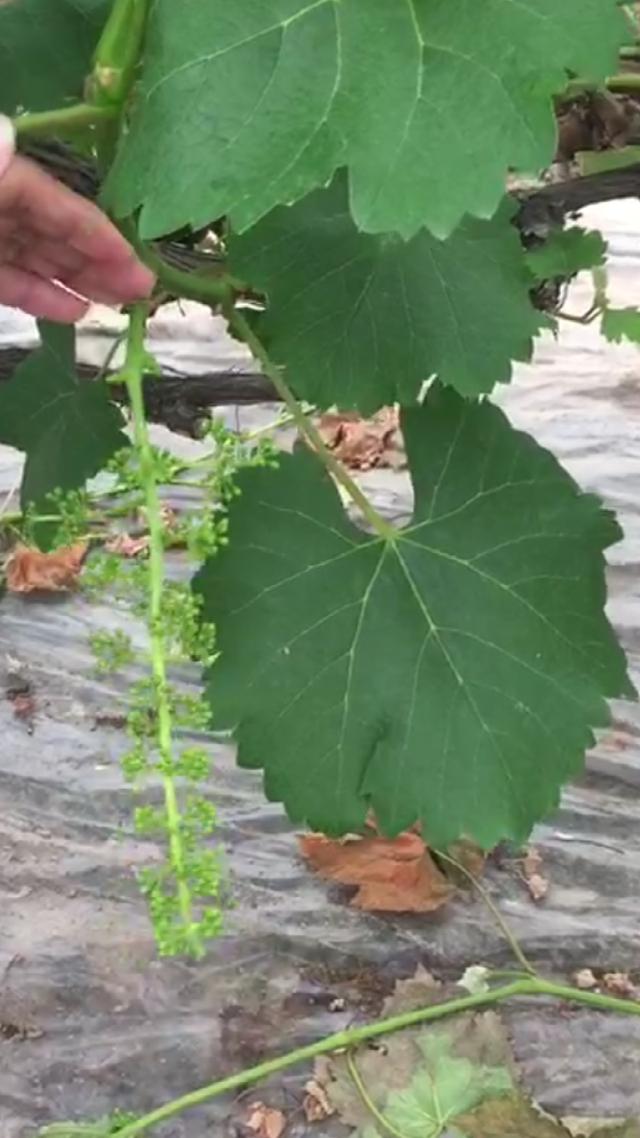
Precautions for Cluster Elongation Agents
Irrigate the furrows thoroughly with water once before and after cluster elongation.
Varieties undergoing cluster elongation must have their fruit set protected, to prevent severe berry drop that results in no proper clusters.
After cluster elongation, gray mold and rachis brown blight must be well prevented. In vineyards where disease has not occurred at the time of elongation, mix a preventive agent into the elongation agent, such as copper quinoline. In vineyards where disease has already occurred, mix in a curative agent, such as Shijiale.
Cluster elongation must be done with caution!
Take Red Globe, for example. Some vineyards that adopt cluster elongation have normal fruit set, while others suffer severe berry drop, affecting yield or even causing total crop failure for the whole vineyard.
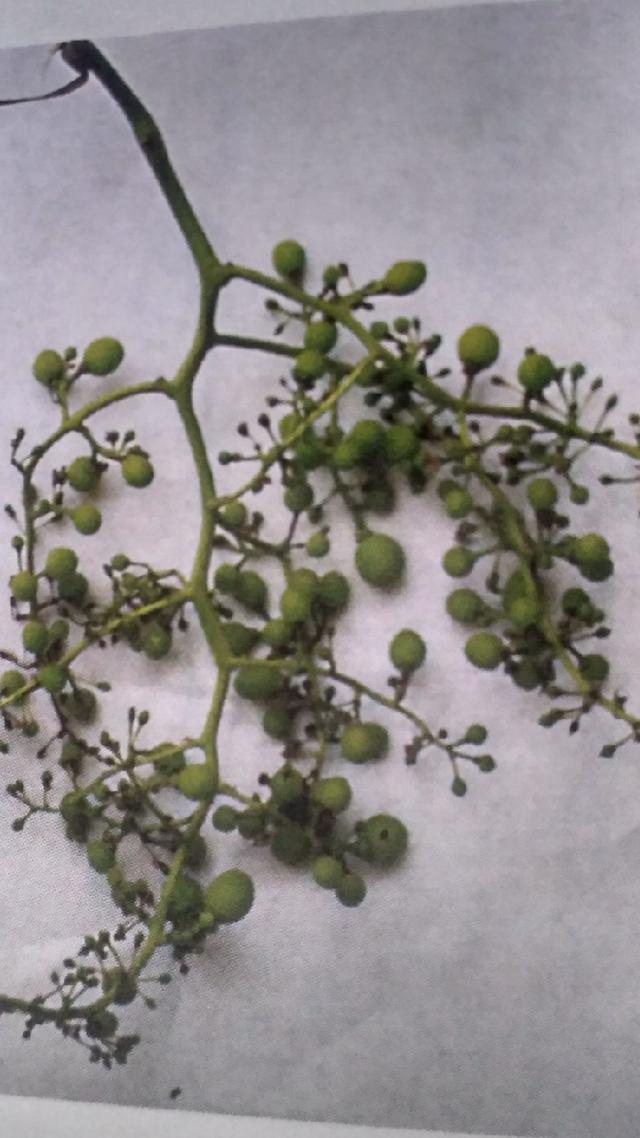
(Most clusters of Red Globe in a certain vineyard after cluster elongation)
As things stand now, basically no Red Globe vineyards in the south use cluster elongation.
Although many varieties of cluster elongation agents have appeared on the market now, vineyards without sufficient experience and technology, whether growing Vitis vinifera or Euro-American varieties, must first test on a few vines, and only after conditions are ripe extend it to the whole vineyard, so as to avoid unnecessary losses.
(Original work by the author. Personal forwarding and saving are welcome, but it must not be used for for-profit business.)