New tricks for growing ginger, learn these practical methods
Ginger is a vegetable and seasoning loved by the broad masses of the people. For many years, the majority of vegetable growers in our area have always used open-field cultivation, and the yield has not been very ideal. In recent years, we have achieved success with plastic film mulching cultivation, and the yield can be increased by 20%. The cultivation techniques are introduced as follows:
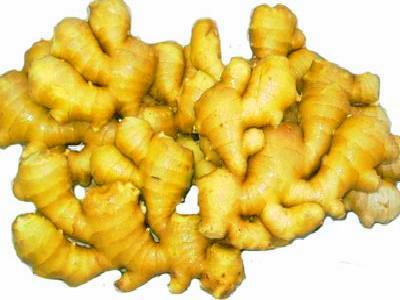
I. Cultivating strong sprouts:20 to 30 days before sowing, take the seed ginger out of the storage pit, wash off the soil on the ginger pieces, spread them flat on a straw mat or clean ground and sun-dry for 1 to 2 days. When sun-drying, pay attention to moderation; do not expose them to strong sunlight. If the sunlight is too strong, shade them appropriately with a straw mat. Place the seed ginger indoors in a pile for 2 to 3 days, covering the ginger pile with a straw mat. At the same time, strictly select the seeds, discarding thin, weak, shriveled ginger pieces, or those with browned or softened flesh, and select plump ginger pieces with bright color, no shrinkage, no rot, no frost damage, firm texture, and no pest or disease damage as seed ginger. Then carry out sprouting. Sprouting is an important technical measure in ginger production. There are many methods, but the basic principle is to keep the temperature at 22-25°C and sprout for 20-25 days to meet the sowing requirements, with plump and thick young sprouts. In our area, a sunny seedbed can be used for sprouting, that is, build a sunny seedbed in a wind-sheltered, sun-facing place, 0.6 m deep and 1.2 m wide, with the length depending on the amount of seed ginger. Spread 10 cm thick dry grass on the bottom and around the sides, place the sun-dried ginger inside, with a ginger thickness of 30-35 cm as appropriate, cover the ginger pieces with 15 cm thick dry grass, maintain darkness and loose air permeability, and finally set up an arch frame, cover it well with plastic film, and add straw curtains at night to ensure a seedbed temperature of 20-25°C. During sprouting, attention should be paid to keeping the seed ginger moist. Under the condition of ensuring air permeability, increase the thickness of the covering as much as possible to reduce water evaporation. The standard for sprouting is a sprout length of 0.5-2.0 cm and a thickness of 0.5-1.0 cm.
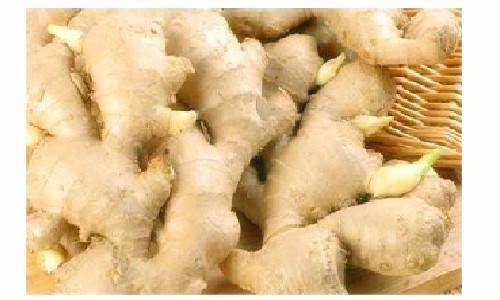
II. Land preparation and basal fertilizer application: Choose fertile loam with deep soil layers, rich organic matter, water and fertilizer retention, irrigation and drainage capacity, loose and air-permeable texture, and slightly acidic. Deep plow more than 30 cm, apply more than 5000 kg of decomposed organic fertilizer per 667 sq m, and 50-75 kg of superphosphate. Level and harrow finely, cultivate on high beds, with a bed width of 1.5 m including ditches and a height of more than 20 cm. Open 3 furrows 10 cm deep on the bed surface, and 3 rows can be planted.
III. Sowing: Seed ginger pieces are preferably about 50-75 g in size, as they emerge early, grow vigorously, and give high yield. If the seed pieces are too small, emergence is delayed, seedlings are weak, yield per plant is low, and market quality is poor. Keep only one short, strong sprout on each seed ginger piece and remove all other sprouts. When breaking the ginger apart, if the base of the sprout or the cut surface of the ginger piece is found to have turned brown, it should be discarded. Then soak the broken ginger pieces in a 250-500 mg/kg ethephon solution for 15 min, remove them, and sow immediately, which can promote branching of the ginger plant, enhance growth, and increase yield. In our area, plastic film mulching cultivation is used, allowing sowing as early as late March, more than 1 month earlier than open-field cultivation.
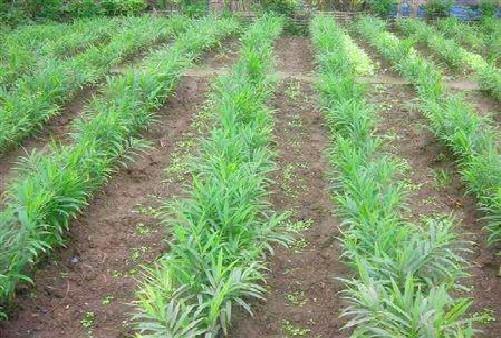
After sowing ginger and covering with soil, while the soil is moist, use 1 kg of nitrofen per 667 sq m mixed with 20 kg of water and spray it evenly on the ginger furrows and surrounding ground. When spraying, the operator should move backward. After spraying, keep the ground moist.
After sowing ginger, stretch 1.2 m wide plastic film tightly over the ridges on both sides of the furrow, press the film firmly, and keep the distance between the furrow bottom and the upper edge of the film at 15 cm. After the young sprouts emerge, when the seedlings touch the upper film, punch holes to lead the seedlings out, and remove the plastic film in mid-to-late May.
IV. Field management
1. Shading: Ginger is not tolerant of strong light and high temperatures. After removing the film in mid-to-late May, shading should be carried out, and removed in early-to-mid August. The method is to insert bamboo poles 2-3 cm thick on both sides of the bed, then tie small horizontal bamboo poles at 1.7-2.0 m above them, and cover with grass. A shade net with 60%-70% shading rate can also be used, then fixed with rope. Tall stalks can also be inserted between rows or vine crops interplanted with trellises for shading. Generally, 60% shading is more suitable. Insufficient shading reduces the effect, while excessive shading causes the plants to grow excessively and yield to drop sharply.
2. Fertilizer and water management: Water thoroughly before sowing. Water the first time half a month after sowing, and the second time 2-3 days later. During the seedling stage, water frequently in small amounts to maintain soil moisture at 65%-70%. In summer, watering in the morning and evening is preferable. After heavy rain, pay attention to drainage. After the Beginning of Autumn, the plants enter the vigorous growth period and need more water, so water once every 4-6 days to maintain relative soil moisture at 75%-80%.
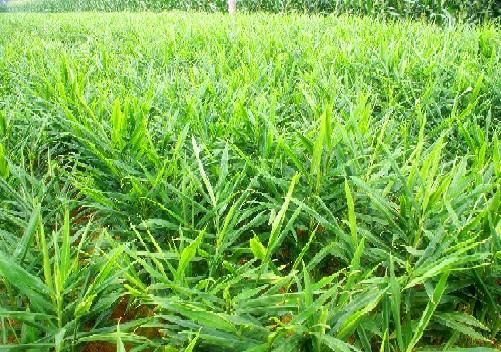
No topdressing is needed during the germination stage. When the seedlings are 30 cm tall and have 1-2 branches, apply a strong-seedling fertilizer once, applying 20 kg of ammonium sulfate or diammonium phosphate per 667 sq m. Around the Beginning of Autumn, combine with dismantling the ginger shed to apply heavy fertilizer. This period is the ginger expansion stage, so apply 75 kg of cake fertilizer and 50 kg of compound fertilizer per 667 sq m. At the same time, combine with topdressing to carry out the first earthing up, and thereafter carry out the second and third earthing up along with watering. In mid-September, apply supplementary fertilizer, applying 25 kg of compound fertilizer per 667 sq m.
3. Pest and disease control: The main disease is ginger blast, which generally begins in July and is severe under high temperature and rainy conditions. This disease is mainly controlled by comprehensive agricultural measures, such as crop rotation, strict seed selection, etc. When diseased plants are found in the field, pull them out promptly, and also remove healthy plants within 0.5 m around the diseased plants, dig out the bacteria-bearing soil, spread 1 kg of slaked lime in and around the diseased holes, and use 50% carbendazim 500-fold solution or 72% agricultural streptomycin sulfate soluble powder 3000-4000-fold solution for root irrigation, or spray with 50% amobam 800-fold solution or 50% DT wettable powder 500-fold solution to prevent the disease from continuing to occur.
4. Timely harvest
Seed ginger can be harvested at the same time as fresh ginger before the first frost, or it can be harvested earlier at the Beginning of Autumn. Generally, early harvest is not recommended, because it easily causes wounds and invites pathogen invasion. Fresh ginger is generally harvested promptly in early November before the first frost.