Detailed Explanation of Key Points for Year-Round Cultivation and Management Techniques of Mandarin Oranges
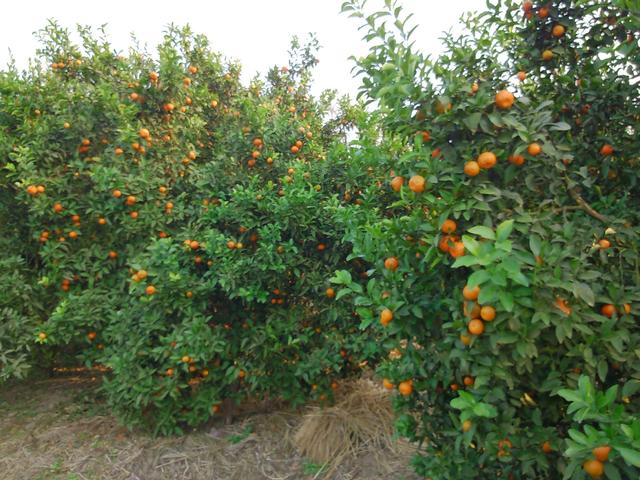
Mandarin orange is an evergreen fruit tree with a life cycle that continues year-round, producing many flushes of new growth, a long fruit development period, and carrying out assimilation and flower bud differentiation even in winter. Once planted, it will grow in the same plot of land for many years. Therefore, mandarin orange selectively absorbs large amounts of nutrients year-round, causing an imbalance of nutrients in the soil. Fertilizer and water management in the orchard is an important factor affecting mandarin orange yield.
The growth and fruiting of mandarin orange require balanced nutrition to regulate the balance between vegetative growth and fruit development, so as to achieve high yield and quality fruit. Excessive nitrogen fertilizer often causes excessive vegetative growth; during the fruit expansion period, more potassium fertilizer is often needed, and if it cannot be supplied in time, it will affect fruit yield and quality. Fertilization is best done with a combination of organic and inorganic fertilizers. Young trees should be mainly fertilized with nitrogen to promote growth; bearing trees should, on the basis of nitrogen fertilizer, increase phosphorus and potassium fertilizers to improve yield and quality; aging trees need more nitrogen fertilizer to restore tree vigor.
We bring you the key work priorities throughout a full year in the mandarin orange planting process, hoping to provide some help to mandarin orange growers.
January (Minor Cold to Major Cold)
Central tasks: Promote flower bud differentiation and control winter shoots.
Phenological period: Flower bud morphological differentiation stage. Main management measures:
(1) Continue harvesting fruit, collect all fruit in time, and restore tree vigor as soon as possible.
(2) Appropriately control water until leaves curl slightly, but if there is a prolonged drought, water appropriately.
(3) Loosen soil, mound soil, repair irrigation and drainage facilities, and repair terraces.
(4) Winter orchard cleaning, spray once with 0.8-1 degree Baume lime sulfur mixture or 12-degree rosin mixture.
(5) Spray dormancy hormone to control winter buds, spraying before buds emerge or just as they emerge.
(6) Apply Major Cold fertilizer to young trees and old weak bearing trees to promote spring shoots.
(7) Prune fruit trees, cutting off dead branches, diseased and pest-infested branches, leafless branch groups and water sprouts.
(8) Spray foliar fertilizer: spray organic and inorganic fertilizers 2-3 times before and after fruit harvest.
(9) Plant fruit seedlings before spring shoot buds sprout, and water thoroughly to settle the roots.
February (Start of Spring to Rain Water)
Central tasks: Promote flowering and strengthen flowers.
Phenological period: Spring shoot sprouting stage and flower bud stage.
Main management measures:
(1) Finish harvesting all fruit on the trees and continue completing orchard cleaning work.
(2) Apply quick-acting chemical fertilizer (such as compound fertilizer) to bearing trees to promote flowering; apply pre-shoot and post-shoot fertilizer to young trees.
(3) Irrigate (or flood irrigate) during spring drought.
(4) Spray ammonium molybdate, borax, etc. on bearing trees at the flower bud stage, once every 7 days, for 2 consecutive times, to improve flower quality.
(5) Thin excessive spring shoots on young and mature bearing trees, keeping only 3 new shoots per parent branch.
(6) Pay attention to the prevention and control of scab, anthracnose, red spider mites and aphids.
March (Awakening of Insects to Spring Equinox)
Central tasks: Mainly protect flowers and strengthen flowers.
Phenological period: Spring shoot growth stage, flower bud stage - early flowering stage - full flowering stage.
Main management measures:
(1) Spray root-absorbed fertilizer: spray amino acid sugar phospholipids, zinc sulfate, borax, etc. at the flower bud stage, once every 7 days, for 2 consecutive times.
(2) For vigorously growing trees, thin spring shoots or branches, and cut overly long spring shoots short to 15-20 cm.
(3) For bearing trees, apply 30-40 grams of magnesium sulfate, 15 grams of zinc sulfate and 25 grams of borax per tree to the ground. For young trees, apply urea plus compound fertilizer to promote vigorous growth.
(4) Irrigate during prolonged drought, and spray clean water on flower clusters.
(5) Drain during rainy days, and shake flowers promptly on rainy days to prevent flower soaking and rotting.
April (Pure Brightness to Grain Rain)
Central tasks: Protect fruit and prevent pests.
Phenological period: Full flowering stage - flower fading stage, young fruit development stage and the 1st physiological fruit drop period.
Main management measures:
(1) For vigorous trees with few flowers, ring-cut the trunk after 1/3 of flowers have faded; for trees with many flowers and vigorous growth, ring-cut the main branch once after flowers have fully faded to protect fruit.
(2) Apply post-flowering fertilizer, starting when 2/3 of flowers have faded.
(3) Spray root-absorbed fertilizer, spraying amino acid sugar phospholipids and cytokinins 2-3 times after flowering.
(4) Spray fruit protection solution, spraying 20 mg/kg gibberellin once 5-7 days after flowering.
(5) Pay attention to the prevention and control of anthracnose, scab, rust mites and red spider mites, etc.
(6) Remove sporadic summer shoots from young trees and bearing trees.
(7) Fertilize non-bearing young trees to promote vigorous summer shoots, and continue planting fruit trees and replanting fruit seedlings.
May (Start of Summer to Grain Full)
Central tasks: Protect fruit and strengthen fruit.
Phenological period: The 2nd physiological fruit drop period, young fruit development stage and summer shoot sprouting stage.
Main management measures:
(1) Spray fruit protection and fruit strengthening solution once before the 2nd physiological fruit drop, and spray again after 15 days, mixed with monopotassium phosphate and magnesium sulfate.
(2) Spray amino acid sugar phospholipids 2-3 times this month.
(3) For vigorously growing trees, carry out a 2nd ring cut on the main branch 15 days after the 1st ring cut to protect fruit.
(4) Remove summer shoots from bearing trees to prevent fruit drop.
(5) Cover the tree base with mulch for sun protection.
(6) Pay attention to draining accumulated water from the orchard during heavy rain.
(7) Pay attention to the prevention and control of rust mites, red spider mites, stink bugs, longhorn beetles, scale insects, anthracnose and canker disease.
(8) Apply sufficient pre-shoot fertilizer to young trees, remove buds to control shoots, and release summer shoots uniformly from the end of the month to the beginning of the next month.
June (Grain in Ear to Summer Solstice)
Central tasks: Remove summer shoots, prevent and control pests and diseases, and strengthen fruit.
Phenological period: End of the 2nd physiological fruit drop period, summer shoot stage.
Main management measures:
(1) Continue removing summer shoots, once every 3-5 days, or use shoot-killing spray to kill summer shoots, paying attention to the concentration used.
(2) For bearing trees with many fruits and few summer shoots, appropriately increase water and fertilizer application; other trees generally do not need fertilizer.
(3) Deep plow and bury green manure to improve soil in hilly and mountainous orchards, and apply phosphate fertilizer and lime.
(4) Clear water ditches and drain accumulated water in time.
(5) Do a good job in preventing and controlling rust mites, longhorn beetles and canker disease.
(6) Apply shoot-strengthening fertilizer to young trees, and release shoots uniformly by the beginning of this month at the latest.
July (Minor Heat to Major Heat)
Central tasks: Pick (remove) summer shoots or spray shoot-killing solution.
Phenological period: Fruit expansion stage and summer shoot stage.
Main management measures:
(1) Continue removing summer shoots until autumn shoots are released.
(2) For trees that have borne fruit for 1-2 years, release shoots once at the beginning of the month, but for perennial bearing trees, heavily apply autumn shoot fertilizer and continue controlling shoots.
(3) Apply fertilizer to promote autumn shoots, mainly organic fertilizer combined with nitrogen fertilizer, phosphorus-potassium fertilizer and magnesium fertilizer 10-15 days before shoot release.
(4) Carry out summer pruning, cutting back upright branches with a diameter of 0.5-0.8 cm in the middle and upper outer canopy, leaving 4-6 cm stubs to sprout shoots.
(5) Do a good job in drought prevention and moisture retention, and irrigate in time during drought.
(6) Pay attention to the prevention and control of rust mites, red spider mites, citrus psyllids, leafminers, swallowtail butterfly larvae, longhorn beetles and canker disease.
(7) For young trees in mountainous orchards, after summer shoots mature, deep plow and bury green manure to improve soil, and fertilize to promote shoots.
August (Start of Autumn to End of Heat)
Central tasks: Promote shoots, protect shoots and strengthen fruit.
Phenological period: Fruit expansion stage and autumn shoot release stage.
Main management measures:
(1) Uniformly remove buds once before releasing shoots.
(2) It is best to release autumn shoots during light to moderate rain; during drought, prevent drought and retain moisture.
(3) After releasing shoots, pay attention to preventing and controlling pests and diseases on new shoots, achieving "one shoot, two sprays," that is, spraying once when shoots are 1-2 cm long and once at about 10 cm.
(4) For large bearing trees, deeply apply organic fertilizer after autumn shoots mature, but cover in time to prevent drought.
(5) Apply sufficient shoot-promoting fertilizer to young trees, release shoots uniformly, and strengthen root-absorbed fertilizer application.
(6) After releasing shoots, pay attention to shoot thinning, keeping 2-3 strong shoots per parent branch and removing the excess.
September (White Dew to Autumn Equinox)
Central tasks: Strengthen shoots and strengthen fruit.
Phenological period: Autumn shoots turning green and rapid fruit expansion stage.
Main management measures:
(1) Apply shoot-strengthening and fruit-strengthening fertilizer, mainly potassium fertilizer combined with magnesium fertilizer and nitrogen fertilizer, applied after autumn shoots self-prune.
(2) Foliar fertilizer: During the period when new autumn shoot leaves unfold and turn green, spray root-absorbed fertilizer.
(3) Prevent and control new shoot pests, and pay attention to mite damage.
(4) For young trees that released summer shoots, release autumn shoots at the beginning of the month.
(5) Prevent drought and retain moisture, shallowly loosen soil, mulch and irrigate.
(6) Apply shoot-strengthening fertilizer cautiously to young trees to prevent winter shoots.
(7) Do a good job in propping up fruit.
October (Cold Dew to Frost Descent)
Central tasks: Strengthen fruit.
Phenological period: Rapid fruit expansion stage, autumn shoot turning green stage.
Main management measures:
(1) Promote autumn shoots to mature, spraying foliar fertilizer 2-3 times.
(2) For old weak trees bearing too much fruit, or orchards with severe leaf curling caused by drought, pay attention to orchard irrigation.
(3) Promptly carry out deep plowing and soil improvement in young orchards.
(4) Pest and disease control, with special attention to the prevention and control of rust mites.
November (Start of Winter to Minor Snow)
Central tasks: Prevent winter shoots, promote flower bud differentiation and prepare for fruit harvest.
Fruit tree phenological period: Fruit maturity, flower bud differentiation and winter shoot sprouting stage.
Main management measures:
(1) Appropriately control water to prevent winter shoots from sprouting.
(2) Fruit trees bearing many fruits can be appropriately irrigated to strengthen fruit; those bearing few fruits should have pits dug appropriately to expose roots to the sun, preventing winter shoots.
(3) Spray 800 mg/kg paclobutrazol to control and strengthen shoots, and pay attention to preventing and controlling red spider mites and rust mites.
December (Major Snow to Winter Solstice)
Central tasks: Seize the opportunity to harvest fruit, promote flower bud differentiation, prevent winter shoots and control pests and diseases.
Phenological period: Fruit maturity, flower bud differentiation.
Main management measures:
(1) For high-yielding trees, harvest the fruit in stages in mid-month, applying the "one fruit, two cuts" method.
(2) For young and vigorous trees, continue digging pits to cut roots and expose roots to control water; for vigorous trees on sour orange (Citrus aurantium) rootstock, carry out ring-barking to control shoots and promote flowering.
(3) Whitewash the trunks with lime slurry.
(4) Carefully carry out winter orchard cleaning after harvest, promptly pick and prune diseased leaves and dead branches, and burn them in a centralized manner.
(5) Spray lime-sulfur mixture, resin soap mixture or other chemical pesticides to eliminate pests and diseases.
(6) Apply post-harvest fertilizer, mainly decomposed organic fertilizer, together with an appropriate amount of compound fertilizer and trace elements such as magnesium, zinc and boron.
China Kiwifruit Industry Network (www.51qiyiguo.com / WeChat official account: wgmhtcyd) adopts the "Internet + industry" approach, centered on Wugong kiwifruit and reaching kiwifruit upstream and downstream enterprises nationwide, integrating industry resources to form a national focal center for the upstream and downstream of a single product industry. It provides information services for the ecological supply chain of the kiwifruit planting, processing and sales industry, driving the online upgrading of the industry.
Follow kiwifruit, follow Wugong Boy (http://www.toutiao.com/m6573745535/)