How to Grow Napa Cabbage in Balcony Containers, Easy Enough for Beginners to Learn
"Of all meats, pork is the most fragrant; of all vegetables, none beats napa cabbage." In life, what nourishes us most is often the most ordinary, the closest, the gentlest things. Besides being nutritious and delicious, napa cabbage also has excellent medicinal and health-promoting benefits.
Napa cabbage is not only tasty but also highly valued for its therapeutic properties. Among these, for people who sit for long periods and dislike exercise, the most valuable component is crude fiber. Crude fiber promotes intestinal peristalsis, aids digestion, reduces abdominal fat, and helps with weight loss. In addition, napa cabbage is rich in minerals that boost the body's immunity. Clearly, there is good reason to love napa cabbage.
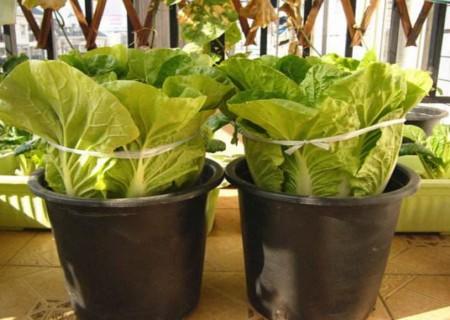
Back to the point, let's take a look at how to grow napa cabbage in balcony containers!
1. Seedling cultivation techniques
For growing napa cabbage in balcony containers, there is no need for seedling raising and transplanting; you can sow directly. Sow 2-3 seeds per pot and choose a variety suited to your local area. Before sowing, water the nutrient soil in the pot thoroughly to provide bottom moisture, then place the seeds in the pot and cover with about 1 cm of sifted fine soil. Water lightly with a spray bottle every day to keep the surface moist, and seedlings should emerge in about 4-6 days. When the seedlings reach the "two leaves and one heart" stage, thin out the weak, small seedlings and those with abnormal cotyledon shapes, leaving just 1 healthy plant.
2. Vigorous cultivation techniques
(1) Temperature and humidity management
Napa cabbage prefers a cool climate, with an optimal growing temperature of 18-20°C. Therefore, you can choose to sow during the middle or even the last period of the dog days of summer. During the seedling stage, water needs are low, so water frequently but lightly, just keeping the soil surface moist; this also prevents the seedlings from growing leggy. Once napa cabbage enters the heading stage, water needs become relatively high, so be sure to water promptly.
(2) Light management
Napa cabbage likes ample light, so growing it on a south-facing balcony is more favorable for its growth.
(3) Fertilizer management
Napa cabbage has a relatively shallow root system and weak absorption capacity, so the soil needs to be loose and must not become compacted. It is best to loosen the soil 2-3 times during the seedling stage, to a depth of about 5-6 cm, to promote root growth and the roots' absorption of nutrients and water.
In addition, during the seedling stage, fertilizing is not recommended to avoid leggy growth. When napa cabbage has grown 8 true leaves and before it begins to head, it enters a period of rapid growth. At this time, apply organic fertilizer as a top dressing multiple times to promote growth. If necessary, use foliar calcium fertilizer to prevent "tipburn" in napa cabbage. In the early heading stage, the demand for nitrogen is relatively high, so apply one additional round of nitrogen fertilizer. In the mid-heading stage, apply top dressing according to growth conditions. Each top dressing should be combined with watering.
3. Green pest and disease control techniques
Napa cabbage is prone to pests such as aphids, whiteflies, and diamondback moths, as well as diseases such as viral disease, downy mildew, and soft rot. In the early stages of pest and disease occurrence, manual removal can be carried out. One of these diseases, called "napa cabbage soft rot," is severely damaging and must be prevented in advance.
Napa cabbage soft rot is caused by bacteria and can invade through wounds created by human activity or pest feeding, and spreads via rainfall and watering. When sowing is too early, when it is hot and rainy, when there is low-lying waterlogged ground, or when pest outbreaks are severe, this disease occurs seriously. It first appears at the base of the outer leaves near the ground, where localized rot develops, appearing grayish-brown. Under suitable conditions, the entire plant quickly softens, rots, and gives off a distinctive foul odor.
How can it be prevented in advance?
First, before planting vegetables, the soil used should be sun-dried, and thoroughly decomposed organic fertilizer should be chosen.
Second, drain water promptly after rain, or do not let water accumulate in the tray when watering. Once disease occurs, promptly pull out affected plants, disinfect the soil near the diseased plants, and then water. Also control pests promptly to reduce wounds caused by human activity and pests.
Finally, remember one principle: soft rot should be primarily prevented. But if disease does occur, in the early stage, use 77% copper hydroxide (Kocide) at 500 times dilution, or 20% thiodiazole-copper at 500 times dilution, to drench the roots or spray the base, focusing treatment on plants near the central diseased plant.