How to Grow and Propagate Lucky Bamboo
Lucky bamboo stands tall and elegant, staying green through winter and summer, making it perfect for the living room or study. So here's the question: how do you care for lucky bamboo, how do you prune it, and can lucky bamboo be put in the sun? Most importantly, of course, how do you care for lucky bamboo so it grows more vigorously?
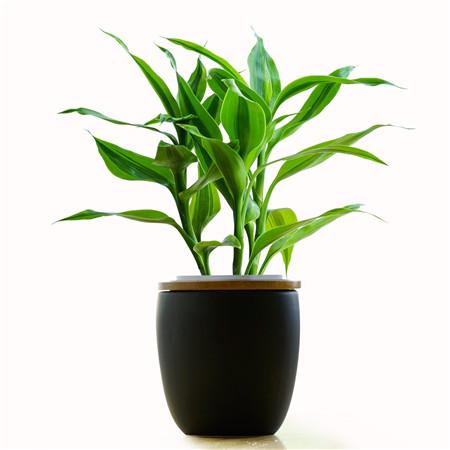
What counts as a beautiful lucky bamboo? Lush green leaves, rich color, and a straight, upright stem. A pot of lucky bamboo like this basically satisfies everyone's aesthetic expectations. But if lucky bamboo is cared for improperly, it can lead to a series of problems such as faded leaves, loss of gloss, and root rot.
Improper care, proper care - just one word apart, yet lucky bamboo ends up in two completely different states. There are no shortcuts to growing good lucky bamboo; it needs a little care every day.
How to care for lucky bamboo so it grows more vigorously
Temperature requirements
No matter which type of lucky bamboo, its temperature requirements are always the same. Lucky bamboo has strong vitality, and its most suitable growing temperature is 20°C. In winter, it can grow safely as long as the temperature does not drop below 0°C. In the hot summer, when the temperature exceeds 35°C, growth slows down, so remember to mist it promptly to cool it down.
Light conditions
Many plant lovers wonder when they buy lucky bamboo: does lucky bamboo need to be put in the sun? In fact, lucky bamboo is a shade-loving plant. It needs sunlight, but a semi-shaded spot is its ideal growing environment.
Friends who have lucky bamboo at home, take note: keep lucky bamboo indoors, and an occasional bit of sunlight is enough. There is no need to deliberately move it to a sunny spot. A cool, shaded environment can promote the growth of lucky bamboo.
Fertilization method
Lucky bamboo likes fertilizer, but it cannot tolerate raw fertilizer, so use decomposed organic fertilizer or nutrient solution. But lucky bamboo is not a vegetable; even without fertilizer, it can still grow very well. The interval between fertilizing can be long or short - once every 2 to 3 months is enough. During this period, you can appropriately increase fertilization according to the growth of the lucky bamboo.
Water quality requirements
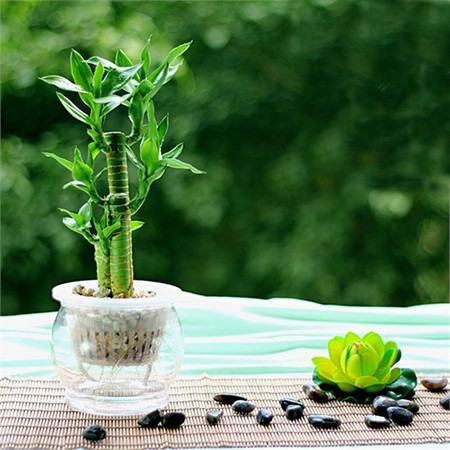
Most lucky bamboo is grown in bottles, and its main source of nutrients is clean water, so water quality is very important. Tap water should be left to stand for 24 hours before use, so that the chlorine in the water does not affect the growth of the lucky bamboo's roots.
In addition, change the water frequently - once a week in summer, and wash the bottle walls. In other seasons, change it once every half month, and add water promptly when the water level drops.
Growing lucky bamboo in soil
The lucky bamboo you have seen is usually in water, but it can also be grown in soil. Choose a flower pot with a diameter of 12 to 24 cm, preferably made of ceramic or porcelain. For the soil, generally use garden soil + leaf mold, mixed at a ratio of 5:5.
The biggest difference between soil culture and water culture is the growing medium; the light and temperature requirements are basically the same.
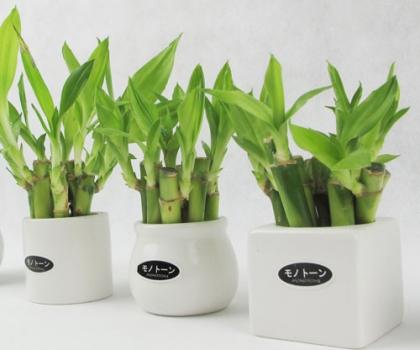
Propagation methods for lucky bamboo
Cutting propagation
The cutting method for lucky bamboo is very simple. Choose a relatively long stalk of lucky bamboo and divide it into two sections, making sure each section has some leaves and young shoots. Each section should be 10 to 15 cm. Then place them in a glass bottle, change the water frequently, and they will take root in about 15 days.
Division propagation
Division is generally the common propagation method for soil-grown lucky bamboo. A large pot of lucky bamboo will produce many small offshoots. After taking the plant out of the pot, break up the soil ball around the roots and use a knife to divide the roots into several clumps, then plant them directly. They can be grown in water or continue to be grown in soil.
Notes on growing lucky bamboo
Avoid wind
When caring for lucky bamboo at home, do not place it directly next to a TV, air conditioner, or electric fan. Direct cold air and radiation from appliances can cause the leaf tips of lucky bamboo to dry out.
How to prune
Lucky bamboo grows in water for a long time, and bacteria can invade the stalk, making it prone to rot, so it needs to be pruned in time. You need a pair of sharp scissors. Cut off 0.5 cm from the roots, let it dry in a ventilated place, and then replant it. In addition, during the growth of lucky bamboo, promptly cut off any crooked branches to keep the plant looking neat.
FAQ on lucky bamboo care - every question answered
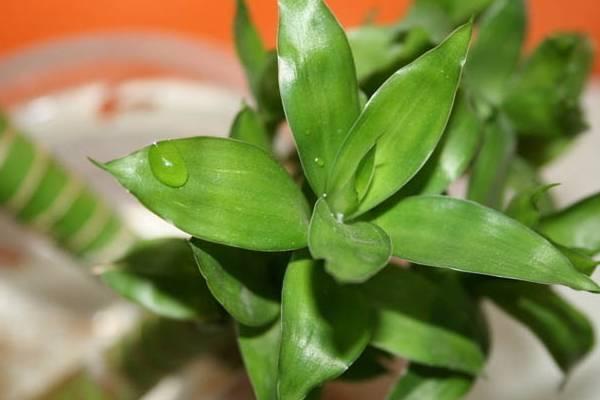
1. What should I do if the leaves turn yellow?
A question from "Sipping a Glass of Fine Wine": The leaves are a bit yellow. Does anyone know what's going on?
The editor's answer
First cut off the yellow leaves. It is summer now, and the environment is a bit stuffy and hot. With improper ventilation, the leaves will turn yellow. Try to put the bottle by a cool window and mist it often to cool it down. Also, there is a bit too little water in the bottle. Lucky bamboo needs a relatively large amount of water, and it is best if the water covers 2/3 of the roots.
2. How do you care for lucky bamboo once it has rooted?
A question from Zonezhehong: I just put it in water today. How many days until it roots, and what should I do once it has rooted?
The editor's answer
This lucky bamboo is growing very robustly and will take root in about 15 days. Before it roots, change the water once every 3 to 5 days. After it roots, you can reduce the frequency of water changes to once a week, and add water promptly when the water in the bottle drops. It is fine to keep it in the living room or bedroom. Do not put it in sunlight, or the leaves will wilt.
3. Can lucky bamboo stems grow leaves?
A question from "Making a Wish at the Toilet": Could someone please tell me whether it will grow leaves like this?
The editor's answer
Yes. The main method for lucky bamboo is cutting propagation. Cut off a stem of lucky bamboo and plant it in water or soil, and in about 20 days it will grow new shoots. Growing leaves takes about a month and a half.