Pesticide residues on vegetables and fruits are highly harmful; how should they be handled so you can eat with peace of mind?
The harm caused by pesticide residues is enormous. According to experts, pesticide poisoning can be divided into acute and chronic types. Acute poisoning can show symptoms within 24 hours, mainly manifesting as muscle spasms, nausea, vomiting, diarrhea, blurred vision and difficulty breathing. It is known that tens of thousands of people nationwide suffer from pesticide poisoning each year, with thousands of deaths, and some of the poisoned individuals are affected by excessive pesticide residues in vegetables. Chronic pesticide poisoning is usually not easily detected, because pesticides have an accumulation process in the body. Even when symptoms appear, because some symptoms resemble headaches and fatigue, they are often overlooked by people, and once discovered it is already too late. Not only that, experiments have proven that pesticides have teratogenic and carcinogenic effects on the human body. Relevant epidemiological surveys show that the incidence of malignant tumors is rising year after year and is related to pesticide residues in vegetables. Pesticide residues, as toxic substances, have enough power to alter genetic genes and cause fetal deformities. This power is far greater than the harm caused by tobacco and alcohol. Currently, the fetal deformity rate in our country is still 3% to 5%.

So how should we handle them so we can eat with peace of mind?
Generally speaking, leafy vegetables such as chives, cabbage, bok choy, spinach and water spinach have relatively higher pesticide residues. First, because leafy vegetables suffer more serious pest damage; second, because their growth cycle is short, the pesticides do not have time to break down before they are already on the market. Root and tuber vegetables such as potatoes, carrots and Chinese yam have lower pesticide residues.
Soaking and rubbing them in clean water can reduce pesticide residues, and the longer the soaking time, the fewer the pesticide residues. Experiments have proven that soaking vegetables in tap water for 10 to 60 minutes and then rubbing them slightly can remove 15% to 60% of pesticide residues. Soaking with fruit and vegetable cleaner is even more effective at removing pesticides. Dilute the cleaner with water at a ratio of 1:200 and soak the fruits and vegetables in it. Within 10 to 60 minutes, pesticide residues can be reduced by 50% to 80%; then, rub them slightly and rinse them clean with water, and pesticide residues can basically be eliminated.
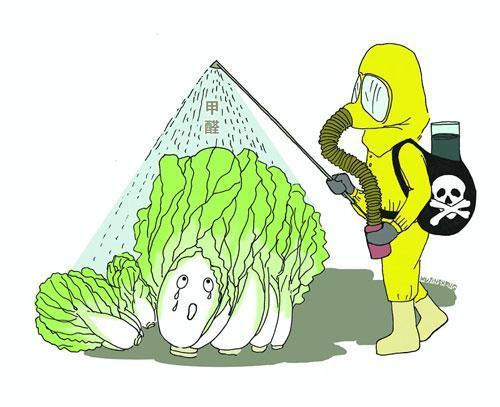
High-temperature heating can also break down pesticides, such as blanching with boiling water or stir-frying in oil. Experiments have proven that some heat-resistant vegetables, such as cauliflower, green beans, green peppers and celery, after being washed clean and then blanched in boiling water for a few minutes, can have their pesticide residues reduced by 30%, and after high-temperature cooking and stir-frying, 90% of the pesticides on the vegetables can be eliminated.
Wash vegetables with rice-washing water, but it is best to use the first or second batch of rice-washing water, because the outside of rice contains potassium, so the first or second batch of rice-washing water is weakly acidic, but afterward it becomes alkaline, and pesticides only lose a certain amount of toxicity in acidic substances. Sunlight can cause some pesticides in vegetables to break down and be destroyed. According to measurements, after vegetables are in sunlight for 5 minutes, the residue loss of organochlorine and organomercury pesticides can reach 60%.
Peeling vegetables can of course also remove pesticide residues, but it also causes the loss of vitamins and minerals in the peel. Therefore, the best way to remove pesticides is: first soak fresh fruits and vegetables in cleaner for 10 to 15 minutes, or soak them in tap water for 30 to 60 minutes, then rinse them clean with water.

If you like it, give it a thumbs up!