How profitable is pomegranate cultivation? The returns are quite substantial.
A few years ago, pomegranate cultivation was promoted in our area, but it later failed due to poor management. Pomegranates are especially vulnerable to freeze damage, so cultivation must involve strengthened precautions.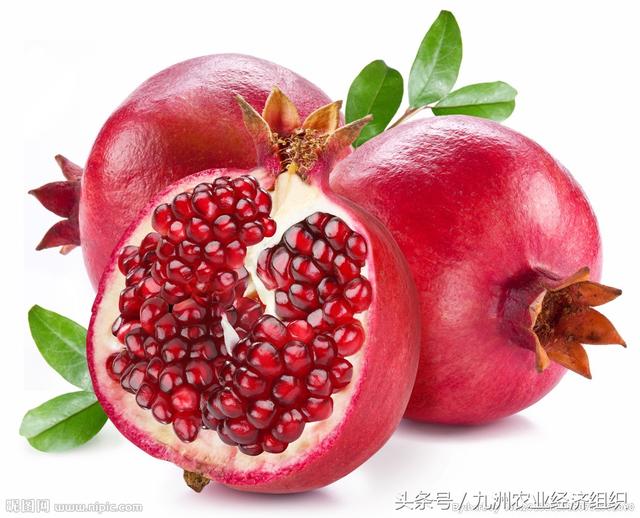
Following a management model that an ordinary household can handle, planting 5 mu of pomegranate trees is the most reasonable.
1. Tree investment: pomegranate trees are mostly grown in shrub form, so the plant spacing is relatively wide. About 80 trees are planted per mu, and one pomegranate sapling costs about 5 yuan, so saplings for one mu require 400 yuan in total, and 5 mu require 2000.
2. Management costs: each mu requires about 300 yuan of fertilizer per year, so 5 mu total about 1500 yuan per year; managing one mu of pomegranate trees requires about 100 yuan in pesticide costs, so 5 mu total about 500, and other miscellaneous items such as water and electricity cost about 200 yuan, so 5 mu total about 1000 yuan. Calculated overall, the annual management costs for 5 mu total about 11000 yuan.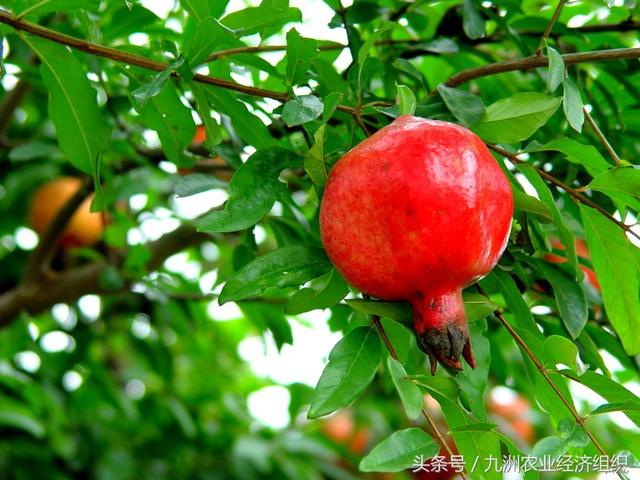
Methods for achieving high returns in pomegranate cultivation
Suitable environment and expanded production. Because pomegranates have long existed in a semi-cultivated, semi-wild state, they have developed strong ecological adaptability, are not choosy about soil, and tolerate drought, poor soil, and storage and transport; even without any management they still produce a certain yield. This characteristic provides a relatively large development area for pomegranate expansion.
The extreme low temperature that pomegranate trees can tolerate is -16°C. When the temperature drops below -17°C, the aboveground branches suffer severe freeze damage or even the whole plant dies. Areas that have historically experienced low temperatures below -16°C should pay attention to winter cold protection. Development in areas outside suitable cultivation zones should be carried out cautiously, mainly taking into account the effect of low winter temperatures, and introduction should not be done blindly.
Key points for pomegranate production development: First, choose terraced land on sunny south-facing mountain slopes, with mountain forest on the northwest side blocking cold currents, and use the temperature inversion layer zone at the foot of the mountains to grow pomegranates and prevent freeze damage. Second, use shallow hills, hills, plains, wasteland, and beach land to develop pomegranate production and increase income, which both opens a path to prosperity for old revolutionary base areas, minority areas, border areas, and poor areas and raises land use efficiency, conserves soil and water, maintains ecological stability, achieves sustainable land use, and realizes the goal of sustainable agricultural development. Third, develop intensive high-efficiency orchards, develop pomegranate production in plain farming areas and urban suburbs with convenient transportation and fertile soil, adopt advanced intensive cultivation techniques, with planting yielding fruit in 3 years and entering the full production period in 5 years.
Introduce improved varieties and increase market competitiveness. Newly developed pomegranate orchards and large commercial bases must ensure that improved varieties are used to establish the orchard. For existing low-yield and inferior trees in pomegranate production, renewal should be achieved as quickly as possible through methods such as top grafting to change varieties and planting young trees of improved varieties between rows. Some production areas lack relatively good varieties and may consider introducing them; introduction from the same latitude and same ecological zone, and from north to south, is more likely to succeed. Orchard establishment, especially for large orchards, should pay attention to variety combination, with 1 main cultivar and 1 to 2 companion cultivars.
Scientific cultivation and increased per-unit yield. At present, in some pomegranate production areas of our country, non-bearing trees account for more than 60%, among which are newly planted young trees and some trees that bear poorly due to poor management. Therefore, it is necessary to vigorously popularize and promote high-yield pomegranate cultivation techniques, strengthen fertilizer and water management, do a good job in shaping and pruning, and promote artificial pollination and techniques for thinning flowers and preserving fruit. Pay attention to pest and disease control, prompt young trees to come into production early, and keep mature trees stable and high-yielding.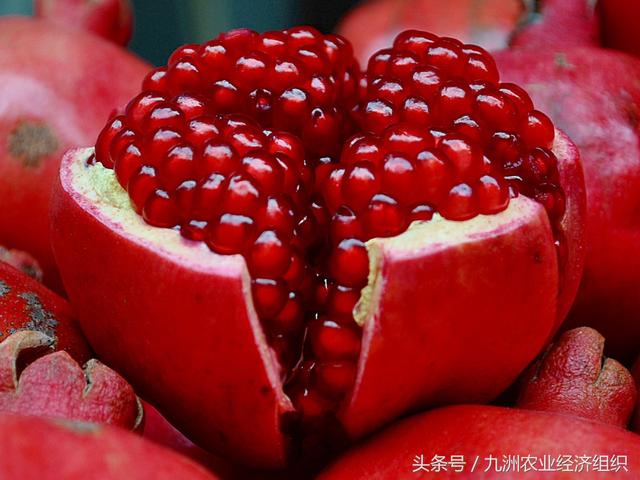
Create brands and increase commodity value. Pomegranates from many domestic production areas have long enjoyed great renown. For example, the "Imperial Pomegranate" of Qian County, Shaanxi, got its name because Emperor Taizong of Tang and Empress Zhangsun liked to eat it; the soft-seeded pomegranate and rock-sugar-seeded pomegranate of Zaozhuang, Shandong, were once selected as tribute to the capital; Fancun pomegranates of Kaifeng, Henan, were once exported to Japan in the 1970s; and Yanshui River pomegranates of Huize, Yunnan, were also sold continuously to Hong Kong, China and Macao, China from 1972 to 1978. At present, pomegranates on the world fruit market mainly come from Middle Eastern countries such as Iran and Israel. Iran produces 600,000 tons of pomegranates annually, making them a major fruit and export-earning product of that country. In recent years, pomegranate production in our country has developed rapidly, and it is necessary to actively guide each production area to create its own premium brand; improve packaging, storage, and transport technology, raise commodity quality, and open up international and domestic markets with high-quality branded pomegranates.
Develop deep processing for value-added and efficiency gains. The juice yield of pomegranate seeds is generally 87%-91%, the sugar content is 10.11%-12.49%, the acid content is generally 0.16%-0.40% for common varieties, while for sour pomegranate varieties it is 2.14%-5.30%, and the vitamin C content is above 11mg/100g. In addition, they also contain mineral elements such as phosphorus, calcium, and iron. Therefore, besides being eaten fresh, pomegranates can be processed into premium refreshing beverages, pomegranate wine, and so on. According to the latest research in Israel, pomegranates and their products contain high levels of antioxidants that delay aging, prevent atherosclerosis and heart disease, and slow the process of cancerous changes, and pomegranate wine and pomegranate juice are both highly beneficial to the human body. It is suggested that while developing pomegranate production and building bases, deep processing of pomegranates may also be considered to achieve value-added and efficiency gains. Before planting pomegranates, it is essential to conduct preliminary investigation into various factors such as whether it suits the local climate, soil, and transportation, and only then can planting be carried out.