Detailed Guide to Growing Tree Peonies in Pots at Home
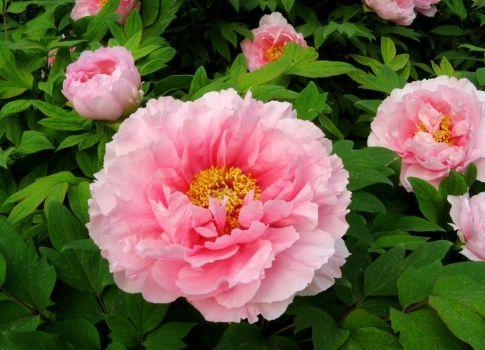
The tree peony is a traditional famous flower of our country, with many varieties, beautiful flower forms, large and brightly colored blooms, and an elegant, noble appearance. It is hailed as the "national beauty and heavenly fragrance" and the "king of flowers," and has always been regarded as a symbol of happiness, beauty, and prosperity. In addition to favorable geographical conditions, growing tree peonies also requires careful cultivation and management.
To make potted tree peonies more elegant and classically refined in decorative form, when the flowers are about to open, you can place the original clay pot inside a painted pottery or porcelain pot; placing it on a finely made plant stand or table in a spacious, bright hall or main room can better reflect the noble elegance of the tree peony. When growing tree peonies at home, people generally do not have a large, level plot of land, so this requires us to master good potting techniques.
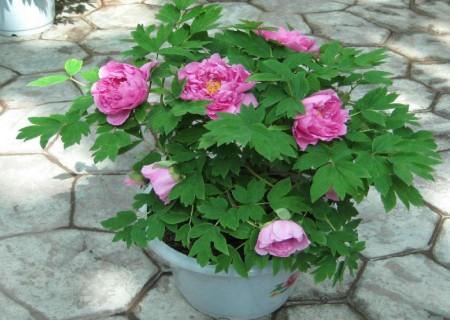
1. Preparing the soil
The growing soil should be prepared one month before potting and can only be used after it has decomposed. The growing soil should be loose, fertile, high in humus content, long-lasting in fertility, and easy to drain. Formula: mix humus soil, horse manure, garden soil, and coarse sand or furnace slag in a 2:1:2:1 ratio, mix evenly, and seal with human urine and feces to decompose for one week before use.
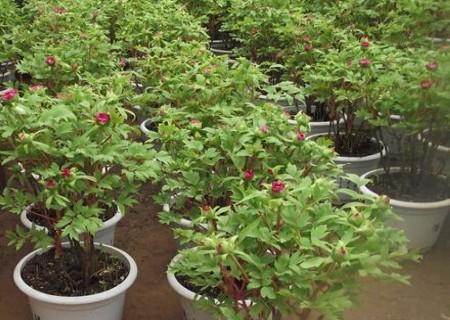
2. Choosing flower pots
When first planting, choose a slightly smaller flower pot; a clay pot with a diameter of 30 cm and a depth of 25 cm will do. When it blooms, it can be switched to a larger clay pot with a diameter of 35 cm and a depth of 30 cm.
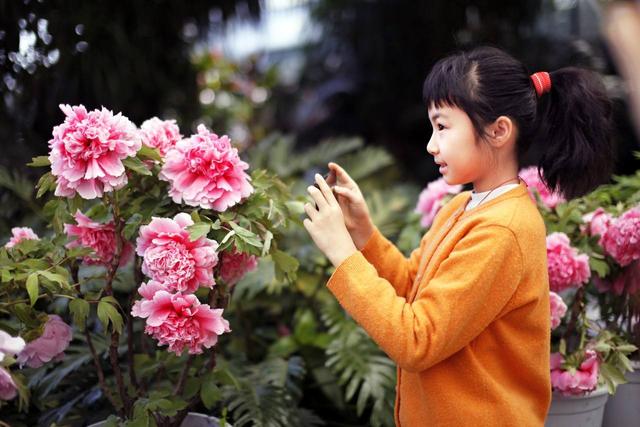
3. Potting time
The suitable time for potting tree peonies is the same as for field division planting. In Heze and Luoyang, it is generally suitable from late September to early October. Planting too early can easily cause "autumn growth"; planting too late results in slow root growth, weak plant growth, and even easy death after flowering the following year.
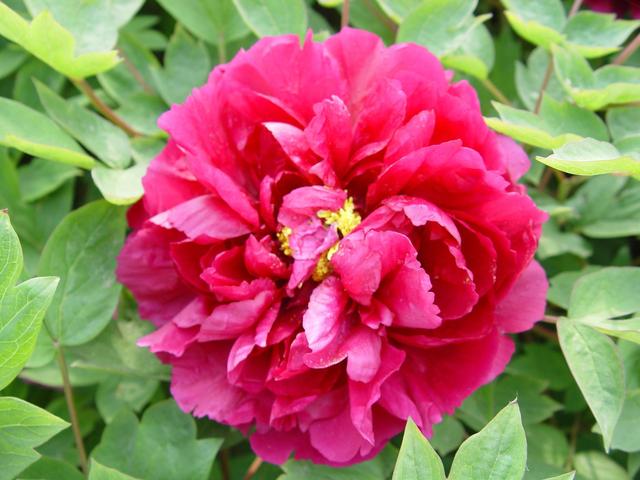
4. Drying the seedlings
Before potting tree peonies, first dig out the seedlings and dry them for 1-2 days, so the roots lose water and become soft, making pruning and planting easier.
5. Planting process
Before planting: Before planting, place the flower pot in a water basin to absorb enough water. The tree peony seedlings also need shaping and pruning so that the aboveground and underground parts are balanced, the shape is beautiful and elegant, and cultivation and management are convenient. First cut off dead branches and fallen leaves and excessively long roots, disinfect the roots with 1% copper sulfate solution for 5-10 minutes, then place the seedling in the center of the pot and fill with soil while planting, pressing firmly with your hands while filling, until the soil is 3-5 cm below the upper rim of the pot, then stop adding soil.
During planting: When planting, first place a piece of tile over the drainage hole at the bottom of the pot to prevent soil loss; then spread a 2-5 cm thick layer of small stones or waste palm rope and similar materials to facilitate drainage.
After planting: After potting, the surface of the pot can be decorated with Taihu stone, Ying stone, or bamboo shoot stone placed alongside the tree peony plant. This not only increases the beauty of the potted tree peony, making the pot surface lush and green and full of vitality, but also helps retain moisture and insulate temperature.
6. Timely watering
Potted plants have limited water-holding capacity, so they must be watered in time. After planting, water thoroughly once immediately. After that, water once every 3-4 days according to whether the soil is dry or moist, to keep the potting soil moist. In dry summer, water in the early morning or at night. In autumn, as long as it is not too dry, there is no need to water. Before flowering and during the flowering period, watering once a day is acceptable.
7. Reasonable fertilizing
Topdressing can begin in the spring of the second year, using sesame, peanut, or bean cake soaked in water and fermented before use. When applying, dilute with water, and fertilize once or twice a week during the growing season; after the flowers fade, it is suitable to nourish the flowers and apply a light fertilizer or spray fertilizer on the leaves. No topdressing is needed during the winter dormant period.
8. Shading and drainage
During the intense heat of midsummer, potted tree peonies can be moved under a seedling shed for shade, or buried together in the soil to prevent heat and lower temperature, while maintaining good drainage and ventilation. When there is no rain, spray water on the branches, leaves, and surrounding area every day to increase air humidity and ensure water supply during the period of flower bud differentiation. In the rainy season, pay attention to drainage. On cloudy and rainy days, tip the flower pot over to prevent water accumulation in the pot.
9. Shaping and pruning
To improve ventilation and light penetration for the tree peony and concentrate nutrients, shaping and pruning should also be carried out after leaf fall in autumn and winter. Cut off overly dense branches, such as parallel branches, crossing branches, inward-growing branches, and diseased or pest-damaged branches, so the plant maintains a beautiful shape.
10. Overwintering treatment
In late autumn and early winter, potted tree peonies can be buried in the soil with the branches exposed above the ground, and covered with grass or earthed up for protection through the winter. Some also place the flower pots directly in a cellar to overwinter. In early spring of the following year, remove the covering, move them out of the cellar, place them in a ventilated, sunny spot, and strengthen fertilizer and water management.
11. Placement location
Tree peonies like light and prefer a dry environment, so they should be placed in a sunny, ventilated spot with sufficient light. In summer, with high temperature and frequent rain, they should be placed under a cool shed to prevent leaf scorch. In winter, they can be moved indoors or the whole pot can be buried in a sunny place with the surface covered with sawdust, so they can overwinter safely. In March-April of the following year, when the weather turns warmer, move them again to a place with sufficient light.
Finally, a little about the uses of tree peony flowers. Li Shizhen pointed out: only the single-petaled red and white tree peonies are used as medicine; all other varieties are artificially bred and "their qi and flavor are impure, so they cannot be used." The red-flowered ones tend toward purging, while the white-flowered ones tend toward tonifying. Tree peony flowers are suitable for facial melasma and skin aging. Drinking them regularly can make qi and blood abundant, the complexion rosy, and the spirit full.