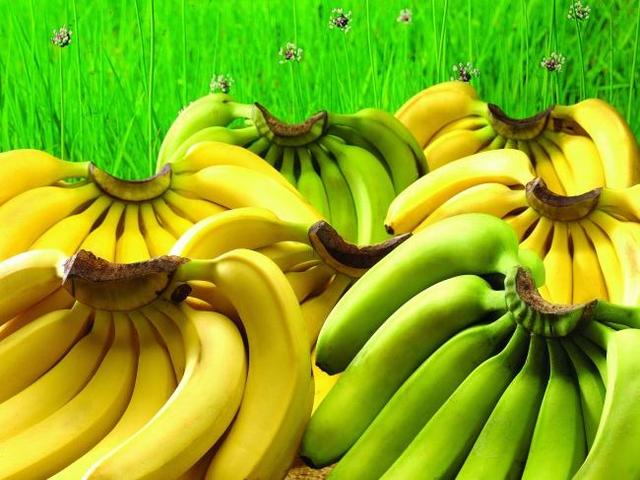
Complete Guide to Banana Cultivation Techniques
Bananas belong to the genus Musa in the family Musaceae, and are mainly produced in the hot and humid regions of Southeast Asia. Bananas prefer a warm, humid environment and are not tolerant of low temperatures, making them suitable for planting in hot regions at altitudes below 800 m, with an average yield of 50-60 jin per plant and an average yield of 5000-6000 jin per mu.

Bananas belong to the genus Musa in the family Musaceae, and are mainly produced in the hot and humid regions of Southeast Asia. Bananas prefer a warm, humid environment and are not tolerant of low temperatures, making them suitable for planting in hot regions at altitudes below 800 m, with an average yield of 18-25 kg per plant and 3000 kg per mu, with a maximum yield of 4500 kg per mu. Banana is one of the four famous fruits of South China, with a short growth cycle and high yield, and can supply the market year-round. The fruit is sweet and delicious, rich in nutrition and in various vitamins, making it one of the fruits deeply loved by consumers. According to the "Green Food Production Technical Regulations", combined with the cultivation characteristics of bananas and experience in growing Grade A green food bananas, the cultivation techniques have been compiled. The main cultivation techniques are as follows:
I. Selection of Production Site
The production site is selected in areas with an annual average temperature above 20°C and a multi-year average extreme minimum temperature above 2.6-6.2°C; soil with high organic matter content and a pH of 6.0-7.0. It should be far from factories that discharge sewage, waste residue and waste gas, with a pollution-free environment, and the farmland soil, agricultural irrigation water and atmospheric quality should meet the environmental quality standards for green food production sites.
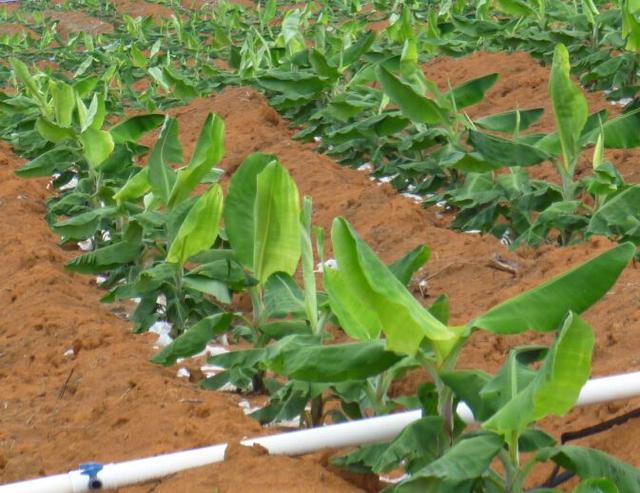
II. Selection of Seedlings: Use high-quality tissue-cultured seedlings of superior, disease-resistant varieties such as Brazilian and Williams.
III. Selection of Organic Fertilizer: Biological stock solution and biochemical organic liquid fertilizer mixed and composted with chicken manure, chicken feathers, pig and cattle bones, banana leaves and stems, bran, chaff, plant straw, etc., at 50%-60% humidity, fully decomposed after 20-30 days to make biological straw organic fertilizer.
IV. Selection and Treatment of Orchard Site
1. Orchard site selection: Soil samples must be collected in advance for testing at the base selection stage to check whether pesticide residues and heavy metal content in the soil exceed the standards. The banana orchard should be built in a place with convenient transportation, sheltered from wind and facing the sun, with little frost damage in the microclimate, open terrain, pollution-free soil, loose soil texture, fertile soil, high organic matter content, deep soil layer, strong water and fertilizer retention capacity, convenient drainage and irrigation, and a relatively low groundwater table.
2. Orchard land reclamation: After clearing, leveling, plowing and harrowing (plowing depth above 1000px), the land is prepared and beds are raised (the bed surface is determined according to planting specifications and planting methods; generally a single-row single bed is 2.5 m wide, and a double-row double bed is 5 m wide). For planting bananas in paddy fields, high beds with deep furrows are used, with furrow depth above 1500px; for planting on sloping land, low beds with shallow furrows are used, and reverse-sloping terraces are built along contour lines.
3. Excavation of drainage and irrigation ditches: Excavate drainage and irrigation channels in the field.
4. Windbreak forest: In areas with strong winds, windbreak forests should be planted, and fast-growing tree species can be selected.
5. Planting: Dig pits for planting (row spacing 2.5 m, plant spacing 1.6 m, 166 plants per mu; planting hole depth and width 50 x 1250px), and apply 2.5 kg of decomposed chicken manure biological organic fertilizer per hole as base fertilizer. Generally, spring planting is in April (harvest period March-April), and autumn planting is in September (harvest period August-October).
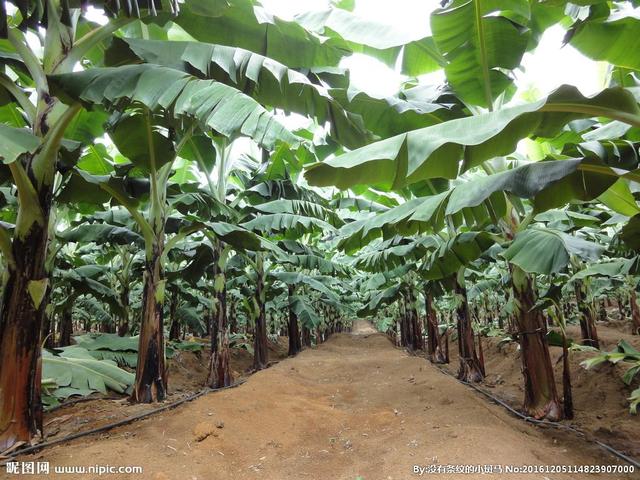
V. Water and Fertilizer Management
1. Fertilization: Fertilizer application is mainly biological organic fertilizer, supplemented by chemical fertilizer, with a scientific combination of nitrogen, phosphorus and potassium; fertilization follows the principle of promoting at the early stage, attacking at the middle stage, and supplementing at the late stage, with frequent application at the early stage, heavy application of bud-strengthening fertilizer at the middle stage, and supplementary fruit-strengthening fertilizer at the late stage. Nitrate fertilizer is prohibited during fertilization to avoid affecting quality.
2. Watering and drainage/irrigation: After planting, if drought occurs, watering is required to keep the bed surface and hole surface soil moist, which helps the root system recover and grow; pay attention to draining accumulated water on rainy days. From September each year to March of the following year, the bed surface is covered with rice straw for insulation and moisture retention; especially for spring-planted tissue-cultured seedlings growing to the stage of producing large leaves and fruit development (July-December), this period is the key period for water supply, with high water demand, and the bed surface soil must be kept moist; otherwise, if drought occurs, yield will be affected. Irrigation methods can include watering, drip irrigation, sprinkler irrigation, etc. Stop irrigation 15 days before harvest to increase the storage and transportation period.