When is the best time to plant eggplant?
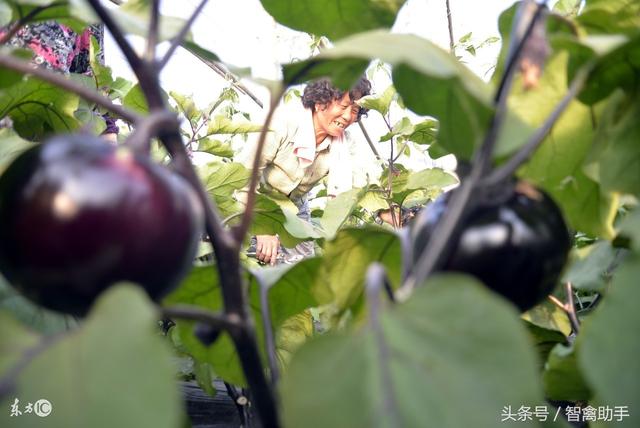
Eggplant is one of the most popular fruits and vegetables, and it is also one of the main vegetables in summer in our country, grown in both the north and the south. The leaves, roots and stems of eggplant can all be used as medicine, giving it high cultivation value. So when is the best time to plant eggplant? And how should it be planted? Here is the planting time and method for eggplant, let's take a look.
I. Planting time for eggplant
Eggplant is an annual herbaceous plant, with a growing temperature between 20°C and 30°C, and it also has relatively high requirements for water and fertilizer, so it is suitable for planting in two periods: early spring and early autumn. Early spring season. In early spring, eggplant can be planted from late December to the end of February; early autumn season. In early autumn, eggplant can be planted from early July to the end of August.
II. Planting methods for eggplant
1. Select good seeds:At present, the eggplant varieties suitable for planting in the Guangdong region, China are mainly those resistant to bacterial wilt and disease, tolerant to heat and rain, with purple-red skin, white flesh and a long club shape. Varieties with fruit about 30 cm long include Hongfeng, Changfeng, Zaofeng, Nongyou Long Eggplant and Guilin Long Eggplant; those with fruit about 25 cm long include Yueqie No. 2, Yuefeng and Shijie Red Eggplant. Among them, Hongfeng has large, uniform and attractive fruit. Yueqie No. 2 is a variety with high resistance to bacterial wilt and verticillium wilt; Yuefeng and Shijie Red Eggplant have deep color and very good gloss; Guilin Long Eggplant has high yield and disease resistance, but its flesh is green.
2. Selecting and preparing the land:The seedbed and the planting field should be chosen as plots whose previous crop was not a solanaceous crop, preferably paddy fields, deeply plowed and sun-exposed, with raised beds more than 30 cm high. Bed width including the ditch: 1.7 m for double-row planting, 1 m for single-row planting. Before sowing, disinfect the seedbed 7-10 days in advance by spraying with quintozene or dexon at 500 times plus dichlorvos at 800 times and covering with plastic film.
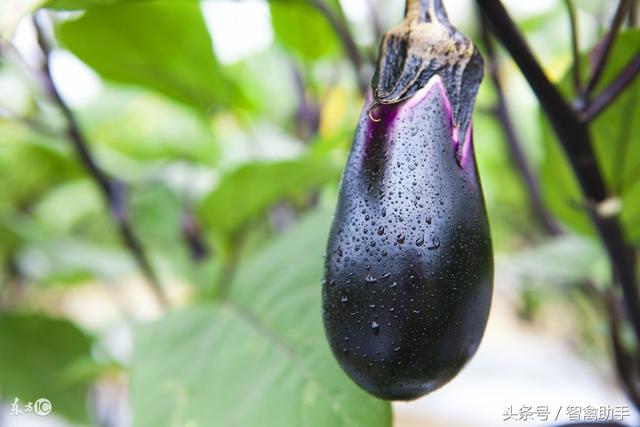
Image: Eggplant planting
3. Apply sufficient base fertilizer:The planting field should be given sufficient base fertilizer. Generally, per mu, apply 1000-1500 kg of fully decomposed pig, cattle and chicken manure, 80 kg of peanut bran, 50 kg of superphosphate and 80 kg of lime, applied when the beds are made. 1-2 days before sowing, apply per mu fully decomposed finely crushed farmyard manure plus 20 kg of compound fertilizer as base fertilizer and mix thoroughly with the topsoil.
4. Sow at the right time:The suitable sowing period for spring eggplant is from late October to November, with a seedling period of 60-70 days. The suitable sowing period for autumn eggplant is June to July, with a seedling period of 25-30 days; for off-season cultivation in cool regions, it can be sown in March to April and transplanted in May. Generally, the seeding rate is 15-20 grams per mu.
5. Fertilizer and water management:① Apply heavy base fertilizer. Along with land preparation, apply per 667 sq m 15000-20000 kg of decomposed farmyard manure, 10-15 kg of urea and 50 kg of compound fertilizer (15:15:15); ② Apply light seedling fertilizer. From planting until before flowering, topdress 1-2 times according to the plant's growth vigor; the concentration must not be too high, otherwise it will cause excessive vegetative growth and lead to flower and fruit drop. During the pollination period, to prevent flower and fruit drop, if the plants are not seriously deficient in fertilizer or water, generally no topdressing or watering is needed; ③ Apply fruit fertilizer in time. When the pollinated fruit grows to the size of a duck egg, water and topdress in time, applying per mu in holes 10-20 kg of urea and 25 kg of compound fertilizer to promote rapid fruit enlargement. After pollination ends, topdress 2-3 times, each time applying only 10-15 kg of compound fertilizer per mu in holes. Stop topdressing when the fruit begins to change color, and keep the soil moist. Land preparation and base fertilizer application for the male parent field are basically the same as for the female parent field. As long as there is sufficient pollen supply, generally no further topdressing is needed, and keeping the soil moist is enough.
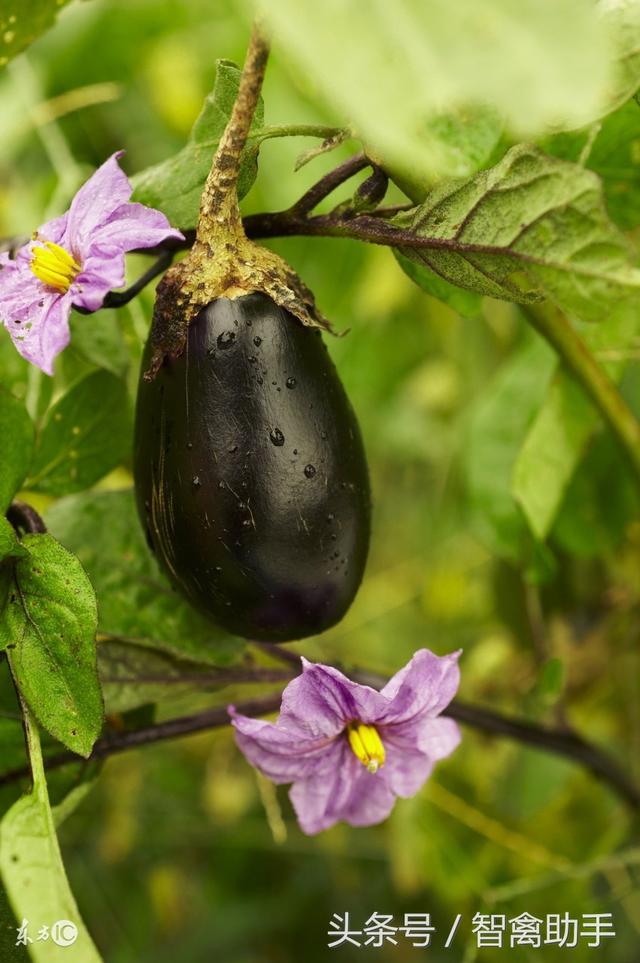
Image: Eggplant planting
6. Plant adjustment:To reduce nutrient consumption, enable the female parent plants to bloom more in a short period, shorten the pollination time and facilitate concentrated pollination, it is necessary to remove the flower buds of the first eggplant and all lateral branches below it (for mid- and late-maturing varieties, 1 lateral branch may be retained), so that the plant maintains dichotomous branching. After pollination of the fourth tier of fruit ends, leave 3 leaves and pinch the top, and insert supports to prevent lodging and reduce rotten fruit.
7. Roguing and pollination:Strictly remove off-type plants between the male and female parent fields. The main basis for inspection and removal of off-type plants is the typicality of the parent's first flowering node, leaf shape, leaf color, growth vigor and flower color. After pollination ends, remove the self-pollinated fruits on the female parent plants and the male parent plants.
8. Pest and disease control:For pest and disease control techniques for eggplant, please read the article "Pest and Disease Control Techniques for Eggplant"; the editor will not repeat them here.
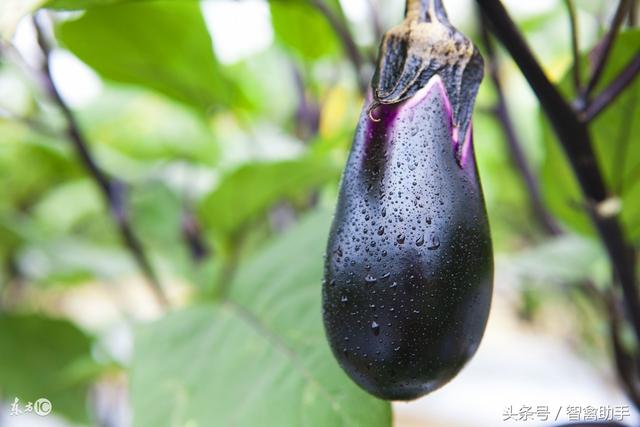
Image: Eggplant planting
9. Seed harvesting and storage:50-60 days after flowering, when the fruit skin turns yellow (some varieties do not change color or change color slowly, so determine by the number of days since pollination), begin harvesting. Place the seed fruits in a cool place to after-ripen for 7-10 days before extracting the seeds. When harvesting hybrid seed fruits, check whether the pollination mark on the seed fruit is obvious.
[Editor's concluding remarks]Eggplant has high nutritional value and good cultivation prospects. With the development of protected agriculture, the planting area of eggplant is also continuously expanding. The above has introduced the planting time and methods for eggplant, and we hope it will be helpful to everyone!