When is the best time to plant garlic chives? A detailed explanation of planting times

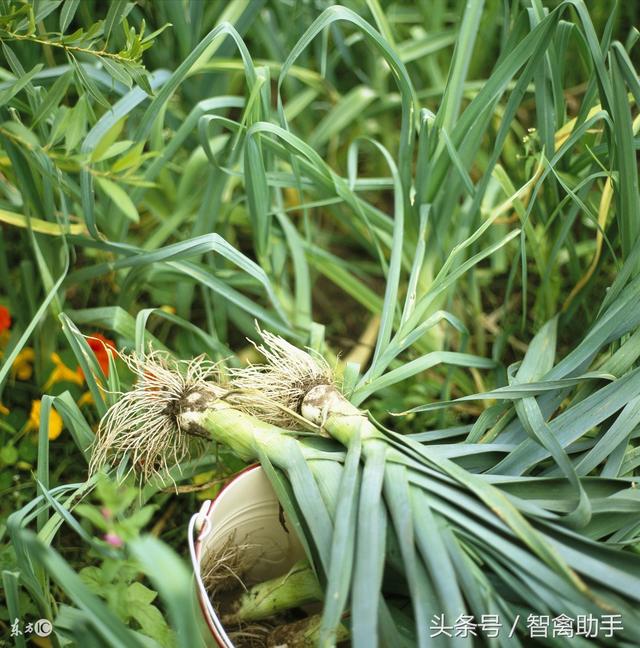
Garlic chives belong to the Liliaceae family and are a perennial bunching vegetable. They are a vegetable that everyone loves very much, with benefits such as nourishing the liver and strengthening the stomach, tonifying the kidney and warming yang, and moistening the intestines to relieve constipation. In recent years, with the development of agriculture, the planting area of garlic chives has also been increasing. So, when are garlic chives planted? The planting times and methods for garlic chives are introduced below.
Image: Garlic chives
I. Planting times for garlic chives
1. Spring sowing:It should be done early rather than late. In spring, when the local soil temperature stabilizes at 5-10°C, sowing can begin. At this time the ground has not yet completely thawed, and the thawing period has not yet arrived, so the surface is relatively moist and seedlings emerge very easily. This sowing method also avoids weed damage, because after sowing the garlic chive seedlings emerge fairly quickly, while the temperature at that time is not yet suitable for weed germination, creating a time difference. Therefore, everyone is recommended to use this sowing method as much as possible.
2. Summer sowing:Generally done after cucumbers and tomatoes are cleared from the field. At this time the temperature is high and drought and waterlogging are likely to occur. The sowing rate should be about one third greater than in spring. The soil cover should not be too thick, and the soil should be kept moist to help achieve full seedling emergence.
3. Autumn sowing:Generally done around the Start of Autumn (Liqiu). The sowing rate should be double that of spring, and management should mainly follow the principle of drying out then moistening. In the later stage, attention should be paid to weed damage. Autumn sowing is generally not recommended.
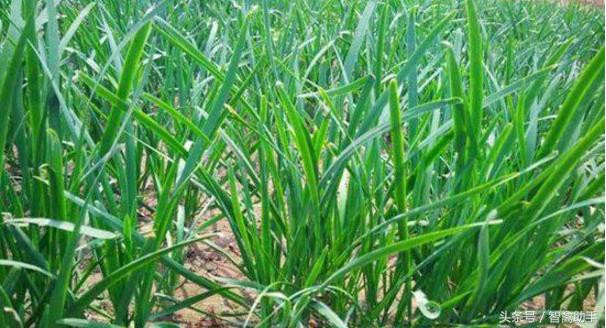
Image: Garlic chives
II. Planting methods for garlic chives
1. Raising garlic chive seedlings:Choose varieties with plump seeds, no impurities, no insect holes, resistance to cold and pests and diseases, heat tolerance, strong tillering ability, and good appearance and internal quality. For the seedling bed, the seeding rate is 5-6 kg per mu, which can transplant to 6-7 mu of field. Seed treatment. Dry seeds can be sown directly (mainly for spring sowing). In the Guangzhou area, sowing is mostly done from October to December and transplanting from March to April. Seeds can also be soaked in 40°C warm water for 12 hours, then the shriveled seeds and impurities removed, and the mucus on the seeds washed off before germination. Wrap the soaked seeds in a wet cloth and place them under conditions of 16-20°C to germinate, rinsing with clean water 1-2 times a day; when more than 60% of the seeds have sprouted white, they can be sown. Land preparation and fertilization. The seedling bed should be chosen as high, dry land that can be irrigated in drought and drained in waterlogging, preferably sandy loam. Before sowing, deep plowing should be carried out, and shortly before sowing, shallow plowing and fine harrowing should be done again. Combined with fertilization, level the soil and make beds, with a bed height of 12-14 cm and a bed width of 100-120 cm.
2. Sowing garlic chives:Tread over the furrow (bed) evenly and firmly, water along the furrow (bed), and after the water seeps in, scatter the germinated seeds mixed with 2-3 times their volume of sand into the furrow or bed, then cover with fine soil. After sowing, cover with plastic film or rice straw, and remove the bed surface covering when 70% of the seedlings have emerged. Water and fertilizer management after sowing. Before emergence, water once every 2-3 days to keep the soil surface moist. From full emergence until the seedlings are 16 cm tall, water about once every 7 days, and together with watering, apply 3 kg of nitrogen fertilizer per mu each time. In the high-humidity rainy season, drain water to prevent waterlogging. After the Start of Autumn, apply topdressing twice together with watering, each time applying 4 kg of nitrogen fertilizer per mu. Before planting out, generally do not harvest, in order to promote strong seedlings and root development. When the weather turns cool, watering should be stopped. In addition, weeds should be removed in time.
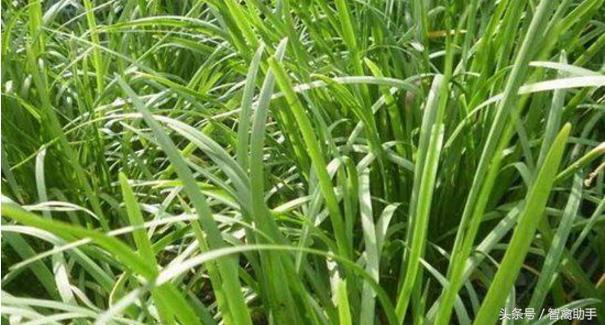
Image: Garlic chives
3. Planting out garlic chives:The seedling stage lasts 120 days. When the seedlings have 7-9 leaves and the plant height reaches 18-20 cm, it is time to plant them out. When planting out, avoid the hot, humid season. The main planting methods include: single-plant close planting, small-clump close planting, small-ridge clump planting, and wide-ridge large-clump planting. Lift out the garlic chive seedlings, trim off the tips of the fibrous roots, leaving 2-3 cm, to promote new root development, then trim off a portion of the leaves to reduce leaf evaporation and maintain a balance between root absorption and leaf evaporation. The plant and row spacing is 10 x 20 cm, with 8-10 seedlings per hole, or 30-36 x 20 cm, with 20-30 plants per hole. The planting depth should be such that the tillering node is not buried.
4. Water and fertilizer management:After planting out, water twice in a row over 3 days, and promptly hoe and loosen the soil 2-3 times to control vigorous growth. Keep the soil in a semi-dry, semi-moist state, and drain promptly when the rainy season arrives. Garlic chives have a very strong tolerance for fertilizer. Before planting out, deep plow and prepare the land (2 m pit enclosure) and apply sufficient rotted base fertilizer, 2000 kg per mu. The fertilization principle is to use organic fertilizer and inorganic fertilizer together, with a ratio of no less than 1:1. Fertilization should be based on growth condition, weather, and soil dryness and moisture, following the principle of light and frequent applications. When the seedlings are below 35 cm tall, apply 500 kg per mu of 2% compound fertilizer water; when the seedlings are above 35 cm tall, apply 800 kg per mu of 3% rotted manure, while also applying 5 kg of compound fertilizer. In dry weather, increase the dilution ratio. Forty-five days after planting out, a small amount of chive flowers can be harvested. In the same year, focus on "nourishing the roots and strengthening the seedlings." Harvesting is best done in the early morning. Mixing in cilantro or other leafy vegetables during the early planting period can lower the temperature and increase income.
[Editor's concluding remarks]Garlic chives taste very fresh and delicious and have a unique aroma, so they are deeply favored by consumers and have high planting value. The above has introduced the planting times and methods for garlic chives, and I hope it will be helpful to everyone!