Detailed Explanation of Key Points of Muskmelon Cultivation and Management Techniques
Muskmelon is also called sweet melon because of its sweet taste. It is rich in nutritional value and has a good effect on promoting the activity of the human heart, liver and intestinal system, and promoting endocrine and hematopoietic function. Moreover, muskmelon has a strong root system and relatively strong adaptability and stress resistance. Therefore, its planting area is increasing rapidly. So, how is muskmelon grown? What management techniques must be mastered for muskmelon cultivation?
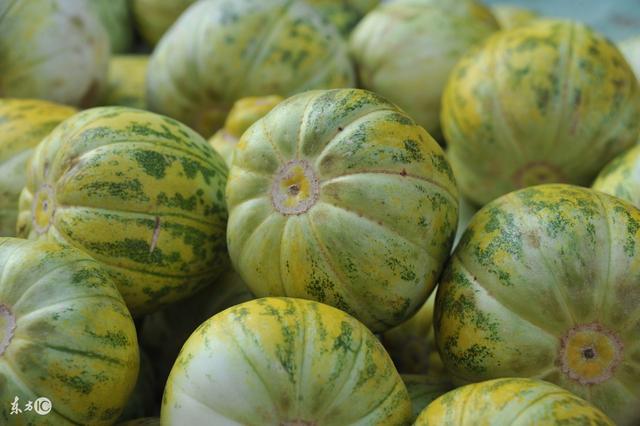
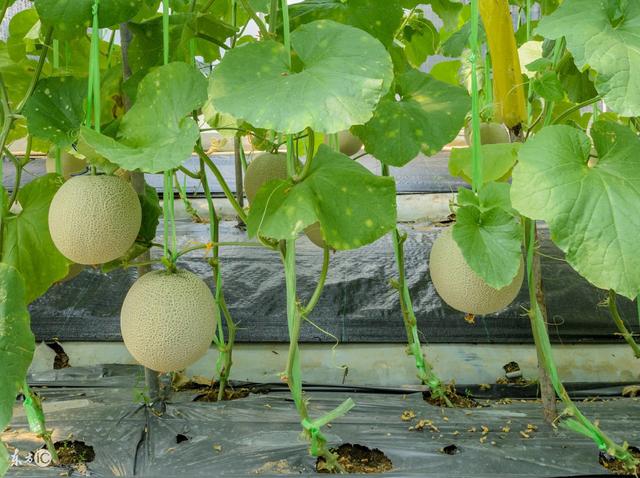
I. Select high-yield, disease-resistant varieties
There are many muskmelon varieties, but the main varieties currently suitable for promotion in all parts of our province are: American zucchini, Zaoqing zucchini, Cuiyu No. 1, Jingdian Biyu, Heixiuli and other high-yield, disease-resistant variety groups. Farmers may choose according to actual needs.
II. Cultivate strong seedlings and establish a high-yield foundation
1. Do a good job of seed disinfection and germination promotion: generally, 1% copper sulfate or carbendazim can be used for seed soaking and disinfection. For direct sowing, aldicarb or 3% padan powder can be used for seed dressing to avoid damage from underground pests.
2. Seedling raising and sowing: for refined cultivation, nutrient pots or nutrient bags can be used for seedling raising. For the nutrient soil, based on 1000 kg, mix in 300-400 kg of fine manure, 2.5 kg of carbendazim (200-500 g of metalaxyl or 100-200 g of padan technical powder or 100-200 g of aldicarb may also be used); 30-50 kg of calcium superphosphate, 20-30 kg of compound fertilizer, add an appropriate amount of water (a soil moisture content of 40-50% is suitable), mix evenly, and pile and cover for 5-7 days. Then fill bags (pots) and sow, preferably sowing one seed per bag (pot). For direct sowing, sufficient base fertilizer should be applied, with 3000-5000 kg of decomposed farmyard manure, 40-50 kg of calcium superphosphate, and 30-50 kg of compound fertilizer per mu. Apply deeply in furrows or in deep-dug pits. Then cover with soil and sow, with 2-3 disinfected and germinated seeds per pit.
III. Reasonable close planting
The planting density of muskmelon depends on the variety. Generally, for dwarf types, the row spacing is 0.60-0.80 m and the plant spacing is 0.50 m, with 1600-2200 pits per mu, or 4000-4500 plants, which is suitable; for vine types, the row spacing is 1.50-2.00 m and the plant spacing is 0.50 m, with 700-800 pits per mu, or 1400-1600 plants, which is suitable. Therefore, when purchasing varieties, farmers must understand whether the variety is a short-vine type or a long-vine type. If short-vine muskmelon is planted too sparsely, high yield cannot be obtained; if long-vine type (spreading everywhere) is planted too densely, the population is large, ventilation and light transmission are poor, disease resistance is poor, it does not set fruit, and the yield is also very low. Therefore, the variety must be understood, and the planting density must be determined according to the variety.
IV. Field management
1. Seedling stage management: muskmelon seedlings grow rapidly, especially seedlings raised in nutrient bags or nutrient pots. To prevent excessive growth, water and temperature should be strictly controlled. After emergence, ventilation should be gradually increased for hardening the seedlings, with the daytime temperature controlled at 20-25°C and the nighttime temperature controlled at about 10°C. At the same time, fertilizer and water management should be strengthened. Every 5-7 days, water the seedlings once with compound fertilizer solution, and apply metalaxyl or metalaxyl-copper oxychloride along with it to prevent root rot. When there are 4-5 true leaves, spray once with Bordeaux mixture to prevent powdery mildew and white rust.
2. Field management during the field period: for seedlings raised and transplanted or directly sown seedlings, frequent hoeing and cultivation should be carried out in the early stage to promote root development. All diseases originate from the root system. If the root system is not well developed and the growth is weak and thin, the disease severity is relatively greater. Later, irrigation, intertillage, earthing up, and fertilization should be combined with management as the theme. When muskmelon grows to 5-6 leaves, fertilizer should be applied in time, with 20-30 kg of compound fertilizer per mu to promote the growth of roots, vines, and young melons. At the same time, irrigate once every 3-5 days to keep the soil moist.
3. Field management during the harvest period: after muskmelon enters the first harvest period, each time a melon is harvested, fertilizer should be applied once, mainly using quick-acting, high-efficiency compound fertilizer or urea plus calcium superphosphate as much as possible. The method is deep application with soil covering, combined with field irrigation.
4. Proper use of plant growth regulators to promote yield and income: there are many types of plant growth regulators. Generally, for muskmelon, those that can promote pollination, fruit retention, and fruit enlargement are preferable, such as 2,4-D, fruit enlargement agent, etc. For specific usage methods, use them according to the methods for plant growth regulators.
V. Other requirements for growing muskmelon
1. Sweet melon requires sufficient light. The daily sunshine duration should be more than 10-12 hours. If maintained at 14-15 hours/day, sweet melon grows well.
2. Regarding soil moisture content, sweet melon needs sufficient water when germinating. In addition to seed soaking and germination promotion, the optimal soil moisture content for seed germination during direct sowing is about 10%. During flowering and fruit setting, the soil moisture content should be moderate, with 60%-70% being more suitable. During the fruit enlargement period, high moisture is required, with 80%-85% being suitable. During the maturity period, that is, after the fruit size is set, a lower moisture content of 55% is best. Stop watering 7-10 days before harvest.
3. Sweet melon is drought-resistant, salt-alkali tolerant, and barren tolerant, and can grow and develop well at pH 8-9. However, it is sensitive to chlorine, so chlorine must be strictly avoided in cultivation, and hydrogen chloride must not be applied as potassium fertilizer. Throughout the entire growth process, the ratio of major nutrient elements required by sweet melon is nitrogen:phosphorus:potassium:30:15:55, which can be referred to for formula fertilization.
4. Land selection requirements: the previous crop should be a non-cucurbit crop, and well-drained sandy loam soil is best. After autumn, apply 3000 kg of high-quality organic fertilizer per 667 sq m, deep plow, leave the soil clods to overwinter, store rain and snow, weather the soil, and eliminate disease and pest sources. Spring harrowing: after the soil resumes thawing, harrow heavily and level the land.
5. Plant management requirements: extensive management with simple pruning, that is, when the field leaf area coefficient is relatively large in the middle and late stages, simply top the plants with a stick to prevent field shading. Double-vine pruning can also be used: when the main vine has 3-5 leaves, top and pinch it, then select and retain 2 robust secondary vines and guide them to extend evenly over the bed surface; the tertiary vines bear fruit, and 2 leaves are retained before the fruit and then pinched. Each tertiary vine bears 1 fruit, and each plant bears 3-5 fruits.
VI. Pest and disease control of muskmelon
The main disease of muskmelon is powdery mildew, followed by downy mildew, gummy stem blight, and viral disease. The degree of occurrence worsens with increased rainfall and field shading. Control is mainly prevention-based, while strengthening field management. In severe cases, chemical control should be carried out. For powdery mildew, spray with 15% triadimefon wettable powder 1000-1500 times solution, or 12.5% myclobutanil emulsifiable concentrate 4000 times solution, once every 15-20 days. For downy mildew, spray with 72% Kelu wettable powder 800 times solution, or 40% phosethyl-Al wettable powder 250-300 times solution, or 75% chlorothalonil wettable powder 600 times solution. For gummy stem blight, spray with 70% mancozeb wettable powder 500 times solution, or 75% chlorothalonil wettable powder 600 times solution. For viral disease, spray with 20% Virus A wettable powder 500 times solution, or 1.5% Zhibingling emulsifiable concentrate 1000 times solution, or 5% Jun du qing aqueous solution 300-500 times solution, once every 10 days, for 3-4 consecutive sprays.
Pest control. Among pests, aphids occur most frequently, followed by noctuid moths, armyworms, cotton bollworms, etc. Use low-toxicity, high-efficiency pesticides for control. For aphids, spray with 10% imidacloprid wettable powder 1500 times solution, or 2.5% Uranus emulsifiable concentrate 3000 times solution, or 20% mieshali emulsifiable concentrate 2000 times solution.