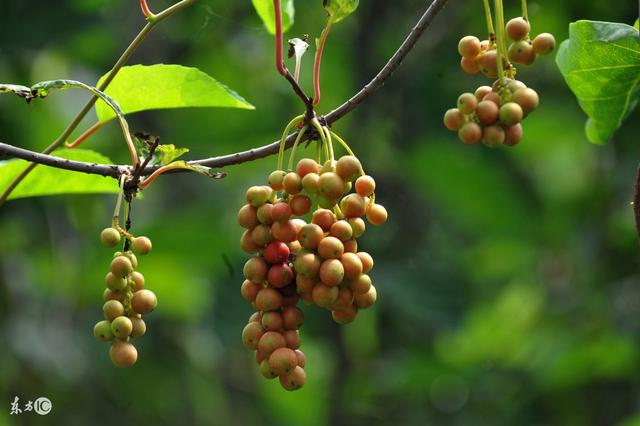
How to grow Schisandra chinensis? Detailed explanation of cultivation methods and techniques
Schisandra chinensis is usually grown by raising seedlings and then transplanting them.
① Raising seedlings: The seedling bed should be chosen on a plot close to a water source, sheltered from the wind and facing the sun, and the soil should be loose, fertile, deep, well-drained, slightly acidic sandy loam. Apply 2000-3000 kg of barnyard manure per 667 sq m, plow deeply 20-25 cm, harrow fine and level to make raised beds 120 cm wide, 15 cm high and 10-20 m long. Sow seeds that have been treated and have already cracked in early to mid-May. Make shallow furrows across the seedbed for drilling, with a row spacing of 10-15 cm, cover with 1.5-2 cm of soil, and cover with straw mats to keep warm and moist; the sowing rate is 30-60 g per sq m. Broadcasting can also be done, with a sowing rate of 80-100 g per sq m. Build a shade frame 0.6-0.8 m high over the bed, and shade with straw curtains or shade netting, with 50% light transmission. Seedlings emerge 15-20 days after sowing. When the young seedlings grow 1 pair of cotyledons, remove the covering, and when they grow 3-4 true leaves, gradually remove the shade material. The seeds of Schisandra chinensis are not fully mature when the fruit ripens, and the seeds must undergo low-temperature treatment before they can be used for sowing. In autumn, rub the fresh fruit in water to remove the flesh, soak the seeds in clean water for 3-5 days, rinsing and changing the water once a day, then take out the sunken seeds and mix them evenly with 2-3 times their volume of wet sand, place them in a pit 50 cm wide and 50 cm deep and as long as needed according to the amount of seed, cover with 10-15 cm of fine sand, then cover with a straw curtain; by April-May of the following year the seeds will have cracked and can be sown.
② Transplanting: Transplant before growth resumes in the following spring or after leaf fall in autumn, with spring transplanting being preferable; transplanting in the evening and on cloudy days gives a higher survival rate. The transplanting density is generally a row spacing of 1.2-1.5 m and a plant spacing of 50-60 cm, transplanting 1 young seedling on each side of the trellis, with 1,750-2,210 young seedlings transplanted per 667 sq m.