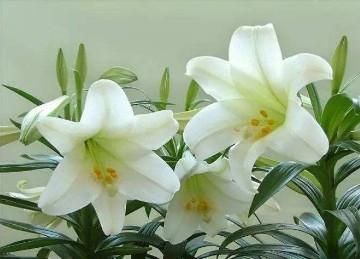
Lily Planting, Care and Management Methods and Technical Key Points
I. Temperature Management
During the first two weeks of lily planting, the temperature should be kept at around 4-13°C, after which the temperature can be gradually increased to promote stem and root growth. If the temperature is too low, it will prolong the growth period of the lilies, and if the temperature is higher than 25°C, it will cause an imbalance in the root-to-shoot ratio of potted lilies, thereby reducing product quality.
II. Water Management
Since water affects the total salt content of the growing medium, the salt content of the irrigation water should be 0.5 mS/cm or lower. Watering is best done in the morning or during the cooler hours of the morning. When lilies are budding, appropriately reduce the frequency of watering, and do not get water on the leaf surface, to avoid "leaf scorch." After the "leaf scorch" period ends, spraying water is acceptable; especially at high temperatures, spraying water on the leaves not only keeps the leaves bright green but also prevents high-temperature leaf burn. In the later stage of flower bud growth, maintain sufficient moisture to avoid bud drop or flower bud shrinkage.
III. Fertilizer
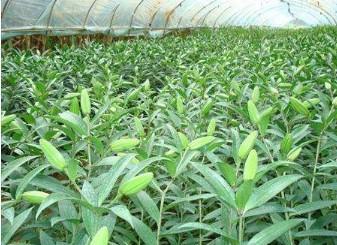
Lilies are bulbous flowers, and applying fertilizer 2-3 times during the growing period is sufficient. During the stem root formation stage, do not fertilize. After the "leaf scorch" ends, mainly apply nitrogen fertilizer, supplemented with calcium, phosphorus and potassium fertilizers. For the first fertilization, calcium nitrate is mostly applied, about 5 grams per pot. The second fertilization is during the flower bud growth stage, and potassium nitrate can be applied.
IV. Light
Potted lilies have different requirements for light intensity at different growth stages. During the budding stage, shading treatment is needed, and if the leaf temperature is too high, appropriate shading should also be applied; during other growth stages, light should be increased, especially during the flower development stage.
V. Relative Humidity and Ventilation
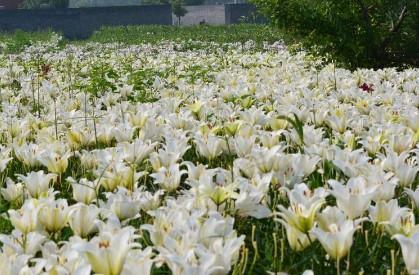
Potted lilies require an air relative humidity of 80%-85%. Too high relative humidity will lead to the occurrence of various diseases, while too low will affect the normal growth rate of the plants. When ventilating, avoid causing drastic changes in air relative humidity, otherwise it will reduce product quality. During the "leaf scorch" period, ventilation can be appropriately increased to alleviate "leaf scorch."
Article source: Kuaihuolin Landscape Maintenance Network