How to grow guava seedlings? Detailed explanation of seedling methods and techniques
Guava is one of the common fruits in daily life. It can be eaten fresh, and can also be used to make processed products such as jam and jelly, so it has good cultivation value. At the same time, guava also has the characteristics of being easy to grow, high and stable yield, and strong adaptability, attracting many fruit growers to cultivate it. To successfully grow guava, doing a good job in guava seedling raising is key. The main guava seedling methods include the seedling method, cutting method, budding method, etc. Let's learn about them together.
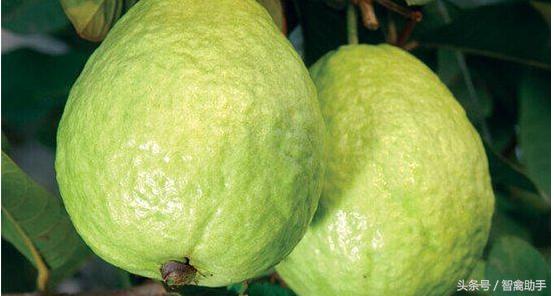
Image: Guava
I. Seedling method
Using this method to propagate seedlings is relatively fast. Seeds are collected from excellent mother plants. After collection, they are immediately broadcast or sown in rows. They germinate after 2-4 weeks. When the seedlings are 10 cm tall, combined with seedling selection, they are transplanted into plastic nutrition bags about 12 cm in diameter and about 20 cm high, or directly sown in the bags, and can be planted in the field after one year. For example, Thailand large-fruit guava is sown in autumn, and the seedlings are transplanted in the following spring. In April-May, when the seedlings are 40 cm tall, they can be planted. When sowing, the seedbed soil must be finely broken up, the seedbed surface must be level, and sufficient base fertilizer must be applied. Spread the washed and sun-dried seeds evenly on the seedbed surface, press them firmly with a wooden board, then sprinkle a thin layer of burned soil or screened garbage mud, or cover with finely broken topsoil, with a thickness of about 0.3 cm, just enough to cover the seeds. After sowing, water with a sprinkling can, and then water once a day to keep the soil moist. To increase the germination rate, soak the seeds in water for 12 hours before sowing or soak them in hydrochloric acid for 3 seconds, and the germination rate can reach 90%. Seedlings grown from seed usually begin to bear fruit in the third year after planting. Seed propagation produces offspring with great variation, tall tree vigor, and inconvenient management.
II. Cutting method
From February to April each year, select branches with a stem thickness of about 1.2-1.5 cm from excellent plants. Each section is 15 cm long. The base is cut into a smooth triangular prism shape, with a pointed tip. Insert it straight into the soil to a depth of one-half of the total length, compact the soil, cover with soil and water, and keep it moist. It can be planted around Qingming in the following year. The rooting rate is lower than that of air-layered seedlings, the root system often develops unevenly, and the tree crown also develops irregularly. The survival rate of cutting propagation reaches 60%.
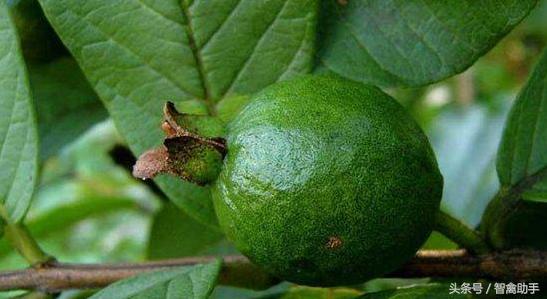
Image: Guava
III. Air layering
Around Qingming, select 2-3-year-old branches with a diameter of 1.2-1.5 cm, girdle the bark at about 40-60 cm from the branch tip, with a width of about 1.5-2.0 cm, then wrap with mud strips mixed with rice straw. After 50-60 days, when new roots are exposed, it can be cut off from the mother plant. Moss or coconut coir, etc. can also be used, wrapped externally with plastic film. After about 3-5 weeks, after a large number of new roots have developed, cut it off from the mother plant. After the air-layered seedling is separated from the mother plant, it is temporarily planted in a nursery for one year. Or it can be directly planted in the orchard in July-August of the same year. During temporary planting, it must be properly shaded for a period of time and kept at a certain humidity. The survival rate of air layering can reach 90-100%. It can bear fruit 1-2 years earlier than cuttings.
IV. Approach grafting method
The rootstock is seedling guava. After the seeds are sown, it takes about 1 year before they can be used as rootstock for approach grafting. About 3 months after successful approach grafting, the mother branch can be cut off.
V. Budding method
Guava grafting has a very low survival rate, among which budding is relatively reliable. The rootstock used grows vigorously, with a diameter of 2-3 cm, and the patch budding method should be used. The grafting method can use various rootstocks to strengthen adaptability to the soil, and can also advance the fruiting period.
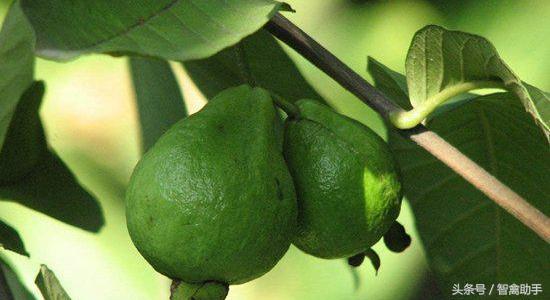
Image: Guava
VI. Planting
Before planting, dig planting holes 70-80 cm square according to the density. Apply 50 kg of decomposed livestock manure or compost (or 50-70 kg of green material) and 0.5-1 kg of superphosphate into each hole, then backfill soil to 20-30 cm above the ground. Prepare the planting holes 1-3 months before planting. In Hainan, if irrigation is convenient, planting can be done throughout the year. In arid areas without irrigation conditions, it is best to plant from the light rain in late spring and early summer until before the end of typhoons. The row spacing is generally 4 x 6 m, but early-maturing varieties planted on mountain land can be slightly denser, while mid-maturing varieties or fertile land can be appropriately wider. According to yield-increasing requirements, 4 x 4 m can be tried.
[Editor's concluding remarks]Doing a good job in guava seedling raising is the foundation for successfully growing guava. The above has introduced guava seedling methods for everyone, hoping it can help everyone!