A Complete Guide to Dental Implants: Things to Know Before Getting One
I've been working away from home all these years, and I go back less and less often. After more than a year away, I finally found time to go home a few days ago. While having a meal at my grandmother's house, I noticed she just drank a little congee and then stopped eating. Later I heard from family that grandmother is getting on in years and has lost almost all her teeth. Maybe it's hereditary, since no one in our family has good teeth. She wore removable dentures for a while, but it wasn't long before she developed symptoms like swollen and painful gums and periodontal inflammation, so she gave up wearing them. Now she can only drink congee and eat soft foods. Seeing grandmother like this after being away from home for so long really upset me, so I thought about taking her to get dentures so she could properly enjoy her later years.
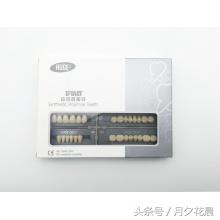
Resin teeth
I gathered some relevant information online. With traditional dentures, the adjacent teeth have to be ground down to secure the crown, the crown feels very uncomfortable in the mouth, and it affects chewing power. But dental implants are a bit better. My grandmother is 67 this year. Although she's still in good health, I wasn't sure whether she was suited for dental implants. After much deliberation, I decided to consult a professional dentist. The doctor said that since grandmother is elderly, she needed to come to the hospital in person for an examination, and then the best treatment plan could be determined.
Grandmother came to the hospital. The doctor first arranged an oral examination to check whether she had any oral diseases. Grandmother had mild periodontitis, which needed treatment first to ensure a good oral environment. Then the doctor did a bone assessment for her. Dental implants have very high requirements for the alveolar bone, and there must be enough jawbone. After the assessment results came out, we learned that grandmother could get dental implants, and we were all very happy. It turns out that as long as the conditions are suitable, age is not a problem for dental implants.
Next, the doctor took a full-mouth CT scan of grandmother to assess the three-dimensional position of the bone. This lets the doctor understand the patient's oral condition more comprehensively. Before dental implant surgery, the doctor makes a precise surgical positioning template, so the doctor can position it in a better direction and reduce unexpected variables during surgery.
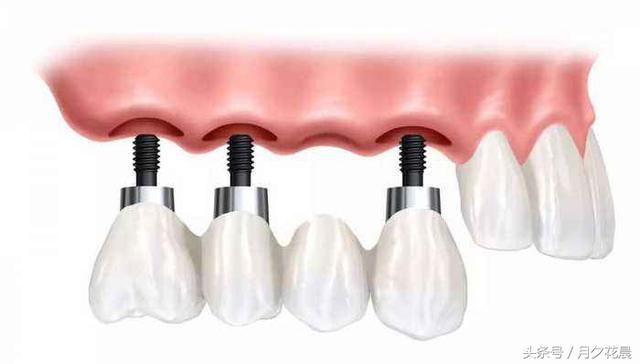
Micro-implant, dental implant
During the surgery, the doctor uses a live monitoring system to watch while implanting, so the implant can be placed into the corresponding position more precisely. Too deep would cause accidents, too shallow would make the implant unstable. After the implant is placed, the doctor judges based on experience whether a denture can be fitted. Now there is a device called an osseointegration test, which can more scientifically judge the growth of the bone.
After dental implants, you must develop good oral hygiene habits. Some people think that since it's a fake tooth, it definitely won't develop dental disease. This idea is wrong. Dental implants, like real teeth, can be attacked by periodontal disease. After implantation, postoperative maintenance is also needed to clean off contaminants on the implant.
The above is the process of dental implants and the points to note. I hope it's helpful to everyone. Below I'll introduce the various dental materials and equipment for dental implants.
Bone powder: artificial bone tissue. The function of bone powder is to make up for the deficiency of alveolar bone. Bone powder combines with the alveolar bone and is the guarantee of successful implantation.
Dental implant: A dental implant is divided into three parts: the implant, the abutment and the crown. The implant is the part implanted into the alveolar bone, commonly known as the dental post. The material of the implant is now all pure titanium, with high hardness and good compatibility.
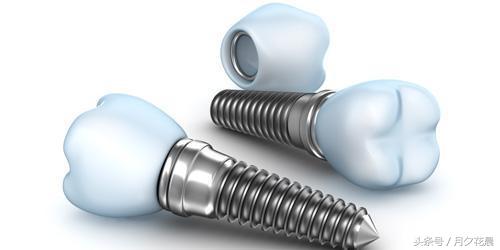
Dental implant
The best material for dental implant crowns currently is porcelain-fused-to-metal crowns, but there are also many kinds of porcelain-fused-to-metal crown materials, including cobalt-chromium alloy porcelain teeth material, pure titanium porcelain teeth, and all-ceramic teeth. The effects and service life of porcelain teeth made of different materials are different.
It is recommended to choose the material that suits you according to your own actual situation. For choosing dental materials, check out Jinhu Dental Network; it's quite professional.