How is foliar fertilization carried out in orchid cultivation?
Orchid foliar fertilization, also called fertilizing outside the roots, has the characteristics of using a small amount of fertilizer, being absorbed quickly, and being highly targeted, and plays a very important role in preventing and treating deficiency symptoms, strengthening orchid plant growth, and disease resistance and cold resistance.
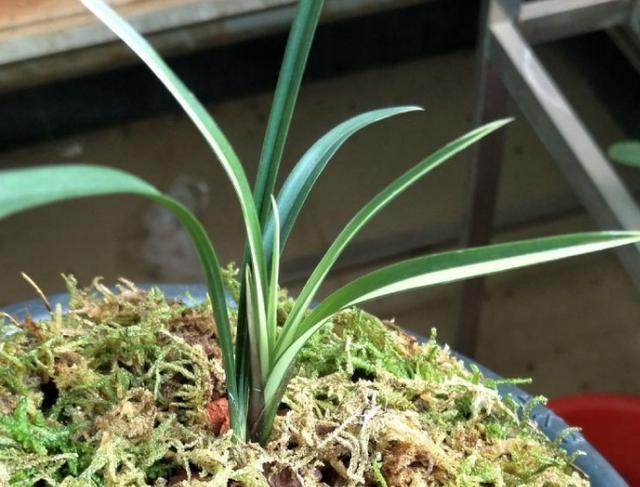
Types of fertilizer for spraying
Like other plants, orchid growth must first satisfy the need for the three nutrient elements nitrogen, phosphorus, and potassium, but calcium, iron, zinc, magnesium, copper, boron, molybdenum, and others are also indispensable. Fertilizers commonly used for orchid foliar spraying include: for nitrogen, urea, ammonium sulfate, and ammonium nitrate; for phosphorus, superphosphate, potassium phosphate, and monopotassium phosphate; for potassium, potassium nitrate and potassium chloride; for calcium, superphosphate; for iron, ferrous sulfate; for zinc, zinc sulfate; for magnesium, magnesium sulfate; for copper, copper sulfate; for boron, borax and boric acid; for molybdenum, molybdic acid.
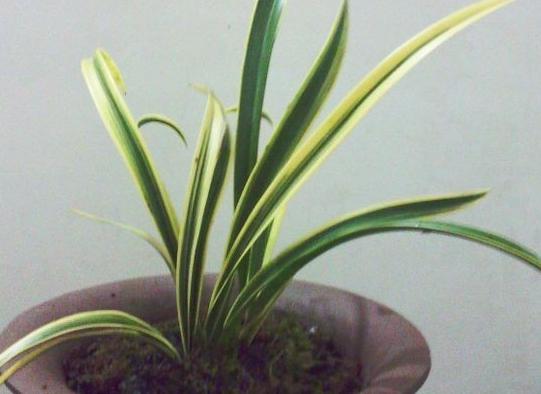
Concentration for spraying
For orchid foliar fertilization, the fertilizer must be diluted to a certain concentration, so that it not only has good fertilizer effect but also does not cause fertilizer damage. The concentration for spraying varies with different fertilizers, and is generally kept at: urea 0.2%, monopotassium phosphate 0.3%, potassium sulfate and potassium nitrate compound fertilizer 0.1%, superphosphate 0.5%, magnesium sulfate 0.5%, ferrous sulfate 0.5%, zinc sulfate 0.1%, copper sulfate 0.2%, borax and boric acid 0.3%, molybdic acid 0.1%. In addition, fertilizers such as Yiduo, Yuanshuo, Shida, Lanjunwang, and Penshibao must be prepared and applied according to the product instructions.
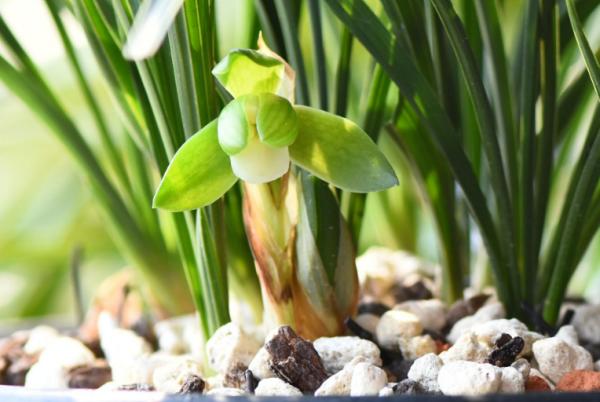
Spraying sites
The key site for orchid foliar fertilization is the underside of the leaves. This is because the upper side of the leaf is covered with a glossy cuticle layer, so the fertilizer solution is not easy to enter; while the underside has no cuticle layer and has many stomata, so the fertilizer solution is easy to penetrate and be absorbed. However, when spraying, the whole plant must be sprayed, that is, all parts other than the orchid roots: leaf surface, petiole, leaf sheath, and the pseudobulbs on the soil surface. For orchid plants placed on the ground, when spraying fertilizer the orchid pot must be laid on its side and rotated 1 full circle, so that every side is covered and the orchid plant is prompted to grow evenly.
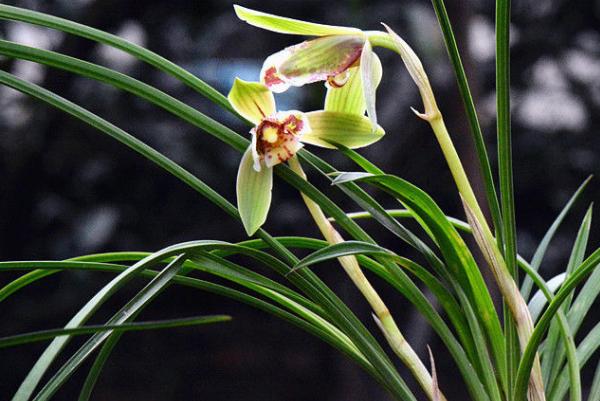
Timing of spraying
For orchid foliar fertilization, during the period of new shoot emergence and new root growth, apply once every 7-10 days, for 2-3 consecutive applications. From flower bud emergence to before flowering, apply once about every half month. During other growth periods, apply 1-2 times per month. During the vegetative growth period, apply more nitrogen and potassium fertilizer, and during the reproductive growth period, apply more phosphorus and potassium fertilizer.
The time for foliar spraying must be determined according to whether the weather is cloudy or clear, the temperature level, and the humidity level. When the temperature is between 18-25 degrees Celsius, the stomata of orchid leaves are fully open, and spraying fertilizer at this time has the best effect. When the temperature is below 15 degrees Celsius, because the temperature is low, the stomata of the leaves are closed or open very little, and the fertilizer solution is not easy to absorb. When the temperature is above 30 degrees Celsius, because the temperature is high, the leaves are baked, and spraying fertilizer will also cause fertilizer damage. When the air humidity is high, the fertilizer solution stays on the leaves for a long time, and the nutrients absorbed are also the most.
Promote Chinese orchid culture and spread orchid knowledge! Click to follow, we continuously update orchid knowledge, your good teacher on the road of orchid growing!
The best time for spraying fertilizer is on a windless sunny or cloudy day, and early morning or evening is even better. At the same time, note that it should not be applied in severe cold, not in extreme heat, not on rainy days, not at noon, and not during the flowering period.