Growing tomatoes on the balcony is very easy, learn it with ease
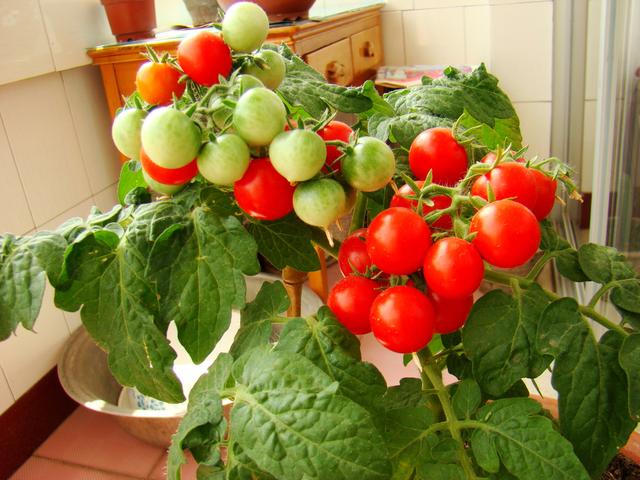
The vegetables on the market nowadays are all grown with pesticides, and eating them doesn't feel safe, yet the nutrients in vegetables must still be replenished, so what can be done? You can grow them yourself on the balcony! Small tomatoes are a fruiting vegetable that can be grown on the balcony; besides enjoying the yellow flowers, you can also watch the fruit gradually change color. And today's tomatoes come not only in red but also in rich colors such as yellow and orange, making them a vegetable pot plant that makes people eager to grow them and welcome the harvest day as soon as possible. Below is a brief introduction to the methods and precautions for growing tomatoes on the balcony.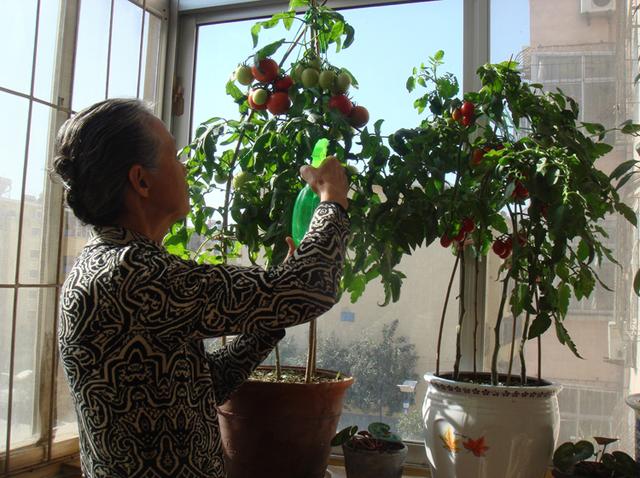
Methods for growing tomatoes on the balcony
1 Sowing and raising seedlings
For home tomato growing, you can sow and raise seedlings directly, or soak the seeds in warm water at 50-55°C for 10-12 hours before sowing them in a flower pot. Before sowing, first put the prepared nutrient soil into the flower pot, leaving 3-4cm from the rim, water thoroughly, and sow once the soil is slightly dry. If planting several plants in one pot, sow 1-2 seeds at 10-15cm intervals, then evenly cover with 0.5cm of substrate and cover with 1 layer of plastic film, removing the plastic film after the seedlings emerge. After sowing, keep the daytime temperature at 20-28°C and the nighttime temperature above 10°C. Control water appropriately in the few days before potting.
2 Potting
When the seedlings reach 3-4 leaves, they can be transplanted into pots. Before potting the young seedlings, first wash the flower pot, place a tile piece or fill nylon gauze over the drainage hole at the bottom, and fill with potting soil. Use a gardening trowel to dig out the young seedlings from the original pot at about 5cm around the root system, at a depth of no less than 8cm, plant the dug-out young seedlings with their soil ball into the pot, straighten the plant, and gently shake the flower pot. Water thoroughly right after planting, until water seeps out from the pot hole.
3 Daily management
Water management: after the tomatoes are potted, water once thoroughly; thereafter water once every 3-5 days. Control the amount of watering before fruit set, and keep the potting soil moist during the fruit swelling stage.
 Precautions for growing tomatoes on the balcony
1. Temperature control
Keep it in a cool place for one week, then place it in the sun; do not water too much; add some base fertilizer appropriately when planting; it will die if the temperature is low. Only one plant can be grown per pot for it to grow well. When transplanting, keep the soil ball, and do not put it in the sun immediately after planting; wait 1-2 days. It is best to grow it with leaf mold plus a little gravel, and it should be placed in the open air; when it grows tall, tie a stick to support it.
2. Water and fertilizer management
When the seedlings grow to 6 leaves, pot the tomatoes and then water once thoroughly; after 20 days, apply 100-150 grams of expanded chicken manure or sesame paste residue as a top dressing per pot of tomatoes, top-dress once every 10 days, and water once every 3-5 days. Control the amount of watering before fruit set, and keep the potting soil moist during the fruit swelling stage.
3. Pruning techniques
1. Continuous pinching: since tomatoes have strong growth vigor and the axillary buds on each side can all develop into branches, flower, and bear fruit, you can carry out two-stem or three-stem pruning; when the plant reaches about 80 cm tall, pinch off the growing point so the plant stays short and sturdy and the fruit ripens uniformly. To increase the plant's photosynthetic area and promote the fruit-setting rate, for side branches growing from multiple main stems, when they have 1-2 trusses of flowers, pinch the tip leaving 1-2 leaves above, so that each pot of tomatoes takes an umbrella shape, fan shape, or hemispherical shape, with the fruit trusses evenly distributed on it. In cold winter, when the indoor temperature and light are suitable, potted tomatoes can likewise bear abundant fruit.
2. Twisting branches, removing leaves, and pinching out shoots: shape the pot by twisting branches, increase the load-bearing capacity of the basic branches, raise the fruit-setting rate of each pot of tomatoes, and make light distribution even to promote fruit ripening. Branch twisting should be done on a sunny afternoon, and must never be done in rainy weather or on a sunny morning. Leaf removal is done to keep the fruit trusses as close to the pot surface as possible; the yellow old leaves at the base and the branch forks should also be removed in time to improve ventilation and light penetration and reduce nutrient consumption. Pinching out shoots is also for shaping, to promote plant growth and fruit swelling, and to help the fruit receive light and color up.
3. Make use of its indeterminate growth characteristic: in winter, place the potted tomato on an enclosed balcony or indoors, and hang a plastic string, guiding one branch of the potted tomato upward to climb, so as to make full use of space for more flowers and more fruit. Use a flower pot with a diameter of 17 cm and a height of 12 cm to plant one tomato pruned to four vines; after the fruit on the long vine is harvested, you can change the head and renew the fruiting branches. If a self-topping variety is used for the potted tomato, the pinching step can be omitted, nutrients can be supplied to the fruit more intensively, and the effect will be somewhat better. But with indeterminate tomato varieties, through repeated pinching and head changing, good results can likewise be achieved.
4. Pest and disease control
Potted tomatoes have very few pests and diseases. Because indoor air is dry, pay attention to frequently spraying water and 0.5% monopotassium phosphate on the leaves, or spray a 100-fold rice vinegar solution weekly, which can prevent insects and diseases and also serve as foliar top dressing. Where conditions permit, spraying a low-toxicity, odorless pesticide once every 10 days can control the occurrence of pests and diseases.
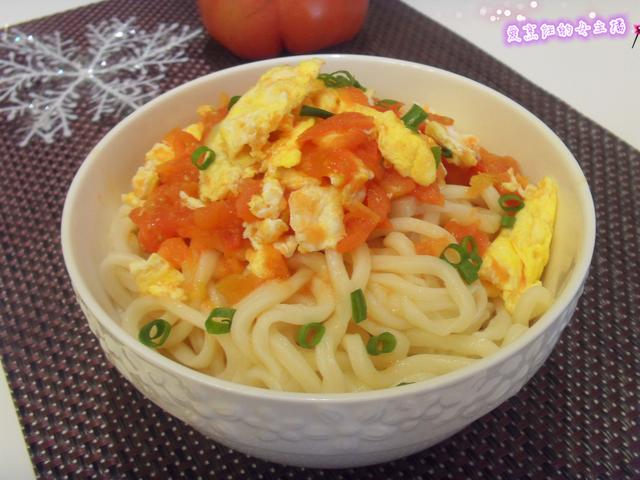
Finally, the favorite tomato and egg noodles
 WeChat official account: tangzhe365