How to grow flowering crabapple? A complete guide to planting techniques and essential knowledge
"Its lush beauty is best when newly wet with rain; its charm lies entirely in the moment before it blooms." The crabapple in poets' verses always carries such tender, ink-washed words. Through the ages, countless men of letters have depicted the crabapple, showing just how deeply it stirs the heart.

The Charm of the Crabapple
Modern crabapples are mostly ornamental flowering trees used for urban greening and landscaping (though some varieties bear fruit of high edible value). Many of them are well-known ornamental plants, such as Malus micromalus, Malus halliana, Chaenomeles speciosa, and Chaenomeles sinensis, collectively known as the "four varieties of crabapple," and are important temperate flowering trees. The crabapple is one of China's traditional famous flowers. With its graceful bearing and blossoms like brocade, it has been a beloved flower for both refined and popular tastes since ancient times, and has long enjoyed the reputation of "national beauty." Generations of literati have written poems about it without end. Even the great literary giant Su Dongpo was captivated by it: "I only fear that deep in the night the flower will fall asleep, so I burn tall candles to light her crimson beauty." Thus the crabapple earned the elegant name "the flower that understands speech."
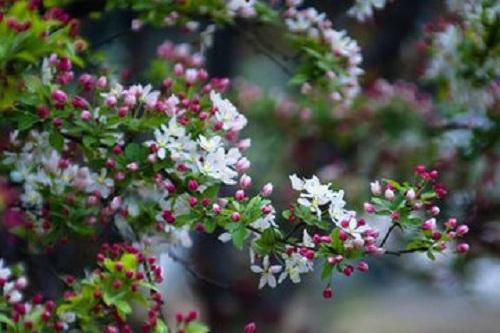
The Crabapple in Urban Greening
The crabapple's flowering period is usually in April, and across China from south to north, the blooming time runs from late February to early May. A single crabapple tree blooms for more than 10 days, with the fruiting period falling in September to October, at the turn of autumn and summer. It likes light and also tolerates partial shade. It is highly adaptable, cold-resistant, and drought-tolerant. It is not demanding about soil and can generally be grown anywhere with good drainage, but it dislikes low-lying spots; it prefers deep, fertile, and loose soil, has some resistance to saline-alkali soil, and is also suitable for cultivation on sandy beaches. Its main disease is apple scab, which can be controlled with agents such as lime sulfur mixture and thiophanate-methyl; its main pests include aphids, scale insects, pear lace bugs, slug moths, and longhorn beetles, which can be controlled with agents such as dichlorvos, deltamethrin, phoxim, and cypermethrin. Be sure to avoid using dimethoate or omethoate.
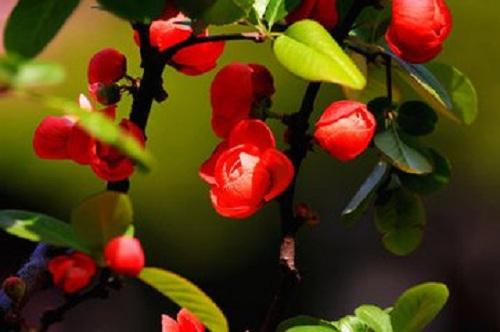
Crabapple Flowering Period
The crabapple has high value and often brings a great many benefits. The oil content of its seed kernel is about 35.99%, with an oil extraction rate of 30%; it has no off-flavor, is edible, and can be made into soap. After boiling, the fruit can be made into candied fruit and can also be used medicinally, with effects of dispelling wind, regulating qi, relaxing muscles and tendons, and relieving pain; most importantly, it can sober one up, remove phlegm, and when roasted and eaten, stop diarrhea. Its flowers can be made into sugar, and when made into a sauce condiment, the flavor is extremely fine. The bark contains tannins that can be extracted to make tannin extract. The crabapple's wood is hard and can be used to make furniture. In addition, this species is also an excellent material for garden landscaping. First, because the crabapple contains a large amount of sugars as well as various vitamins and organic acids, it can help people replenish the intracellular fluid of the human body, so it has the effect of promoting fluid production and quenching thirst. Second, the crabapple fruit is relatively rich in vitamins and organic acids, which can help the stomach and intestines digest food, so it can treat indigestion. Third, the crabapple's taste is sweet with a hint of sourness, which can ease acidity and counter astringency, with the functions of astringing and stopping diarrhea and calming the middle burner and stopping dysentery, so it can treat conditions such as diarrhea, dysentery, and loose stools. Fourth, it contains a large amount of nutrients essential to the human body, such as sugars, various vitamins, and organic acids, which can supply the body with nutrients, so it can supplement nutrition and improve people's immune function.
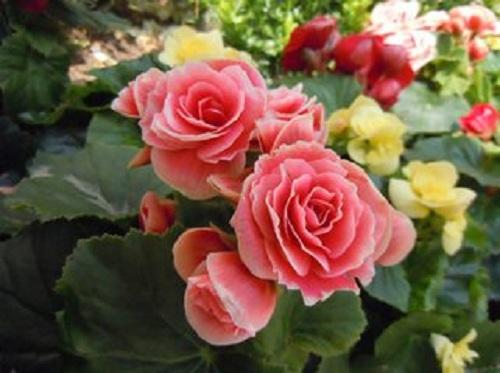
Crabapple Benefits
Below is a brief introduction to the crabapple's planting techniques:
First, ensure there is plenty of sunlight. If it is the scorching midday sun in summer, shade is needed to avoid sunburning the crabapple's flowers and leaves. The crabapple also has certain requirements for its soil environment: it needs relatively loose soil and also needs some alkalinity, with a pH of no less than 7. You can also choose soil from a flower bed or from beneath tree roots and simply add some river sand.
Second, do not plant the crabapple too deep in the pot; give its root system some room to spread, ideally about 15 cm from the bottom, though of course this also depends on the size of the crabapple. When watering, also take the weather into account, keeping the soil in the pot moist but not waterlogged; when the weather is cold, there is no need to water. Then note that when the spring buds first emerge, some necessary organic fertilizer should be applied to supplement its nutrients, along with one thorough watering; do the same when leaves fall in autumn. After the flowers fade, phosphorus and potassium fertilizer should be applied.
Finally, if you want the flowers to bloom abundantly, you need to prune the branches and leaves from after leaf drop until the time of budding in early spring. You can remove weak branches, diseased and pest-infested branches and leaves, individual overly long branches, and overly dense branches and leaves. You can also cut back sparse areas of the branches to encourage more side branches to grow. In addition, to prevent the plant from becoming overgrown, it also needs to be repotted in a timely manner.