Detailed Explanation of Rapeseed Planting Methods and Technical Points
Rapeseed is one of everyone's favorite vegetables, with a crisp and tender texture and rich nutrition. At the same time, rapeseed also has effects such as lowering blood lipids, detoxifying and reducing swelling, and beauty and health care. In recent years, as people pay more and more attention to health and wellness, rapeseed, which has certain health benefits, has also become very popular and has high planting value. Therefore, rapeseed planting has also attracted many farmers and has become a wealth-generating vegetable. So, how is rapeseed planted? The planting techniques and management of rapeseed are introduced below.
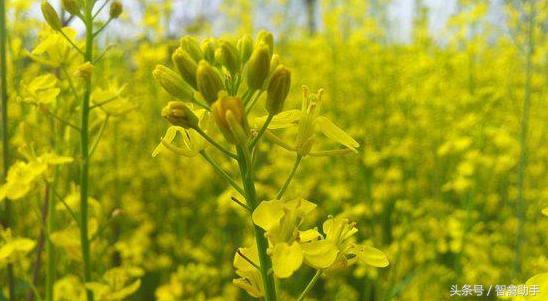
Image: Rapeseed planting
I. Rapeseed planting techniques
1. Select good varieties:According to the local cultivation system and climatic conditions, and in combination with the local soil fertility level and production situation, choose varieties with strong stress resistance and good yield performance.
2. Prepare the seedbed well:The seedbed should be selected in a plot that is ventilated and sunny, with fertile and loose soil, and close to a water source, and the land should be prepared carefully. Seedbed preparation should achieve "level", "fine", and "firm".
3. Sow at the right time:Rapeseed is very sensitive to the sowing period. Therefore, determining the sowing period is an important issue in rapeseed cultivation. Rapeseed germination, seedling emergence, root development, and leaf growth all require certain temperature conditions. The suitable temperature for germination requires a daily average temperature of 16-22°C, and seedling leaf emergence also requires above 10-15°C to proceed smoothly. In addition, it is also necessary to ensure that after transplanting there are still at least 40-50 days of effective growth period before entering overwintering.
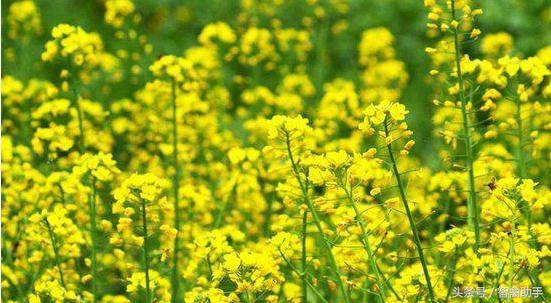
Image: Rapeseed planting
4. Seedbed management:One day before transplanting, the "lifting water" should be poured thoroughly to facilitate pulling seedlings and reduce root damage. In fertilizer management, grasp the principle of "promote early, control in the middle, stabilize later". On the basis of applying sufficient base fertilizer before sowing, at the three-leaf stage, combined with final thinning, apply seedling fertilizer well. Generally, 20-30 loads of clear water manure or 2-3 kg of urea per mu is applied to promote leaf opening and seedling development. 5-6 days before transplanting, apply 7.5 kg of urea per mu as lifting fertilizer, which is beneficial for early seedling development after planting. Timely control diseases and insect pests. Aphids and cabbage caterpillars are the main pests in rapeseed seedling fields. Apply pesticides in time for control. At the same time, remove weeds around the seedbed to reduce pest sources. 3-4 days before transplanting, apply a "lifting pesticide" thoroughly to prevent bringing pests into the field.
5. Apply sufficient base fertilizer:Rapeseed plants are tall and require a large amount of fertilizer, so attention should be paid to the application of base fertilizer. Insufficient base fertilizer will make seedlings weak and thin, thereby affecting plant growth and even the economic yield of rapeseed. Base fertilizer should be mainly organic fertilizer, supplemented by chemical fertilizer, to lay a good foundation for the fertilizer needs of rapeseed throughout its life. Generally, apply 2000 kg of organic fertilizer per mu, 25-30 kg of 45% general-purpose compound fertilizer or 30-40 kg of 36% compound fertilizer (15-10-11), and 0.5-1 kg of boron fertilizer. Application method: combine with plowing and land preparation to apply organic fertilizer, compound fertilizer, and boron fertilizer deeply. Never apply fertilizer too shallowly, so as to avoid fertilizer deficiency in the middle and late stages of rapeseed.
6. Transplant at the right time:Reasonable close planting. When the seedling age is 30-35 days, there are 5-6 green leaves, and the root diameter is 5-6 mm, transplant large and strong seedlings with soil, fertilizer, and pesticide. Do not transplant tall-footed seedlings, curved-footed seedlings, or thin and diseased seedlings. The transplanting specification is 50 cm x 20 cm, with about 7000 plants per mu. Transplant while covering soil, and water the roots promptly after transplanting. Three days after rapeseed transplanting, check for missing plants and fill gaps.
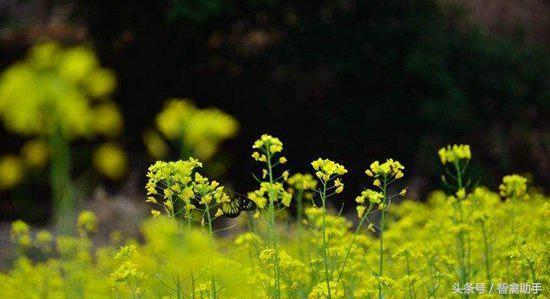
Image: Rapeseed planting
II. Rapeseed planting management
1. Seedling fertilizer:Apply seedling fertilizer early and frequently, promptly supply the nutrients needed by rapeseed at the seedling stage, and use the brief higher temperatures before winter to promote rapeseed growth, achieve strong seedlings for overwintering, and lay the foundation for high and stable rapeseed yields. Seedling fertilizer can be divided into two topdressings: early seedling stage and late seedling stage. Early seedling fertilizer is applied at final thinning or at the 5 true-leaf stage, generally applying 5-6 kg of urea per mu. In soil lacking phosphorus and potassium, if no phosphorus and potassium fertilizer was applied as base fertilizer, phosphorus and potassium fertilizer should be supplemented. Late seedling topdressing should be determined according to seedling conditions and climate. Generally, apply 8-10 kg of high-nitrogen compound fertilizer per mu. Varieties with strong springness or areas with warmer winters should apply early, while areas with low winter temperatures or triple-cropping rapeseed areas may apply appropriately later.
2. Bolting fertilizer:The bolting stage of rapeseed is a period when vegetative growth and reproductive growth proceed together. The plant rapidly bolts and grows branches, leaf area increases, and flower buds differentiate in large numbers. It is the period with the greatest fertilizer demand and also the key period for increasing branches and pods. Therefore, according to the application of base fertilizer and seedling fertilizer and the growth condition, apply bolting fertilizer steadily as appropriate. If base fertilizer and seedling fertilizer are sufficient and the plants grow robustly, less or no bolting fertilizer may be applied; if base fertilizer and seedling fertilizer are insufficient and there is a trend of fertilizer deficiency, bolting fertilizer should be applied early. Generally, apply 15-20 kg of high-nitrogen compound fertilizer per mu. The application time is generally at the middle bolting stage, when the bolt height is 15-30 cm. However, for weak growth, fertilizer may be applied at the early bolting stage to avoid premature aging; for strong growth, it may be applied at the late bolting stage when the bolt height is 30-50 cm, to avoid excessive growth during the flowering period causing closure.
3. Flower fertilizer:After rapeseed bolts, it flowers while forming pods. The number and weight of seeds are closely related to the nutritional conditions after flowering. For vigorous growth and large fertilizer application at the bolting stage, it may not be applied or applied less; for early-maturing varieties, do not apply, or apply less at the initial flowering stage. Topdressing at the flowering stage can be done by foliar spraying. During the flowering and pod-forming period, spray 0.1-0.2% urea or 0.2% potassium dihydrogen phosphate. In addition, spray 0.2% borax aqueous solution once each at the late seedling stage and bolting stage to prevent the phenomenon of "flowers but no seeds" and increase yield.
4. Irrigation and drainage:Reasonable irrigation and drainage are important measures to ensure high and stable rapeseed yields. Rapeseed has a long growth period, large vegetative mass, luxuriant leaves, and many fruiting organs, and requires a relatively large amount of water throughout its life. In rapeseed-producing areas, rainfall in autumn, winter, and spring is generally low, and soil drought is not conducive to sowing, seedling emergence, and cultivating strong seedlings. In northern regions, winter drought often aggravates freezing damage and causes dead seedlings. In southern regions, excessive rainfall in the later period causes waterlogging or flooding damage. Therefore, timely irrigation and drainage must be carried out according to local conditions based on the water requirements of rapeseed.
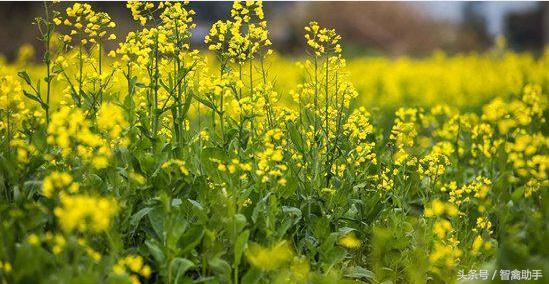
Image: Rapeseed planting
5. Scientific tip pruning:45-50 days after rapeseed transplanting, when flower buds appear at the top of the plant, tip pruning should be done at the right time to promote more thick primary branches in rapeseed, form an excellent population structure, and obtain the best yield. The flower buds should be manually removed during the shortened-base growth stage after budding and before bolting. After tip pruning, the plant should retain 8-9 leaves. If too early, the flower buds have not completed differentiation and the growth amount is insufficient, which is unfavorable for rapeseed growth. If too late, rapeseed has already bolted and cannot form an excellent population structure, and high-node branches are likely to form, which are prone to breaking and lodging in the later growth stage.
6. Disease and pest control:The main diseases and pests harming rapeseed include cabbage caterpillars, flea beetles, aphids, cotton bollworms, and others. For damage by cabbage caterpillars, flea beetles, and aphids, spray 25% Decis 3000-fold solution or 40% dimethoate 1000-fold solution for control. For damage by cotton bollworms, at the low-instar larval stage, use 40 g of Baode plus 20 g of Wanling per mu mixed with water for spraying, once every 5-7 days, for 2-3 consecutive sprays.
7. Harvest at the right time:Rapeseed should be harvested at the right time when mature. If harvested too early, the siliques do not develop to maturity. If harvested too late, the siliques are overripe, the husks are likely to shatter, and the seeds scatter, causing waste. When the siliques are at the yellow-ripe stage, that is, when 2/3 of the siliques of the whole field appear yellow, it is the best time to harvest rapeseed. Harvesting at this time can obtain the highest oil content and highest yield of rapeseed.
[Editor's Conclusion]Rapeseed contains a variety of nutrients, has very high nutritional value, and is also a good edible vegetable oil, with very high planting value. The above has introduced the planting techniques and management of rapeseed for everyone. Have you all learned it?