What are the key points for growing potted blueberries?
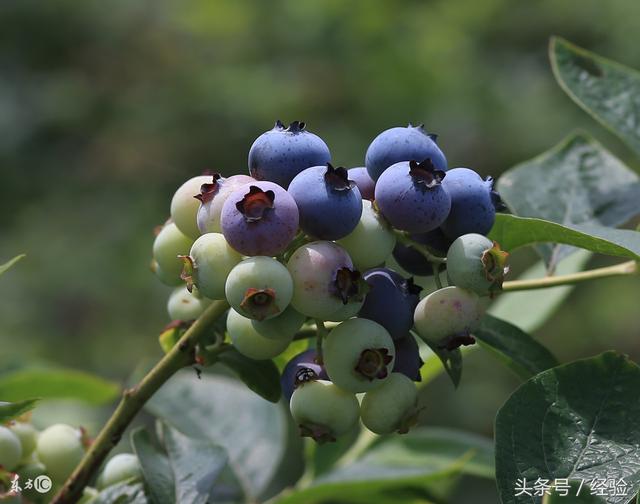
Blueberry fruit As people's living standards improve, home greening and beautification have become a fashionable pursuit for everyone, and potted blueberries will surely become the ideal choice for home greening and beautification. At present, domestic blueberry cutting and tissue culture techniques are gradually maturing, and nursery stock prices are gradually falling, so for flower-growing enthusiasts, the time has come to grow potted blueberries. Below are the key technical points for potted blueberries:
I. Choose suitable varieties
Choose varieties whose chilling requirement (the cumulative value of effective hours at 0-7.2°C) suits the local climate conditions. Note: lowbush types are only suitable for open-air planting in the north (the specific range is yet to be confirmed); the rabbiteye series, Sharpblue and O'Neal are not self-fruitful, so at least two plants must be grown or pollinizer trees must be provided for pollination in order to set fruit.
II. Timing of nursery stock purchase
Container-grown nursery stock can be planted all year round. However, it is best to buy it from autumn to before bud break the following spring, when the stock is easy to transport and simple to manage and plant; simply remove the pot, place it in a container and cover with soil.
III. Soil requirements:
Blueberries prefer acidic, soft, loose, airy soil rich in organic matter, requiring a soil pH of 4.5-5.5 and a soil organic matter content of 8%-12%.
Soil mix: for home potting, you can buy the common leaf mold or seedling substrate from the flower market, mix it with garden soil at 1:2, add sulfur powder (about 2 grams per 1 L of soil, or as conditions require) to adjust the soil pH, and if possible also add decomposed moss or peat, wood shavings, rotted pine bark fragments and other organic matter
Note: decomposed organic matter can be mixed in evenly or simply spread on the surface of the potting soil; undecomposed plant-based organic matter can be applied around the roots but must be kept away from the roots.
IV. Planting containers:
It is recommended to use well-aerated clay pots, next plastic pots, and to avoid ceramic and porcelain pots as much as possible. Because blueberries have fibrous, shallow roots, large pots are not needed and deep pots should be avoided; for small seedlings, a pot with an inner diameter of 15 cm is recommended, and for ordinary mature plants a 25-30 cm pot is sufficient; avoid using a large pot for a small seedling.
V. Climatic conditions:
For seedlings that are both to flower and fruit, the chilling requirement must be met as required by the variety, that is, the blueberry seedlings must go through a sufficiently long low-temperature dormant vernalization period. The chilling requirement varies from variety to variety, but if the aim is only to enjoy the flowers, then a sufficiently long vernalization period is not needed.
VI. Watering management:
Blueberry roots are rather shallow and quite sensitive to water, so the potting soil should be kept moist but not waterlogged at all times, and there are also differences at different growth stages of the blueberry. In the spring vegetative growth stage: maintain the most suitable moisture conditions to make the plants strong;
During fruit development and before ripening: appropriately reduce the water supply to prevent excessive vegetative growth from competing with the fruit for nutrients;
After fruit harvest: restore a suitable water supply to promote vegetative growth and flower bud development.
From mid-autumn to late autumn: reduce the water supply to help the plant enter dormancy in good time.
To maintain soil acidity, it is recommended to water in sulfur powder (about 2 grams per 1 L of soil, or depending on the soil pH) once every six months. Note: for daily watering, rainwater is best. If tap water is used, it must be left to stand for 3-5 days first to remove the chlorine from the water.
VII. Fertilization management:
Blueberries are light feeders; compared with other fruit trees, their trees contain very low levels of nitrogen, phosphorus, potassium, calcium and magnesium. Since organic matter has already been mixed into the soil at planting, blueberry fertilization mainly means topdressing. Fertilizers suitable for potted blueberries include phosphorus pentoxide, ammonium sulfate, potassium sulfate and so on. The amount of fertilizer for blueberries must be chosen carefully, depending on soil fertility and the nutritional status of the tree, and above all over-application must be prevented to avoid fertilizer damage. Fertilization should follow the principle of little and often. Note: blueberries are calcifuge and chlorine-sensitive plants, so never add bone meal, eggshells or other high-calcium fertilizers to the soil, and do not use chloride fertilizers or nitrate nitrogen fertilizers.