What Are the Causes of Dental Implant Failure? A Comprehensive Analysis of Common Factors
When teeth are lost due to cavities, periodontal disease, or injury, artificial dental implants have gradually replaced traditional dentures. Although artificial dental implants have become the most common treatment choice for restoring missing teeth, cases of implant failure are still heard of.
Causes of Dental Implant Failure
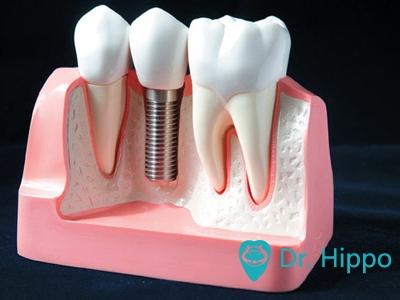
Artificial dental implants have become an option on dental treatment lists and represent the future trend of treatment, but their success rate is not 100%. Artificial dental implants may fail due to incomplete preoperative evaluation, the patient's individual health factors, inadequate oral cleaning, and so on.
Different papers define implant failure rates differently, but overall, the failure rate during the initial surgical phase of implantation is about 1%-5%, while the failure rate after 10 years of long-term use is between 2% and 10%.
Finally, an analysis and summary of the causes of artificial dental implant failure can be grouped into the following points:
1. Infection
For patients who originally do not have enough bone, bone powder or other devices must be placed before implantation to strengthen stability, but the growth of this bone requires good blood circulation to assist it. If infection occurs during the surgical procedure, it will affect the integration between the implant and the bone, leading to loosening of the artificial tooth root.
The tooth extraction procedure before implantation is very important. If there are residual sources of infection in the bone bed after extraction, or if the tooth was removed due to severe periodontal disease, immediate implantation is not advisable; if one wants to extract and implant but finds that the tooth root is inflamed, debridement must be performed after extraction, followed by bone grafting, so that the implant will later have a stable hold.
2. Smoking
The wound healing period requires good nutrition, and the nutrition of the gums in the oral cavity depends entirely on blood circulation for supply. The nicotine in cigarettes causes blood vessels to constrict and inhibits blood circulation, leading to insufficient surrounding nutrients and reduced wound healing capacity, and may even increase the chance of infection.
3. Osteoporosis Medications
In recent years, it has been found that some osteoporosis medications affect bone metabolism, causing patients to develop complications of bone inflammation, which may also cause the implant to loosen.
4. The Patient's Biting Habits
Some patients grind their teeth severely at night or have excessive biting force. Excessive biting force may cause the implanted tooth root to bear too much load, leading to bone resorption and loosening of the implant.
5. Poor Oral Hygiene
Poor oral hygiene not only affects the growth of the artificial tooth root when it is implanted, but also has a key impact on whether the successfully implanted artificial tooth can be used long term. Many patients, after artificial implantation, keep their oral cavity in a long-term state of inflammation and infection due to periodontal disease and poor oral cleaning, all of which shortens the service life of artificial implants.
Generally speaking, the length of an artificial tooth root is about 8mm or more. Research has found that under ideal conditions, after 10 years of use, only about 1mm of surrounding bone is resorbed around the artificial tooth root. So under normal circumstances, a successful artificial implant has more than an 80% chance of lasting at least 20 or 30 years.
However, clinically it has been found that some periodontal disease patients, because they neglect oral hygiene and cleaning, see the artificial tooth root shorten by 2-3mm in just 1 year, greatly shortening the service life of the artificial implant and ultimately requiring re-implantation.
6. Mechanical Design Reasons
These may come from the dentist or related operators, such as insufficient experience of the doctor, inadequate preoperative planning, incorrect implant selection, implantation angle, direction, or position, or inadequate evaluation of bone grafting surgery, insufficient care in bone grafting material and wound management, as well as poor denture material quality and restorations that do not fit closely enough, which may also lead to problems during long-term use.
Preoperative Communication and Postoperative Care Are Key
Although artificial implants have their benefits, not everyone is suited for implantation. Before undergoing implantation, a thorough evaluation must be done to confirm whether one is suitable for artificial implants. Whether the patient smokes, takes osteoporosis medications, has enough bone, has oral cleaning ability, and the status of periodontal disease improvement are all important evaluation factors.
For those with severe teeth grinding habits, very poor oral hygiene, or acute or chronic inflammation in the oral cavity, the failure rate of implant surgery will increase. In addition, those in poor general condition or with severe diseases who cannot withstand surgery, those with severe diabetes or obvious complications, and those with severe mental illness are all unsuitable for rashly undergoing dental implant surgery.
To have a successful implant, communication with the doctor before surgery is very important. Through detailed communication, confirming the doctor's professionalism and giving the patient confidence before surgery is also very important. After all, artificial implants are meant to provide a better quality of life, but relatively speaking, there are also certain surgical risks, and these patients need clear awareness and understanding before implantation.
In addition, maintenance after artificial dental implantation is also very important. Although the denture part will not decay, if cleaning is not done well, the artificial tooth root may still develop peri-implantitis. It may cause bone resorption and destruction around the implant, and may also cause the implant to loosen, so cleaning must match that of natural teeth, or even require more careful attention; at the same time, implant patients should preferably have a follow-up check every 3 months in the first year after implantation, and at least 2 follow-up checks per year thereafter, to ensure implant quality and maintain good function.
Preoperative Evaluation for Immediate Implants Is Very Important
Whether immediate implants succeed also depends on favorable timing, conditions, and personal suitability, and not every patient is suited for them. In clinics, many cases are often seen of failure caused by blindly pursuing speed and hastily extracting and immediately implanting. After all, although this surgical method is good, it still has its limitations; for example, it is not suitable when the extracted tooth has acute infection, periodontal disease, periapical cysts, or when the gums and bone have already been extremely destroyed and atrophied.
Preoperative evaluation and examination for immediate implants are very important. Usually, for immediate implants to succeed, the bone volume must be thick and tall enough, and the biting angles of the upper and lower teeth must be reasonable, and it is best if it is not a single implant but rather a situation with missing teeth on both the left and right, because when there are multiple teeth distributed on the left and right, the load on the implants can be dispersed, avoiding excessive biting force on a single implant that causes the tooth root to loosen.
Due to advances in high technology, the latest computed tomography imaging scans and full-mouth X-rays are now used before implantation for evaluation, allowing a clear view of the jawbone, maxillary sinus area, nerve growth and distribution, and whether there is inflammation. Most importantly, it can reveal how wide and tall the patient's bone is for supporting the implant, and then determine whether immediate implantation is possible. However, clinically it has also been found that some patients thought they could safely receive implants after computed tomography examination, but after surgery, bone exfoliation was found, showing that technological examination sometimes still has blind spots.
Periodontal Disease Patients Need Careful Evaluation
In addition, some periodontal disease patients may also be unsuitable for immediate implants, especially those with severe alveolar bone destruction caused by periodontal disease. After implantation, there may be a gap between the tooth root and adjacent teeth, making the teeth look uneven in length, enlarging the gaps between teeth, and creating an uncoordinated ratio between gums and teeth, affecting appearance. If the alveolar bone is insufficient, the implant becomes exposed in the oral cavity, which can further cause implant or gum infection, with the consequence of implant collapse.
Immediate implants are not always unworkable, but before surgery there must be clear communication with the doctor and a complete preoperative evaluation. If there is inflammation or severe bone defect, it is recommended to proceed step by step using the traditional medical model to build up the bone bed well before performing implantation.