Detailed Explanation of Key Points of Peony Cultivation and Management Techniques
I. Growth Habits of Peony
Peony is cold-tolerant, likes fertilizer but fears waterlogging, prefers moist soil but is also drought-tolerant, likes sunlight, and prefers cool climates in summer. Peony has fleshy roots and a relatively long root system, so it should be planted in sandy soil with high terrain, deep soil layers, loose fertility, and good drainage. Planting it in clay or low-lying waterlogged areas makes it prone to root rot.
II. Distribution of Peony
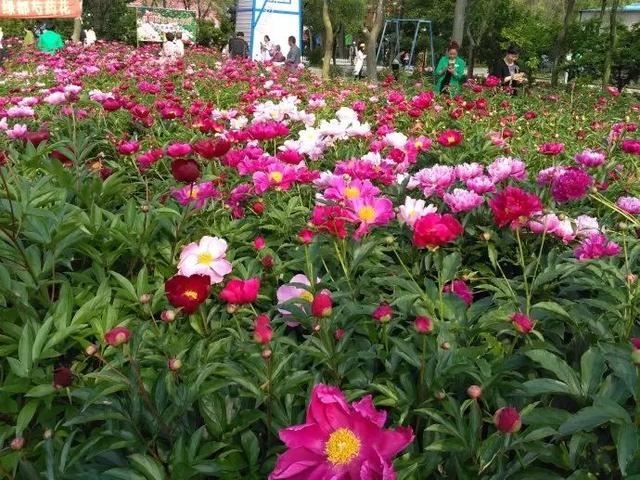
In China, peony is mainly distributed inJiangsu, Northeast China, North China, Shaanxi and southern Gansu. InNortheast China, it is distributed on hillside grasslands and under forests at an altitude of 480-700 m, and in other provinces it is distributed on hillside grasslands at an altitude of 1000-2300 m. It is also cultivated in Sichuan, Guizhou, Anhui, Shandong, Zhejiang and other provinces as well as in urban parks.


III. Peony Planting and Management Techniques
1. Land preparation
Before plowing, use 500 ml of 48% chlorpyrifos and 500 ml of 40% phoxim per mu, mix with 10 kg of soil and spread evenly. Apply 50 kg of balanced compound fertilizer, 40-80 kg of phosphate fertilizer, and 100-150 kg of organic fertilizer per mu.
2. Seed selection and propagation
Peony propagation methods include division propagation and seed propagation, among others, but division propagation is mostly used in production. During autumn harvest, select peony roots that are thick, long, uniform, with strong terminal buds and free of pests and diseases. Among them, large roots with a diameter of more than 0.5 cm are cut off for medicinal use, and those with buds are used for planting.
Divide the bud heads used for planting into sections according to size and natural growth shape, each section with 2-3 strong buds and a thickness of about 2 cm. Peony bud heads should be planted immediately after cutting.
3. Planting
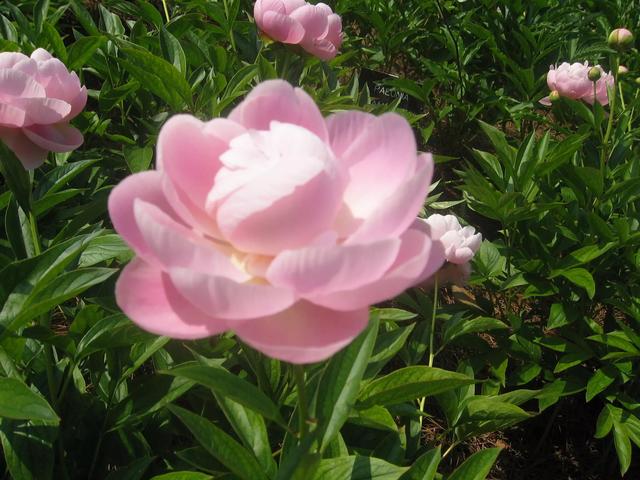
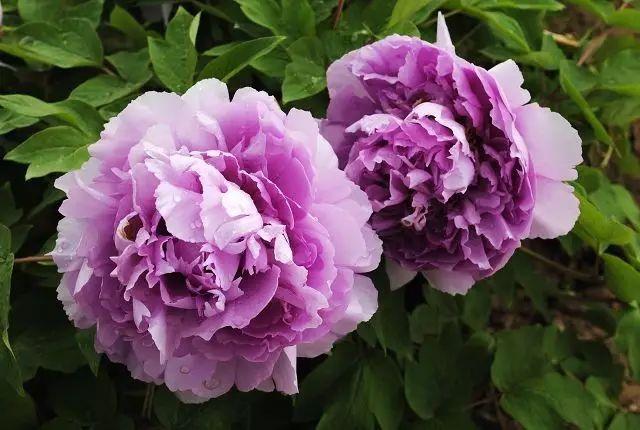
Generally plant from late August to September, no later than late October. Earlier is better than later, otherwise it will affect the yield and quality of peony.
4. Field management
In the spring of the second year, before peony sprouts, level the soil mounds from the previous autumn. During the peony growing period, keep the soil loose and free of weeds. Hoe immediately after rain and hoe during prolonged drought.
If the lateral buds in the upper leaf axils of peony stems are removed early, nutrients can be concentrated, making the main bud flower larger and fuller; if the lateral buds are retained, the ornamental period of the flowers is longer. The specific practice can be carried out according to individual needs.
Peony has a well-developed root system and strong drought resistance, so it generally does not need watering. If spring drought or summer drought lasts a long time, it can be watered once or twice, preferably with unpolluted river water. In winter, depending on soil moisture, it can also be watered once with overwintering water. Peony grows vigorously and has a high fertilizer requirement, so it can be fertilized twice a year. Before winter, some slow-release fertilizer can be applied, such as decomposed cake fertilizer (150 kg/mu) or dried manure (1500 kg/mu). Before or after flowering, some quick-acting fertilizer can be applied, such as compound fertilizer or diammonium phosphate (10-15 kg/mu). Foliar topdressing can also be combined with this, such as potassium dihydrogen phosphate or trace element fertilizer, sprayed once every 15-20 days.
5. Pest and disease control
Diseases: mainly leaf spot disease, including red spot disease and brown spot disease.
The peak incidence period is generally in summer and autumn when temperature is high and humidity is high. In the early stage of the disease, 40% carbendazim 800-fold solution can be sprayed on the leaf surface for control. In severe cases, use 40% carbendazim 500-fold solution once every 15 days, 2-3 times is sufficient.
Pests: mainly grubs and nematodes.
During the peak occurrence period of grubs in July-August, 30% carbofuran (5 kg/mu) or 50% phoxim granules (3 kg/mu) or isofenphos-methyl liquid can be mixed with organic fertilizer or sandy soil to make poisoned bait, spread evenly, and then deep-hoed.
Nematodes are root-knot nematodes. Symptoms include root nodules of different sizes on fibrous roots, weak plant growth, yellowing, scorching and early falling of leaf edges, and in severe cases the plant becomes shorter until death. 30% carbofuran granules can be applied evenly to the affected plot during the rainy summer period at a standard of 25 grams per square meter. Because root-knot nematodes are aerobic lower animals and mainly live in the soil layer within 5-20 cm, when applying pesticide, it must not be applied too deeply.
6. Harvesting
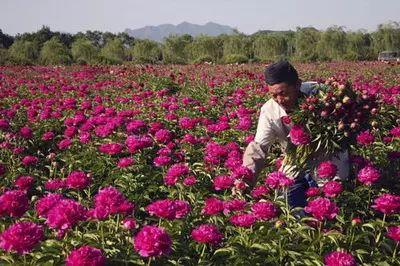
Generally harvest in August-September of the 4th year after planting, choosing a sunny day. At harvest, first cut off the stems and leaves of the plant, then dig out the entire root, and cut off the main root and lateral roots for processing.