Detailed Explanation of Sweet Potato Cultivation Techniques, Planting Methods and Field Management Key Points
Sweet potato was originally named fan shu, also known as hong yu, gan shu, fan shu, da mi, fan yu, di gua (in the north), hong shao, xian shao, bai shu, jin shu, tian shu, zhu shu, zhen shu, fan ge, bai yu, hui yu di gua, etc.How do you grow sweet potatoes? What are the methods for growing sweet potatoes? Then let's take a look together at the sweet potato growing methods carefully recommended by the editors of Xuexila, hoping they will be helpful to you.
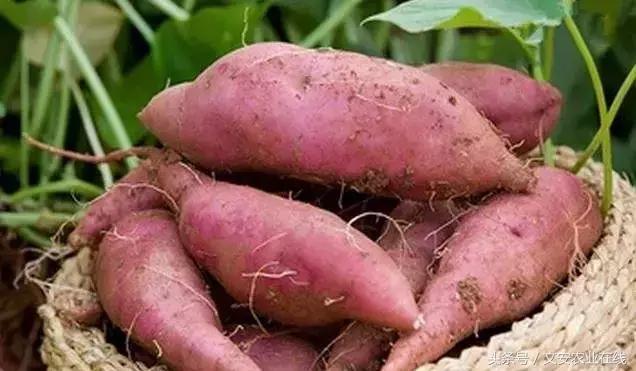
Sweet potato growing methods:
Sweet potato (English: sweet potato), originally named fan shu (scientific name: Ipomoea batatas (L.) Lam.), is commonly called di gua in the northeast (in Hubei dialect hong shao, hong yu, bai shu, hui yu, zi shu, gan shu, zhu shu, jin shu, etc., also known as shan yu, gan shu, fan shu, bai yu, etc.). Sweet potato belongs to the order Tubiflorae, Convolvulaceae, an annual herbaceous plant, over 2 m long, prostrate on the ground and ascending obliquely, leaves usually broadly ovate, 4-13 cm long, 3-13 cm wide, corolla pink, white, light purple or purple, bell-shaped or funnel-shaped, 3-4 cm long, capsule ovate or oblate, with false septa, divided into 4 chambers, with underground tuberous roots, tuberous roots spindle-shaped, outer skin earthy yellow or purplish red. (Sweet potato is the root among the six major organs of a plant: root, stem, leaf, flower, fruit, seed)
Sweet potato tuberous roots are rich in protein, starch, pectin, cellulose, amino acids, vitamins and various minerals, with a sugar content of 1.5%-5%.
Sweet potato tuberous roots contain active ingredients and have effects such as anti-cancer, protecting the heart, preventing emphysema, diabetes, weight loss, and beauty, and have the"longevity food"reputation. In addition, besides being commonly used for food, the tuberous roots can also be used to make sugar, brew wine, and make alcohol, and can also be used to produce starch, extract pectin, etc. The starch produced can be used to make vermicelli and sheet jelly, and can be used to make delicious dishes.
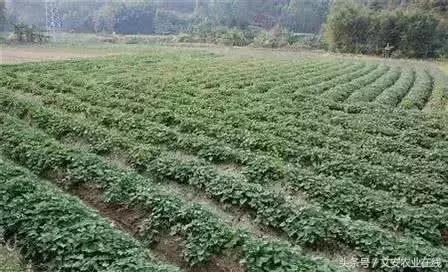
Growth habits of sweet potato
Growth periods
The growth period of spring sweet potato is 160-200 days, and that of summer sweet potato is about 110-120 days. According to the growth characteristics of spring sweet potato in the field and its relationship with climatic conditions, it is roughly divided into three growth periods:
(1) Early stage (from planting seedlings to closing of the rows). Spring sweet potato lasts about 60-70 days, and summer sweet potato about 40 days. In this period, stems and leaves grow relatively slowly, the root system develops relatively quickly, and it is a period dominated by the growth of fibrous roots.
(2) Middle stage (from closing of the rows to the peak of stem and leaf growth). Spring sweet potato lasts about 50 days, and summer sweet potato about 30 days. In this period, tuberous roots expand relatively slowly and stems and leaves grow quickly, and it is a period dominated by the growth of stems and leaves.
(3) Late stage (from the beginning of decline of stems and leaves to harvest). Spring sweet potato after late August, and summer sweet potato after early September. This period is the main period for tuberous root expansion.
Growing environment of sweet potato
(1) Temperature. Sweet potato likes warmth and fears cold. When planting seedlings, at 5-10 cm, if the ground temperature is around 10°C, roots will not develop; at 15°C it takes 5 days to develop roots; at 17-18°C roots develop normally; at 20°C roots develop in 3 days; at 27-30°C roots can develop in only one day.
When the air temperature is 25-28°C, stems and leaves grow quickly; above 30°C, stems and leaves grow even faster, but tuber expansion is slow. Above 38°C, respiration consumption is high and stem and leaf growth is slow; below 20°C, stem and leaf growth is also fast; at 15°C growth stops; if the duration below 10°C is too long or frost occurs, stems and leaves wither and die.
When the ground temperature is between 21-29°C, the higher the temperature, the faster the tuberous roots form and the greater their number, but the tubers are smaller. A ground temperature of 22-24°C is more favorable for tuberous root formation. A ground temperature of 20-25°C is most suitable for tuberous root expansion; below 20°C or above 30°C, expansion is slower; below 18°C, some varieties stop expanding; below 10°C, they are prone to cold damage; at -2°C, the tuberous roots freeze. During tuberous root expansion, a relatively large day-night temperature difference is favorable for tuberous root expansion and nutrient accumulation.
(2) Light. Sweet potato likes light. Under sufficient light, leaf color is deeper, leaf age is longer, stems and vines are sturdy, the conductive tissue of the stems is well developed, and yield is relatively high. If light is insufficient, leaf color turns yellow, there is more leaf fall, leaf age is short, stems and vines are slender, conductive tissue is poorly developed, less organic nutrients formed by assimilation are transported to the tuberous roots, and yield is low.
A long daily light duration is favorable for stem and leaf growth, the stems and vines become longer, and the number of branches increases. A daily light duration of 12.5-13 hours is more suitable for tuberous root expansion. A daily light duration of 8-9 hours is favorable for budding and flowering, but not suitable for tuberous root expansion.
(3) Water. Sweet potato is a drought-tolerant crop, but too much or too little water is unfavorable for increasing yield. Sweet potato fears waterlogging, especially being waterlogged after tuber formation, which greatly affects yield. Alternating dry and wet soil causes uneven growth rates inside and outside the tuberous roots, often resulting in skin cracking. In short, sweet potato fears both waterlogging and drought. As people say: "Dry grows firewood roots, wet grows fibrous roots, neither dry nor wet grows tuberous roots." To obtain high yield of sweet potato, irrigation should be timely and appropriate according to specific conditions, drainage should be timely and thorough, and dryland should strengthen intertillage to preserve soil moisture.
(4) Nutrients. Sweet potato has a strong ability to absorb fertilizer and tolerates poor soil, but to achieve high yield, sufficient fertilizer must be applied. In addition to nitrogen, phosphorus, and potassium, sulfur, iron, magnesium, calcium, etc. also play important roles. Among the three major elements, sweet potato has the greatest demand for potassium, followed by nitrogen, and the least for phosphorus. According to analysis, every 1000 jin of sweet potato contains 3.5 jin of nitrogen, 1.75 jin of phosphorus, and 5.6 jin of potassium. Therefore, increasing potassium fertilizer and applying nitrogen and phosphorus fertilizers timely and appropriately have a significant yield-increasing effect.
(5) Soil. Sandy loam and sandy soil with deep soil layers, rich organic matter, loose texture, good aeration, and good drainage performance are best. When the soil texture is heavy and sticky, the tuberous root skin color is poor, rough, tuber shape is irregular, yield is low, and storability is poor. However, sandy loam and sandy soil generally have relatively low fertility and poor water retention, so fertility should be gradually improved through measures such as fertilization before high yield can be obtained. Sweet potato is relatively tolerant of acidity and alkalinity, with an adaptive pH range of about 4.5-8.5, but 5.2-6.7 is suitable. When the soil salt content exceeds 0.2%, sweet potato should not be planted.
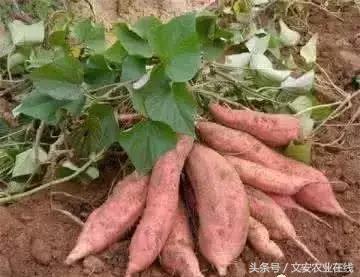
Cultivation techniques of sweet potato
Seedling raising methods
Sweet potato needs to be raised as seedlings 2 months before transplanting, that is, spring sweet potato begins seedling raising in late January, autumn sweet potato in mid-to-late June, and early winter sweet potato in early-to-mid August. One-time seedling raising can be used, or propagation can be done in batches.
Each year, seed selection and seedling raising are carried out for purification and rejuvenation. Seed selection should be done in fields free of viral disease and scab disease and with consistent varieties, selecting medium-sized seed potatoes with long, uniform tuber shape, no ridges, straight, smooth skin, and no disease or insect spots or scars. Before planting, soak in 1.0% copper sulfate solution or 2% sodium hydroxide solution for 5-10 min, or soak seed potatoes for 2 h in biological agents permitted for organic production such as Bt and Beauveria bassiana. It is best to use gauze-net greenhouses under insect-free conditions to propagate virus-free seedlings.
The seedbed base fertilizer should be applied sufficiently. Generally, per 667 sq m, apply 500-1000 kg of self-composted organic fertilizer and 50 kg of mineral potassium-magnesium fertilizer. Before sowing, disinfect the seedbed with lime sulfur or lime, or disinfect by sealing the shed.
Seedling stage management
During the sweet potato seedling raising period, topdressing should be applied timely according to seedling conditions. Use biologically organic fertilizer that is organically certified or permitted by an organic certification body (total NPK nutrient content >=6%, organic matter content >=40%). The total amount of topdressing during the seedling raising period is generally 250 kg per 667 sq m. At the first "red bud" stage, generally apply thin fertilizer water; when the seedlings are 10-13 cm high, a second topdressing can be carried out. After each fertilization, splash and wash the seedlings with clean water to prevent fertilizer from adhering to the seedlings and causing seedling burn.
Earthing up can be carried out in 2-3 rounds. When the seedlings are about 10 cm high, the first earthing up can be carried out, and after 7 d the second earthing up, for a total of 3-5 cm of earthing up. For earthing up, it is best to use fertile, loose, fine soil mixed with burnt mud ash or decomposed compost, and spread it evenly into the seedbed. Earthing up can be combined with applying liquid fertilizer, doing earthing up first and then fertilizing, so that the soil and the base of the seedlings are closely combined, which is conducive to early and abundant new root development.
After sowing, spray every 15 d with biological agents permitted for organic production such as Bt and 300-fold tea seed cake water, spread wood ash once; and place sex pheromone traps around the seedbed or outside the seedling shed.
Seedbed management should also do a good job in measures such as heat preservation, moisture retention, and ventilation, with temperature as the main focus. Before emergence, cover with straw curtains at night and maintain bed temperature at 25-35°C. After emergence, control the temperature at 20-25°C, and prevent high temperature from scorching the seedlings. If the temperature inside the film exceeds 30°C, ventilate and dissipate heat in time to prevent seedling burn. When a cold wave comes, do a good job in heat preservation.
Before seed potatoes emerge, generally do not water, so as to facilitate high-temperature germination promotion, disease prevention, and emergence. If the seedbed is too dry, use a sprayer to spray clean water on the seedbed. After emergence, pay attention to seedbed humidity. When the seedbed turns white, water in time, moisten the bed soil and sprinkle thin fertilizer water to promote sweet potato seedling growth; when the seedbed is too wet, uncover the film in time for ventilation.
Fertilizer and water management
The demand of sweet potato for the three major elements nitrogen, phosphorus, and potassium varies with growth period. Nitrogen fertilizer is absorbed more during the stem and leaf growth period and less during the tuberous root expansion period; phosphorus fertilizer is absorbed less in the middle stage of stem and leaf growth and more during the tuberous root expansion period; while potassium fertilizer absorption is greater than nitrogen and phosphorus from planting to harvest, and is even more significant during the tuberous root expansion period. Therefore, sweet potato fertilization should be carried out around this characteristic, N:P:K=5:6:20. It is best to use soil testing and formula fertilization technology.
Organic sweet potato cultivation prohibits the application of any chemical fertilizer, with base fertilizer application as the main method. Generally, the amount of base fertilizer accounts for 60%-80% of the total fertilization amount, and the base fertilizer is applied in combination with land preparation and ridge formation.
After the transplanted seedlings survive, apply 1 topdressing of biogas slurry or fully decomposed thin manure water in combination with replanting missing seedlings, as a seedling-promoting fertilizer. The second time is during the tuber formation period of sweet potato, that is, about 60 d after spring and autumn planting, and about 70 d after winter planting, apply 1 topdressing of tuber-promoting fertilizer. The tuber-promoting fertilizer is mainly potassium fertilizer. Generally, per 667 sq m, apply 500 kg of homemade organic fertilizer (or organically certified organic fertilizer), 250 kg of wood ash, or 25 kg of mineral potassium-magnesium fertilizer. The application method is generally to break open both sides of the ridge with a plow, or open small ditches at the middle of the ridge with a small hoe, then mix the fertilizer with probiotics and apply it in bands. After application, water once to promote the fertilizer effect as quickly as possible. At the same time, after fertilization, earthing up can be carried out in combination with manual weeding.
After sweet potato is planted and watered for seedling establishment, 30-40 d after planting, it begins to branch and spread vines, and water demand increases. If drought occurs at this time, water in time. Furrow irrigation can be used, but the irrigation amount must not exceed 1/2 of the ridge height. Overall, water management should keep the soil basically moist. If rainy days occur, drain water in time to prevent water accumulation from causing excessive growth of sweet potato seedlings and the phenomenon of only growing firewood roots without forming tubers.
Common knowledge on sweet potato diseases and insect pests
Main diseases:Viral disease, leaf spot disease, scab disease, sweet potato blast, sweet potato stem rot, sweet potato soft rot, etc.
Disease control methods
First, use virus-free seedlings and disinfect seedlings; second, carry out chemical control according to different diseases.
Control and prevention of physiological diseases: due to factors such as soil nutrient deficiency, physiological nutrient deficiency, and adverse environmental conditions (too dry, too wet, sunscald, high temperature, low temperature), various physiological diseases such as deficiency symptoms, sunscald, aging, weakness, and wilting are caused.
Control methods: choose resistant varieties or insensitive varieties; choose robust varieties with strong growth vigor; water appropriately to keep the soil surface and plants dry; maintain appropriate density; maintaining crop rotation in the planting plot can reduce occurrence.
For non-infectious diseases, use sulfur and copper preparations for control. For bacterial diseases, such as soft rot, water appropriately while watering to keep the soil surface and plants dry. For fungal diseases, such as downy mildew, rust, and other soil-borne diseases, measures such as film mulching and drip irrigation can be adopted to keep the environment dry, which can control them.
Viral diseases are controlled by controlling aphids.
Main insect pests
Stem borers, hawk moths, leaf rollers, leaf beetles, small weevils, wireworms, scarab beetles, mole crickets, cutworms, tobacco cutworms, aphids, and whiteflies, etc.
Crop rotation. In paddy fields, carry out paddy-upland rotation, planting rice in early stubble and sweet potato in autumn, or planting rice in late stubble and sweet potato in winter; or planting aquatic vegetables in spring and summer and sweet potato in autumn and winter.
Use tissue-culture virus-free seedling raising methods.
Light trapping for insect control. Install one frequency-vibration insect-attracting lamp every 20000 sq m.
Comprehensive control measures for underground pests such as small weevils, cutworms, mole crickets, wireworms, and leaf beetles. After planting, spray 500-fold probiotic liquid once every 15 d; 2-3 months after planting, drench once with Beauveria bassiana or tobacco leaf (tobacco stem) water; stagger each drenching time by 15 d; place 15-20 small weevil sex pheromone traps per 667 sq m.
Stem borer control. 20 d after planting, spray once with azadirachtin or rotenone to control sweet potato stem borers, then spray once every 10 d, for 2-3 consecutive sprays.
Longchi Agricultural Materials and Agricultural Technology Service Center