What are the efficient management methods for fig cultivation?
Whenever flowers bloom, we can see a scene of brilliant purples and reds, but there is a plant that hides its flowers deep inside its "fruit." This plant is what the editor will introduce today:Fig。
The fig fruit is bulbous in shape. Besides being eaten fresh, it can also be used medicinally or processed into preserved fruit, jam, juice, fruit wine, fruit tea, and more. In addition to the fruit's rich economic value, the fig tree also has good ornamental value and is one of the tree species considered for landscaping in gardens and courtyards. Fig trees planted in the current year bear fruit in the same year, making them especially suitable for development as potted fruit trees, and their economic benefits are also very obvious. They are currently among the potted fruit trees with the highest profit margins in the country.
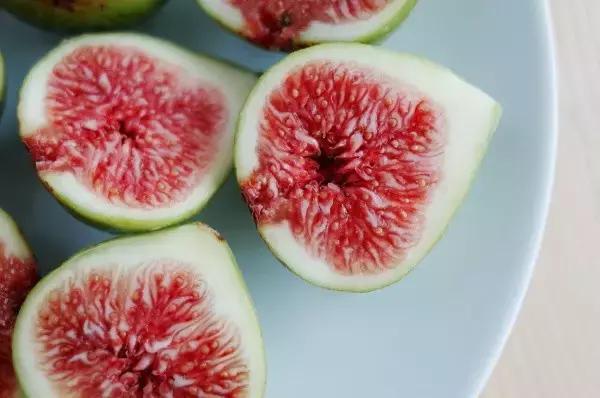
So how should fig trees be planted to achieve high yield and high returns?
1. Selection of planting site
Figs prefer warm and humid climatic conditions, are drought-resistant but not cold-resistant, and tolerate poor soil but not waterlogging. It is advisable to choose neutral or slightly alkaline soil with high terrain, shelter from wind and sun exposure, good drainage and good irrigation conditions, and deep, fertile soil layers for planting figs. Fig cultivation cannot be continuous-cropped with peach trees or mulberry trees. At the same time, because figs do not store or transport well, the orchard should be established in the outskirts of cities or in places with convenient transportation.
2. Propagation
Fig tree propagation methods include cuttings, layering, and division, with cutting propagation being relatively common.
3. Field planting
When the sapling diameter reaches 40-60 cm, it can be field planted. Before planting, apply a base fertilizer of mixed fertilizer containing phosphorus and potassium (farmyard manure, chemical compound fertilizer, cake fertilizer, etc.). Generally, in Northeast China, planting is done around Grain Rain; in North China, planting is done around Qingming; and in the south, transplanting and field planting are done after leaf fall in autumn.
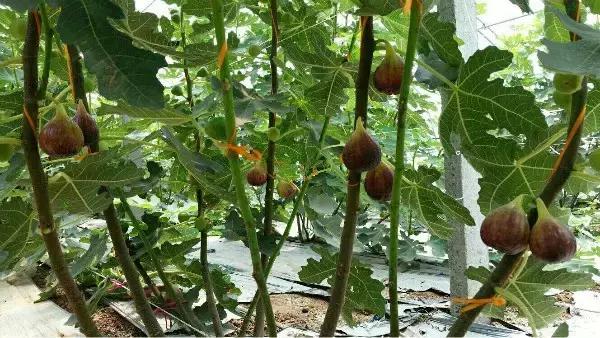
4. Training and pruning
The training and pruning of figs is relatively simple. In the young tree stage, the main branches are mainly cultivated; in the initial fruiting stage, multiple branch groups are cultivated to lay a foundation for yield; in the full fruiting stage, scaffold branches are cultivated, and aging, weak, diseased, and pest-damaged branches are pruned off.
5. Fertilizer and water management
Fig fertilization is mainly based on organic fertilizer, combined with compound chemical fertilizer. Additional fertilizer is needed once each during flower bud differentiation, new shoot growth, the fruit harvesting period, and after fruit harvest.
Figs are drought-resistant but not waterlogging-resistant. During new shoot growth and fruit enlargement, the water demand is relatively high, but if water accumulates too heavily, it can easily cause flower drop, fruit drop, and leaf drop. Therefore, if the orchard is in low-lying terrain, attention should be paid to high-ridge cultivation, and attention should be paid to drainage work during the rainy season.
6. Pest and disease control
In fig cultivation, pests and diseases rarely occur. It is only when the fruit ripens that it is easily damaged by birds. A scarecrow with colorful plastic strips can be set up in the field to drive them away.