Open-field Melon Cultivation Techniques and Management Key Points
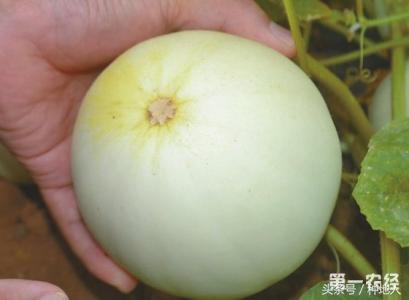
Muskmelon (Cucumis melo), also known as "sweet melon", also known as "white pecking melon". It is an annual trailing herbaceous plant of the Cucurbitaceae family, Cucumis genus, with heart-shaped or palm-shaped leaves. The five petals are yellow, monoecious, the female flowers are bisexual flowers containing stamens and pistils, the male flowers are unisexual with only stamens. The melon is spherical, ovate, elliptical or oblate, with skin color yellow, white, green or mixed with various markings. The flesh is green, white, crimson red or orange-yellow, crisp or soft in texture, fragrant and sweet. It prefers high temperatures, dryness and abundant sunlight. Native to the tropics, it is widely cultivated throughout our country, with many varieties; those produced in North China and Northwest China are sweet and rich in flavor, while those produced in humid regions have more water content and a relatively bland taste. It is one of the excellent fruits of summer. The famous Xinjiang Hami melon is a variety of the melon variant var.saccharinus.
Answers to Melon Cultivation Techniques
1. Variety Selection
Varieties should mainly be early-maturing and mid-maturing high-quality varieties, supplemented by an appropriate amount of mid-to-late-maturing varieties. At present, the varieties mainly used in greenhouse production include Elizabeth, Yinmizi, Netted Fragrance, as well as some suitable early-maturing and mid-maturing varieties from home and abroad.
2. Raising Strong Seedlings
(1) Sowing period Generally, when the ground temperature in the greenhouse is stably above 12°C, planting can be done. The seedling-raising period of melon is roughly about 1 month, so counting back about one month from that time is the sowing period. Sowing and seedling raising are often carried out in heated greenhouses and hotbeds. The sowing period for greenhouse melons in southern China is early to mid-February; if the insulation conditions are good, it can also be advanced to January for seedling raising.
(2) Seed treatment and germination promotion The seeds to be sown are cleaned of impurities, inferior seeds and shriveled seeds, air-dried, and then subjected to seed treatment. Soak the seeds in 500-600 times diluted Thiophanate-methyl or Carbendazim for 15 minutes for sterilization, remove and wash them clean in clear water, then soak them in a 15% trisodium phosphate solution for 30 minutes to inactivate the virus. Then soak the seeds in warm water at 50-60°C, stir until it reaches 30°C, let them soak for 6-8 hours, remove and wipe off the moisture on the seed coat, wrap the seeds in layers with clean coarse cloth, and place them at a constant temperature of 30-32°C to promote germination (there are various germination methods, which can be carried out in a constant-temperature incubator, or with an electric blanket, a fermentation manure pile, or in a warm water bucket in the boiler room, etc.). After 24-30 hours, the radicle emerges, and sowing can begin.
(3) Nutrient preparation and sowing Nutrient pots can be made by yourself or purchased in plastic nutrient pots of different specifications. The specifications of the nutrient pots can be 10 cm x 10 cm or 8 cm x 8 cm or 8 cm x 10 cm, with the smallest not less than 6 cm x 6 cm. Preparing nutrient soil is to meet the needs of melon seedlings for soil mineral nutrients, water and air during growth and development. The nutrient soil should be loose and breathable, not easily broken, strong in water and fertilizer retention, rich in various nutrients, and free of pests and diseases.
Nutrient soil is prepared from field soil that has not grown cucurbit crops, garden soil, river mud, furnace ash, and various poultry and livestock manures and dried human manure, etc. All manure must be fully decomposed. The preparation ratio is 5 parts field soil, 4 parts decomposed manure, and 1 part river mud or sandy soil. Each cubic meter of nutrient soil is supplemented with 0.5 kg of urea, 1.5 kg of superphosphate, 0.5 kg of potassium sulfate, or 1.5 kg of nitrogen, phosphorus and potassium compound fertilizer. Before mixing, the nutrient soil should first be sieved, and then evenly mixed. For block seedling raising, it can be spread into the seedbed for use; for paper tube and nutrient pot seedling raising, it can be put into paper tubes or nutrient pots and closely arranged in the seedbed. This work should be completed a few days before sowing to ensure sufficient time for watering and heating the bed before sowing.
Spray the nutrient pots in the seedbed once with a watering can until thoroughly watered, and sow after air-drying for 4-6 hours. Place 1 germinated seed in each nutrient pot, and cover with soil 1-1.5 cm after sowing. Then cover with plastic film to keep the bed soil moist and increase the temperature of the nutrient pots. Remove the plastic film immediately when the seedlings emerge, so as to facilitate seedling emergence.
(4) Seedbed management Seedbed management centers on controlling temperature. Before emergence, it should be kept closed without ventilation, and the bed temperature at this time should preferably be maintained at 30-35°C. Once the young buds begin to emerge, proper attention should be paid to ventilation and air exchange, because from seedling emergence to the flattening of the cotyledons, the hypocotyl grows fastest during this period, and this is the stage when seedlings are most prone to spindling. Therefore, special attention must be paid to controlling the spindling of melon seedlings, and there are three measures: first, lower the bed temperature to 15-22°C; second, extend the lighting time as much as possible to ensure normal seedling development; third, reduce the air and soil humidity in the bed, with relative air humidity of 50%-60% during the day and 70%-80% at night. After true leaves appear, seedlings are not easily spindled, so the bed temperature should be raised again to 25-30°C. After the seedlings have two true leaves, the bed temperature should be lowered, watering controlled, and hardening carried out before planting. In addition, practice has proved that raising seedlings with a large day-night temperature difference is an effective measure for cultivating strong seedlings. After the true leaves of the seedlings appear, the air temperature in the bed during the day is about 30°C, and the lowest temperature at night is about 15°C. This is conducive to root growth and to cultivating strong seedlings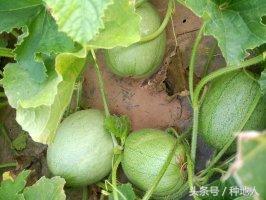
3. Planting
(1) Planting When the seedlings grow to two true leaves and one heart, with a seedling height of about 10 cm, thick leaves, and dark green leaf color, they can be planted in the greenhouse. The greenhouse planting period is closely related to the ground temperature in the greenhouse at that time, so the planting period differs from place to place. The middle and lower reaches of the Yangtze River can plant in early to mid-March. When planting in the greenhouse, the temperature is relatively low, so the greenhouse should be covered 10-15 days before planting to help raise the temperature inside the greenhouse.
(2) Land preparation and bed making, planting density
The soil in the greenhouse should be deeply plowed in time after the previous crop is harvested. The base fertilizer is mainly organic fertilizer, applied at 3500-4000 kg per mu, and 30 kg of potassium sulfate compound fertilizer. First spread 2/3 of it when plowing, level after application, and make beds with a bed spacing of 1.4 m, height of 20 cm, and width of 80 cm (turtle-back-shaped high beds), and apply the remaining 1/3 of the base fertilizer at the bottom of the bed. Water once as bottom water, and lay plastic film after air-drying. To facilitate lighting, make beds along the direction of the greenhouse for north-south-oriented greenhouses, and make beds across the greenhouse direction for east-west-oriented greenhouses. Before planting seedlings, use a pot-making tool to break the film and punch holes in the center of the high ridge at a certain spacing, and plant the seedlings into the holes. For single-vine pruning, plant two rows per bed; for double-vine pruning, plant one row. The density for trellis cultivation in the greenhouse is: for single-vine pruning, large-fruit varieties (such as Yinmizi) 1500-1800 plants/mu, small-fruit varieties (such as Elizabeth) 1800-2000 plants/mu; for double-vine pruning about 1000-1200 plants/mu.
After the row spacing is determined (average 0.7 m), adjust the plant spacing according to density when planting.
Usually, it is sufficient to lay only plastic film on the high beds in the greenhouse, but sometimes a small tunnel is also added for a short period after planting to facilitate heat preservation, promote seedling recovery, and promote rapid growth of seedlings.
(4) Trellis cultivation To adapt to the dense planting characteristics of greenhouse melons, trellis cultivation is mostly used to make full use of the space in the greenhouse and better capture light energy. Bamboo poles, tree sticks, or nylon ropes are commonly used as trellis materials. A single-sided trellis is preferable, as this trellis type is suitable for dense planting, has good ventilation and light transmission effects, and is convenient to operate. The trellis height is about 1.7 m, and the greenhouse roof height is 2.2-2.5 m, so the upper end of the trellis should leave a space of more than 0.5 m from the greenhouse roof, which is conducive to air flow, reducing humidity, and reducing diseases.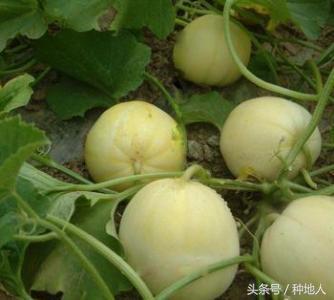
4. Field Management
(1) Temperature and humidity management in the greenhouse The most suitable temperature for melon growth and development throughout the entire growth period is 25-30°C, but the temperature requirements also differ at different growth and development stages. After planting, the greenhouse should maintain an air temperature of 27-30°C during the day, not lower than 20°C at night, and a ground temperature of about 27°C. After seedling recovery, pay attention to ventilation and cooling. During the vegetative growth period before flowering, maintain daytime air temperature of 25-30°C, nighttime not lower than 15°C, and ground temperature of about 25°C. During the flowering period, 27-30°C during the day and 15-18°C at night. During the fruit expansion period, maintain 27-30°C during the day and 15-20°C at night. During the ripening period, 28-30°C during the day, not lower than 15°C at night, and ground temperature of 20-23°C. During the vegetative growth period, the day-night temperature difference is required to be 10-13°C, and after fruit setting, 15°C is required. Too high a nighttime temperature easily causes spindling, which is unfavorable for sugar accumulation and affects quality.
The relative air humidity suitable for melon growth is 50%-60%. In the greenhouse, 60% during the day and 70%-80% at night can also allow melons to grow normally. During the seedling stage and vegetative growth period, it has strong adaptability to relatively higher or lower air humidity, but after flowering and fruit setting, especially after entering the melon expansion period, it is sensitive to air humidity. Mainly in the middle and late stages of plant growth, excessive air humidity will delay the flowering period, cause stem and leaf spindling, and cause the occurrence of diseases. When there is a contradiction between temperature and humidity in the greenhouse, lowering humidity should take priority.
Measures to reduce humidity in the greenhouse: first is ventilation. In the early growth stage, the temperature outside the greenhouse is low and unstable, so ventilation in the middle of the greenhouse is preferable; in the later stage, the temperature is higher, so ventilation mainly at both ends and both sides of the greenhouse is preferable, and the middle ventilation opening can be closed on rainy days. In the middle and late stages of melon growth, it is required that there be a level-one wind in the greenhouse. Second is controlling watering: more irrigation means a large amount of evaporation, which easily causes excessively high humidity in the greenhouse, so the number of irrigations should be reduced as much as possible and the amount of irrigation should be controlled.
(2) Water and fertilizer management Throughout the entire growth period, soil moisture must not be lower than 48%, but the water requirement differs at different development stages. From planting to before vine extension, the melon seedlings need less water and leaf evaporation is low, so watering should be controlled to promote root expansion; during the vine extension period, appropriate topdressing and watering can be done; watering should be strictly controlled before and after flowering; when the young melon grows to the size of an egg, it begins to enter the melon expansion period, and the water supply must be sufficient. The ripening period requires little water. During the melon expansion period, along with watering, 10 kg of potassium sulfate can be applied per mu as topdressing. Usually, greenhouse melons need one vine-extension watering and 1-2 melon-expansion waterings. Note that the amount of water should not be too large when watering for melon expansion, so as to avoid causing diseases.
(3) Pruning
In order to make thick-skinned melons bear fruit in the most ideal position and make the fruiting period consistent, pinching and pruning are necessary cultivation measures. For greenhouse melons, single-vine pruning is mostly used. A small number are also double-vine pruned.
Single-vine fruiting pruning method: This method is simple to operate, convenient to manage, advances the ripening period, and concentrates fruiting, but the yield is slightly lower. The specific method is: do not pinch the main vine first, and pinch only when it reaches 25-30 leaves; remove all lateral vines from the 1st to 10th nodes at the base of the main vine.