A Detailed Guide to the Cultivation Techniques and Management Methods of Red Sandalwood (Pterocarpus santalinus)
Red sandalwood (Pterocarpus santalinus) has high density and stable wood properties, being resistant to deformation and cracking, which are its notable characteristics. Its hardness ranks first among woods, and its rarity is comparable to a national treasure; it has long been known as the "Emperor's Wood" and "Gold among Woods," and it takes 5 years to form one growth ring and more than 800 years to mature into usable timber. It is often said that of ten sandalwood trees, nine are hollow; the largest red sandalwood trunk is only about 20 cm in diameter, so its preciousness can well be imagined.
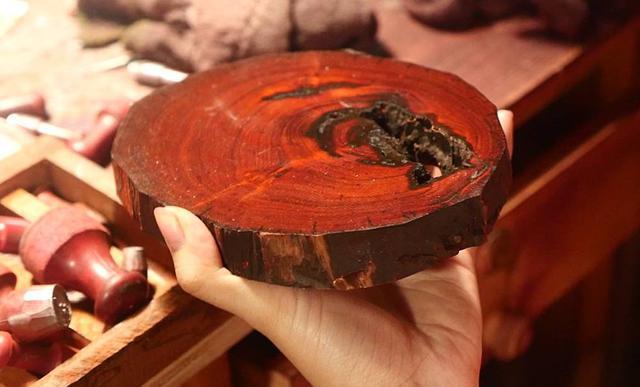
With such a long growth cycle and such preciousness, how should it be cultivated? Let's take a look together:
1: Red sandalwood has a well-developed root system with root nodules, can fix nitrogen, and has low soil requirements, but for high-yield plantations, fertile land with ample sunlight should be chosen. Afforestation is done from March to May, adjusted in each region according to the rainy season; container seedlings 30-40 cm tall give good results, and seedlings that are too tall should have their stems cut back before planting. Planting holes are 50*50*30 cm, with calcium-magnesium-phosphate compound fertilizer as base fertilizer, about 250 grams per hole, and a spacing of 2*2 m between plants and rows. 2: Tending and management: strengthen forest protection in young plantations and prohibit grazing. Apply compound fertilizer 2 times per year, 200 grams per plant each time; in the first 3 years, weed before fertilizing and straighten the trunks. 3: Main pest control: seedlings and young trees are prone to anthracnose and black spot disease (leaves fade and then turn black), which can be controlled with 1:100 Bordeaux mixture or 50% carbendazim 1000-fold solution; for leaf-eating pests such as flea beetles and scarab beetles, trichlorfon can be used.
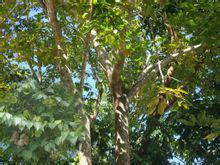
In addition, red sandalwood prefers a hot and humid climate, with an annual average temperature above 25 degrees, an extreme minimum temperature of 2 degrees, and annual precipitation of 1100-2200 MM. Seedlings are prone to frost damage below 3 degrees. It is not tolerant of shade; after planting, it flowers and fruits in 6-8 years, with the flowering period from April to May and the fruiting period from September to October.
You can add my WeChat IDzitan768(Long-press to copy)I am very glad to be your friend; a friend is a lifetime's wealth. Every day on my Moments I share the latest styles of red sandalwood, cypress, and Hainan huanghuali, so you can be the first to connect with the ones you like and fill your life with an artistic flair.